Concentration may also suffer. Tasks that normally feel straightforward can require more effort, and it may become harder to remember details or maintain attention during conversations.
This can affect ordinary activities such as reading, studying, driving, preparing meals, or completing work assignments.
The relationship between sleep and daytime performance is well established. Sleep supports attention, memory, emotional regulation, and many other functions. The U.S. Centers for Disease Control and Prevention notes that sufficient sleep is important for health and well-being and that adults generally need at least seven hours per night, although individual requirements vary by age and circumstances.
When phone habits repeatedly reduce sleep time, the consequences may extend beyond feeling tired.
A person may become less productive, make more mistakes, or find it harder to manage everyday stress. They may also become more likely to reach for another stimulating activity to overcome their tiredness, continuing the cycle into the following evening.
Mood and emotional balance can be affected
Sleep and emotional well-being are closely connected. After a restless night, people may find that small problems feel more frustrating than usual.
A delayed reply, an unexpected change in plans, or a minor disagreement may trigger a stronger reaction than it normally would. Some people become impatient, while others feel unusually sensitive or overwhelmed.
This does not mean that using a phone before bed directly causes a mental health condition. It means that insufficient or disrupted sleep can make it harder to regulate emotions and respond calmly to everyday situations.
Nighttime online activity can add another layer. Social media sometimes exposes users to arguments, upsetting stories, alarming headlines, or comparisons with other people's lives. When this material is consumed just before sleep, it may leave the person thinking about it long after the phone has been put away.
Someone who reads an upsetting comment may replay the exchange in their mind. Another person may see a worrying news report and begin imagining possible consequences. A user waiting for an important reply may repeatedly check the screen because uncertainty feels uncomfortable.
These experiences can make bedtime less peaceful.
A calmer evening routine does not guarantee perfect sleep, but reducing emotionally intense content before bed can remove one possible source of unnecessary stimulation.
Attention and memory may become less reliable
Sleep plays an important role in how the brain processes information. During sleep, the brain participates in processes associated with learning, memory, and the organization of experiences.
When sleep is shortened or repeatedly interrupted, some people may find it harder to focus on new information the next day.
They may reread the same paragraph several times, forget why they entered a room, or struggle to follow a conversation. Students may find studying more difficult, while workers may need additional time to complete familiar tasks.
These problems can become more noticeable when late-night phone use is combined with an early morning schedule.
For example, a student might stay awake watching videos, then wake early for class. Even if the student believes they can manage with less sleep, their attention may not be as steady as it would be after a full night of rest.
The same issue can affect adults who work long hours and use their phones to relax after everyone else in the household has gone to bed.
It is worth remembering that memory and concentration are influenced by many factors. Poor sleep is one possible contributor, not a complete explanation for every episode of forgetfulness or reduced focus.
The cycle of tiredness and more screen time
One of the most frustrating patterns is that tired people may use their phones even more.
After a difficult night, someone might feel too exhausted to do anything demanding. They may choose short videos or social media because these activities require little physical effort.
During the day, they may also use their phones to stay entertained during breaks or to distract themselves from feeling sleepy.
Then, when evening arrives, they may feel that they deserve another period of relaxation. They return to the same device and repeat the behavior that contributed to the previous night's delayed bedtime.
This can become a self-reinforcing routine:
-
The person stays up late using the phone.
-
Sleep becomes shorter or more fragmented.
-
The person feels tired the next day.
-
They seek easy entertainment and stimulation.
-
The phone remains part of their evening routine.
-
Bedtime is delayed again.
Breaking this pattern may require changing the environment rather than simply promising to stop scrolling.
For instance, charging the phone outside the bedroom, switching off nonessential alerts, or setting a specific time to stop using applications can make the desired behavior easier.
Why a phone can disturb sleep even when you do not notice it
People sometimes assume that a notification has no effect if they do not remember waking up.
However, the relationship between sound, brief arousals, and sleep is more complicated than simply remembering whether the phone rang.
A person may notice an alert and wake fully. Another may briefly shift into a lighter stage of sleep and return to deeper sleep without forming a clear memory of the event. Individual sensitivity varies, and not every sound produces a measurable or meaningful disruption.
This is one reason why turning off nonessential notifications is a reasonable precaution. It reduces the number of possible interruptions without requiring the person to stop using a smartphone entirely.
The same principle applies to screen lighting. A phone that remains dark and silent is less likely to attract attention than one that repeatedly lights up, vibrates, and displays new information.
Does keeping a phone near the bed cause serious health problems?
Headlines sometimes suggest that sleeping beside a phone creates immediate danger. Such claims should be treated carefully.
The evidence discussed here is primarily about sleep habits, light exposure, alertness, and interruptions. It does not establish that simply having a smartphone on a bedside table causes a serious disease.
It is also important not to confuse ordinary phone use with unsupported claims about radiation or mysterious overnight effects. The strongest practical reasons to create distance between a phone and the bed are usually behavioral: reducing temptation, preventing alerts from waking the user, and avoiding prolonged screen exposure.
For most people, the first useful question is not whether the device is physically close to the pillow. It is whether the phone is making them stay awake longer, interrupting their rest, or creating anxiety about messages and updates.
If it is, changing the routine may help.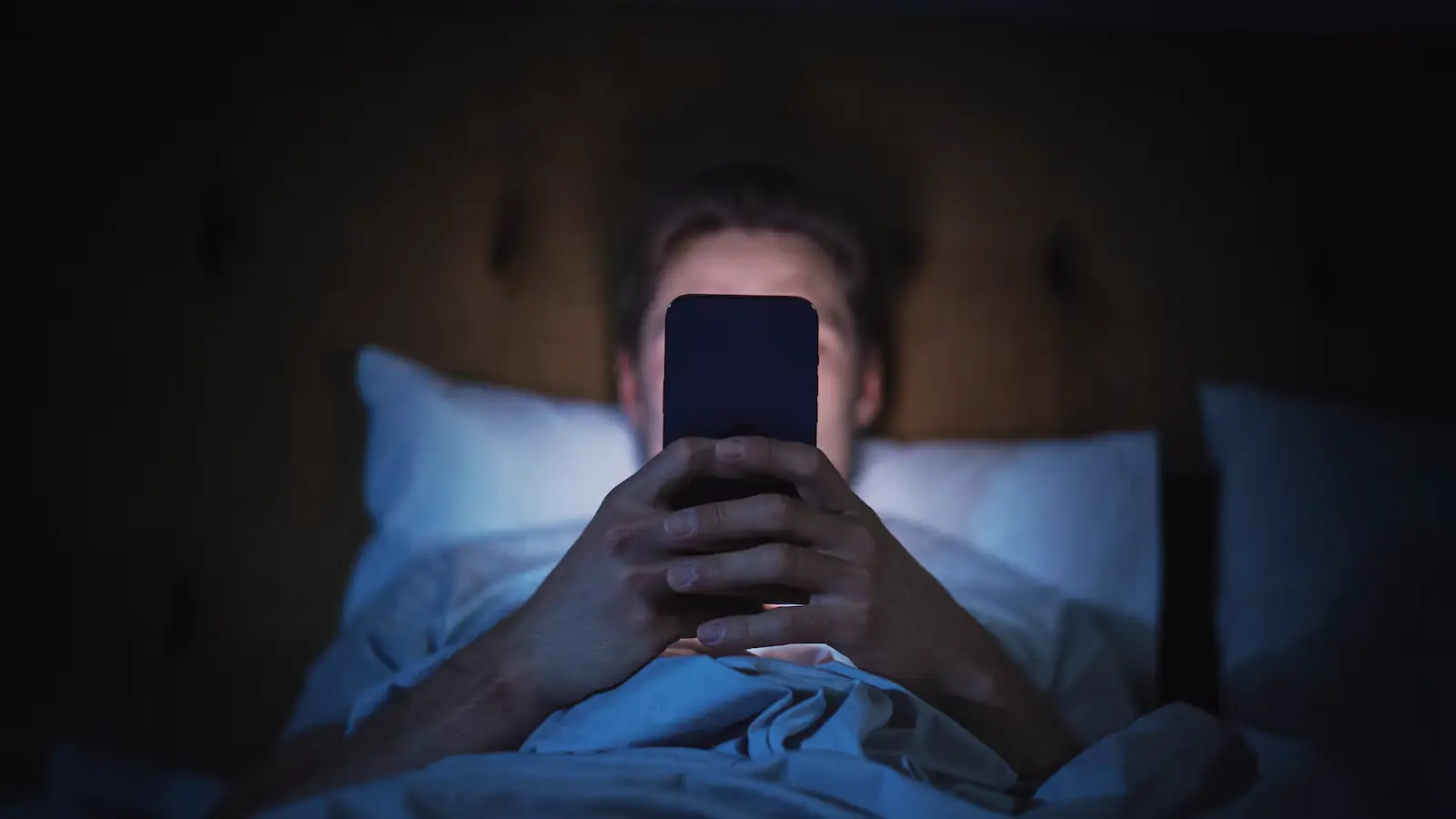
When nighttime phone use becomes a sign of a larger problem
Some people find it difficult to stop checking their phones even when they know they are tired. They may feel restless if the device is not within reach, repeatedly unlock it without a clear reason, or worry that they will miss something important.
These behaviors do not automatically indicate an addiction or a medical condition. They may simply reflect a strong habit reinforced by constant notifications and the design of digital platforms.
However, if phone use is regularly interfering with sleep, relationships, work, or daily responsibilities, it may be worth taking the pattern more seriously.
People who experience persistent difficulty falling asleep, frequent awakenings, or daytime sleepiness should not assume that the phone is the only cause. Stress, medication effects, pain, breathing problems during sleep, and other health conditions may also be involved.
A healthcare professional can help assess ongoing sleep problems, particularly when they are severe, persistent, or affecting safety during the day.
The aim is to identify the real cause rather than blaming every difficult night on a single device.