Cold hands and feet do not independently indicate that death is approaching. They can occur because of temperature, circulation problems, medication effects, or other medical conditions. But when they appear together with declining consciousness, reduced urine output, significant weakness, and changes in breathing, they may be part of the body's overall decline.
Caregivers can help by keeping the person comfortably warm with blankets and adjusting the room temperature. Direct heat sources, such as heating pads or hot water bottles, should be used cautiously because people with reduced sensation or fragile skin may be more vulnerable to burns.
The goal is not to force the body to return to its previous temperature but to make the person as comfortable as possible.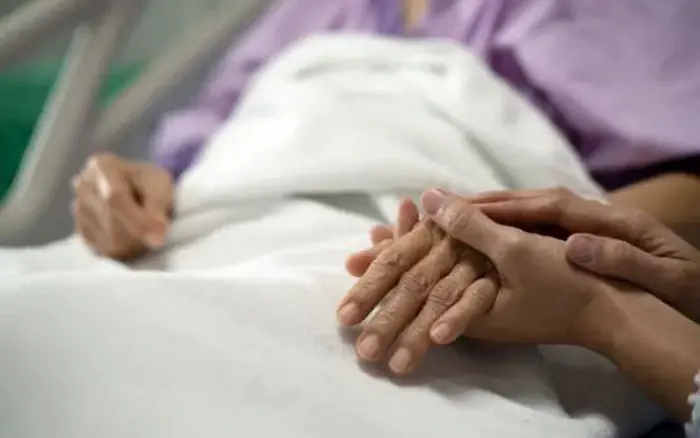
Chapter 5: Breathing May Begin to Change
Breathing is one of the most noticeable and emotionally challenging changes near the end of life.
A person's breathing may become irregular. They may take shallow breaths followed by deeper ones, pause briefly between breaths, or develop periods in which breathing becomes faster and then slower.
Some people experience a pattern known as Cheyne-Stokes breathing, in which breathing gradually becomes deeper and faster, then slows, followed by a temporary pause. This pattern can occur in people with serious neurological or cardiac conditions and may also be observed near the end of life.
The changes may be caused by alterations in the brain's regulation of breathing, circulation, metabolism, and the body's response to carbon dioxide and oxygen.
Families often become frightened when they see long pauses. They may believe the person is struggling or suffocating. Sometimes breathing changes are associated with discomfort, and medical professionals can assess whether treatment or medication may help.
In other cases, the breathing pattern may look alarming but not necessarily indicate that the person is experiencing the same level of distress that an observer imagines.
A sound known as a death rattle may also occur. It is caused by secretions collecting in the throat or upper airway when a person becomes too weak or unconscious to swallow or clear them effectively. The sound can be wet, rattling, or gurgling.
Although the noise can be distressing to family members, it does not always mean the person is choking. Care teams may recommend repositioning, mouth care, or medications to reduce secretions when appropriate.
Breathing changes are not a reliable clock. They cannot tell a family exactly how many minutes or hours remain. Some people experience them for a relatively short period, while others may have fluctuating patterns for longer.
The most important response is to seek guidance from medical professionals who understand the person's condition and can evaluate whether the breathing is comfortable.
Chapter 6: The Heart and Circulation May Become Less Efficient
As the body becomes increasingly weak, the heart may also be affected.
The heart must continue pumping blood to supply oxygen to organs and tissues. Serious illness, dehydration, heart disease, infections, metabolic disturbances, and other conditions can place additional stress on the cardiovascular system.
In some people, the pulse may become weaker or irregular. Blood pressure may gradually decline. The heart may not be able to maintain the same level of circulation that it previously supported.
This can contribute to fatigue, dizziness, weakness, and changes in the appearance of the skin.
A person may have less energy to sit upright. They may become lightheaded when moved. Their extremities may become colder, and their skin may develop a mottled appearance.
These symptoms can occur in many medical situations, not only near death. A sudden drop in blood pressure, an irregular heartbeat, chest pain, or severe weakness may require urgent medical attention.
In advanced illness, however, a gradual decline in cardiovascular function may be part of the body's transition toward the final stage of life.
The heart does not usually stop simply because a person has become sleepy or stopped eating. The process is more complicated, involving interactions among multiple organ systems.
As the body loses the ability to maintain circulation, oxygen delivery and the functioning of other organs may gradually become less effective. Eventually, when the heart can no longer sustain circulation, death occurs.
Chapter 7: The Kidneys May Produce Less Urine
The kidneys play a critical role in filtering waste products, balancing fluids, regulating electrolytes, and helping maintain blood pressure.
When a person becomes severely ill, kidney function may be affected by reduced blood flow, dehydration, medications, infection, or the underlying disease.
One change caregivers may notice is that the person urinates less frequently. The urine may become darker or more concentrated.