Purple Veins on Your Legs? Here’s What They Could Mean
Have you ever looked down at your legs and noticed blue or purple veins becoming more visible?
You may wonder: Is this normal, or is my body trying to tell me something?
The good news is that visible purple veins are often harmless. But in some people, they can be associated with varicose veins, spider veins, or problems with blood returning properly through the veins.
Here’s what you should know.
1. They May Be Varicose Veins
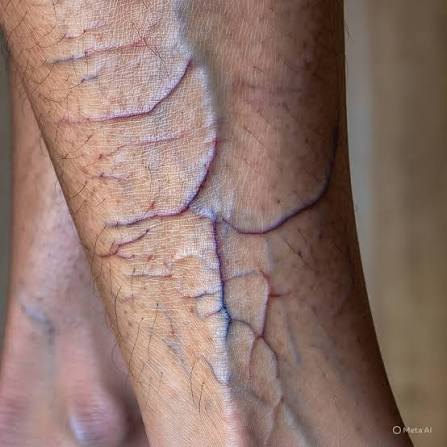
One of the most common explanations for prominent purple veins on the legs is varicose veins.
Varicose veins are enlarged, twisted veins that appear just beneath the skin. They commonly develop in the legs because the veins there have to work against gravity to return blood to the heart.
When the small valves inside the veins become weak or damaged, blood can pool in the veins. This can cause them to enlarge and become more noticeable.
Varicose veins can appear dark purple, blue, or skin-colored, and they may look twisted or bulging.
For many people, they are primarily a cosmetic concern. However, some people experience aching, heaviness, itching, muscle cramps, or swelling—especially after standing or sitting for long periods.
2. They Could Be Spider Veins
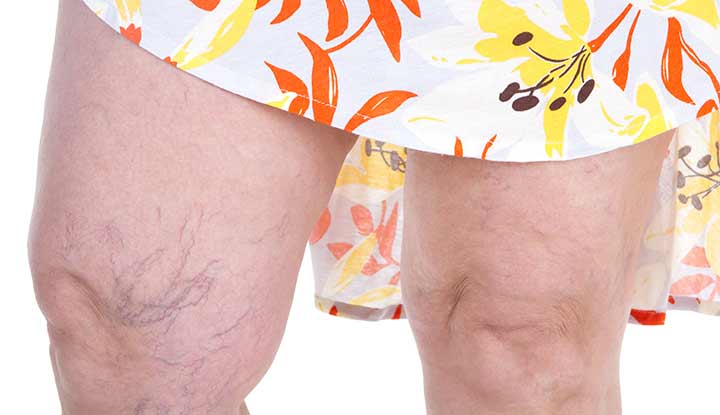
If the purple lines are small, thin, and arranged in a web-like or branching pattern, they may be spider veins rather than traditional varicose veins.
Spider veins are tiny blood vessels close to the skin that can appear red, blue, or purple. They are particularly common on the legs and are usually harmless.
They don't usually cause symptoms, although some people may have burning, itching, cramping, or discomfort when other vein problems are present.
3. Age, Genetics and Lifestyle Can Play a Role
Purple or prominent veins don't necessarily mean something is seriously wrong.
Your likelihood of developing varicose or spider veins can increase with age, family history, pregnancy, excess weight, and spending long periods standing or sitting.
In other words, seeing visible veins on your legs by itself isn't enough to diagnose a circulation problem.
Some people simply have veins that are naturally easier to see through the skin.
4. Your Veins May Be More Noticeable After Standing
Have you noticed that your veins seem more prominent after spending hours on your feet?
That can happen because prolonged standing increases pressure in the veins of the lower body. Symptoms related to varicose veins can also become worse after long periods of standing and improve when you rest and elevate your legs.
Regular movement, walking, and avoiding prolonged periods of sitting or standing can help support healthy circulation.
5. Purple Veins Plus Swelling or Pain Deserve More Attention
This is where you shouldn't simply assume that visible veins are a cosmetic issue.
If you develop persistent leg swelling, pain, warmth, redness, or tenderness, particularly if the change is sudden or affects one leg, you should seek medical advice.
A blood clot such as deep vein thrombosis (DVT) can cause leg swelling and pain and requires prompt medical evaluation.
A healthcare professional may examine your leg and, when appropriate, use a venous Doppler ultrasound to evaluate blood flow and check for a clot.
When Should You See a Doctor?
Consider speaking with a healthcare professional if your purple or visible veins are:
- Becoming increasingly prominent
- Associated with persistent pain or aching
- Accompanied by leg swelling
- Associated with itching, skin changes, or sores
- Warm, red, or tender
- Suddenly appearing or changing significantly
Cleveland Clinic recommends medical evaluation when a visible blood vessel becomes swollen, discolored, warm, or tender, because these changes can sometimes indicate a blood clot or another vascular problem.
What Can You Do for Your Legs?
If you have uncomplicated varicose veins, several lifestyle measures may help with symptoms.
Stay active. Walking and regular exercise can help improve blood flow.
Avoid sitting or standing for very long periods. If your daily routine requires either, try to take regular movement breaks.
Elevate your legs when resting. Raising your legs can help reduce discomfort and swelling.
Maintain a healthy weight. This can reduce pressure on the veins in your legs.
Compression stockings may also help some people, but it's best to discuss whether they're appropriate for you with a healthcare professional.
The Bottom Line
Purple veins on your legs do not automatically mean you have a serious health problem.
They may simply be spider veins or varicose veins, both of which are common. However, when visible veins are accompanied by pain, swelling, warmth, redness, skin changes, or sudden changes, they deserve closer attention.
So don't panic when you notice purple veins—but don't ignore significant changes either.
Your veins can sometimes provide useful clues about what's happening beneath the skin.
Sources
- Mayo Clinic — Varicose Veins: Symptoms and Causes
- NHS — Varicose Veins
- Cleveland Clinic — Spider Veins
- Cleveland Clinic — Varicose Veins
- Mayo Clinic — Varicose Veins: Diagnosis and Treatment