10 Stroke Warning Signs You May Notice Up to One Month Before It Happens
A stroke rarely comes without warning.
While many people believe stroke symptoms appear suddenly and without notice, medical evidence and survivor accounts suggest that the body often sends subtle but critical signals weeks—or even a month—before a major stroke occurs. The problem is that these early signs are frequently ignored, misinterpreted, or dismissed as stress, aging, or minor health issues.
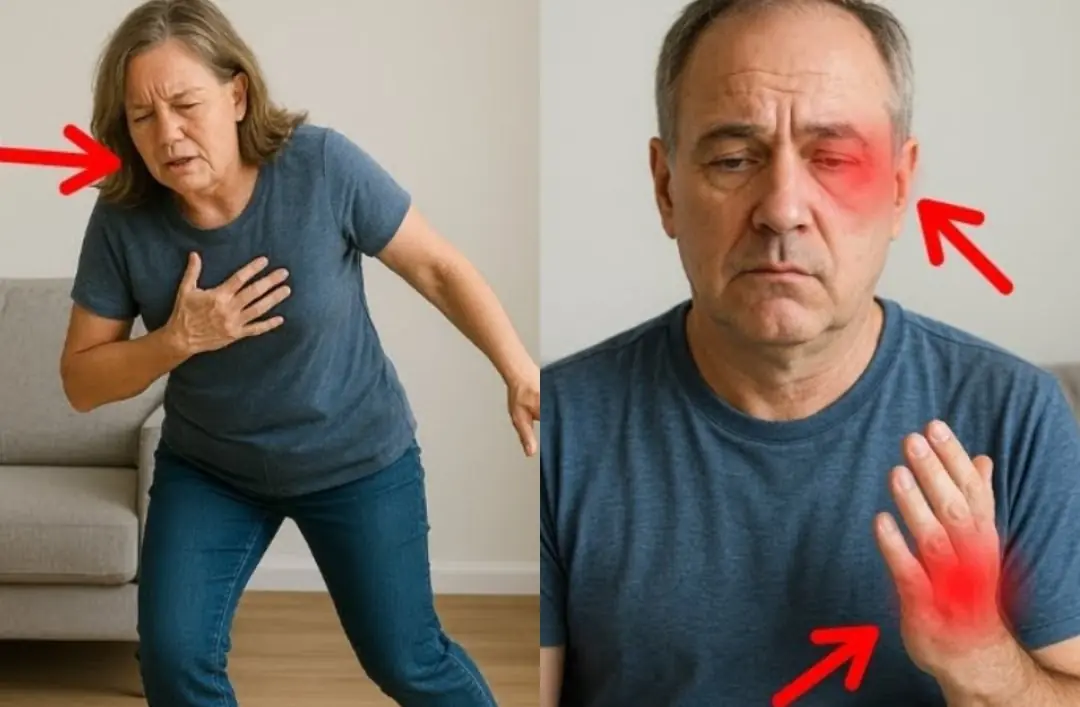
The image above highlights several of the most common warning signs that may appear before a stroke. Recognizing these symptoms early can be the difference between full recovery and permanent damage—or even death.
1. Sudden Weakness or Numbness on One Side of the Body
One of the earliest red flags is unexplained weakness, numbness, or tingling, especially affecting one side of the face, arm, or leg. This sensation may come and go, lasting only minutes at first, which causes many people to ignore it.
However, even brief episodes of one-sided weakness may indicate a transient ischemic attack (TIA)—often called a “mini-stroke”—which is a major predictor of a future full stroke.
2. Facial Drooping or Uneven Smile
If one side of the face begins to droop or feels heavy, particularly around the mouth or eye, it may signal reduced blood flow to the brain. Many people notice this when looking in the mirror or during conversation, but dismiss it as fatigue or facial tension.
Facial asymmetry should never be ignored, even if it resolves on its own.
3. Trouble Speaking or Slurred Speech
Difficulty finding words, slurred speech, or suddenly speaking in a confused or disorganized way can be an early sign of stroke-related brain disruption. Some people describe it as knowing what they want to say but being unable to say it clearly.
This symptom often appears intermittently in the early stages, which makes it especially dangerous to ignore.
4. Vision Problems in One or Both Eyes
Blurred vision, double vision, or sudden loss of vision in one eye may occur days or weeks before a stroke. These changes can happen without pain and may last only a short time.
Vision disturbances often indicate that blood supply to the visual centers of the brain is being compromised.
5. Severe or Unusual Headaches
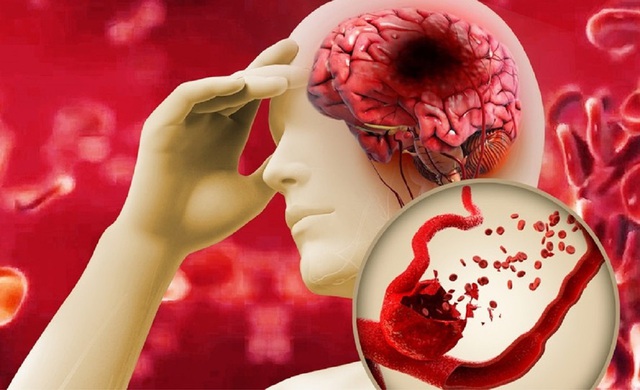
A sudden headache that feels different from previous headaches—especially if it appears without an obvious cause—can be an important warning sign. Some people describe it as the worst headache of their life, while others experience persistent pressure or sharp pain.
Headaches accompanied by dizziness, nausea, or sensitivity to light are particularly concerning.
6. Loss of Balance or Coordination
Unexplained dizziness, difficulty walking, clumsiness, or frequent stumbling may be linked to early stroke development. These symptoms are often brushed off as inner ear problems or low blood pressure.
If balance issues appear suddenly or repeatedly without explanation, medical evaluation is essential.
7. Sudden Confusion or Difficulty Understanding Others
Feeling mentally “foggy,” having trouble following conversations, or experiencing brief episodes of confusion may be early neurological warnings. Family members often notice personality changes or slower responses before the person does.
Changes in mental clarity should always be taken seriously.
8. Numbness or Pain in the Hands or Arms
As shown in the image, redness, numbness, or strange sensations in the hands or arms—especially on one side—may indicate disrupted nerve signaling caused by reduced blood flow to the brain.
These symptoms are sometimes mistaken for nerve compression or arthritis.
9. Chest Discomfort and Shortness of Breath
Although more commonly associated with heart attacks, chest pain and breathing difficulty may also appear before a stroke, particularly in people with cardiovascular disease or high blood pressure.
The heart and brain are closely connected—warning signs in one often reflect danger in the other.
10. Extreme Fatigue With No Clear Cause
Unusual, overwhelming fatigue that doesn’t improve with rest can be an overlooked stroke warning sign, especially in women. This fatigue often appears suddenly and feels disproportionate to recent activity levels.
When combined with other symptoms, it may signal that the body is under serious neurological stress.
Why Early Recognition Matters
A stroke occurs when blood flow to part of the brain is interrupted, causing brain cells to begin dying within minutes. Recognizing early warning signs allows for intervention before irreversible damage occurs.
If you or someone around you experiences even one or two of these symptoms, seek medical attention immediately. Time saved is brain saved.
Stroke prevention begins with awareness.
Listening to your body—and acting early—can save a life.