23 Strange Signs Your Kidneys Might Be in Trouble: Warning Symptoms You Should Not Ignore
Kidney problems can develop quietly. In many cases, a person may continue working, eating, exercising, and following their usual routine without realizing that these two small organs are gradually losing their ability to do an essential job. The first clues are not always dramatic. Sometimes they appear as changes in urination, unusual tiredness, swelling, or symptoms that seem to have nothing to do with the kidneys at all.
That is what makes kidney disease so easy to overlook. A swollen ankle may be blamed on standing too long. Persistent itching may be mistaken for a skin allergy. Feeling exhausted may be attributed to a busy schedule or poor sleep. Even back discomfort can be dismissed as an ordinary muscle problem. Yet certain symptoms, especially when they appear together or persist, deserve closer attention.
The illustration accompanying this article highlights several striking examples, including skin changes, a runny nose or sneezing, and pain around the lower back. But there is an important distinction readers should understand: not every unusual symptom is a sign of kidney failure. Many conditions can cause the same complaints, and some symptoms shown in the picture are not established indicators of kidney disease.
So what should people actually watch for? Which changes may suggest that the kidneys are not working properly, which symptoms are easily confused with other conditions, and when is it time to seek medical advice? The following guide examines 23 possible warning signs, explains what they may mean, and separates medically recognized symptoms from clues that should not be interpreted on their own.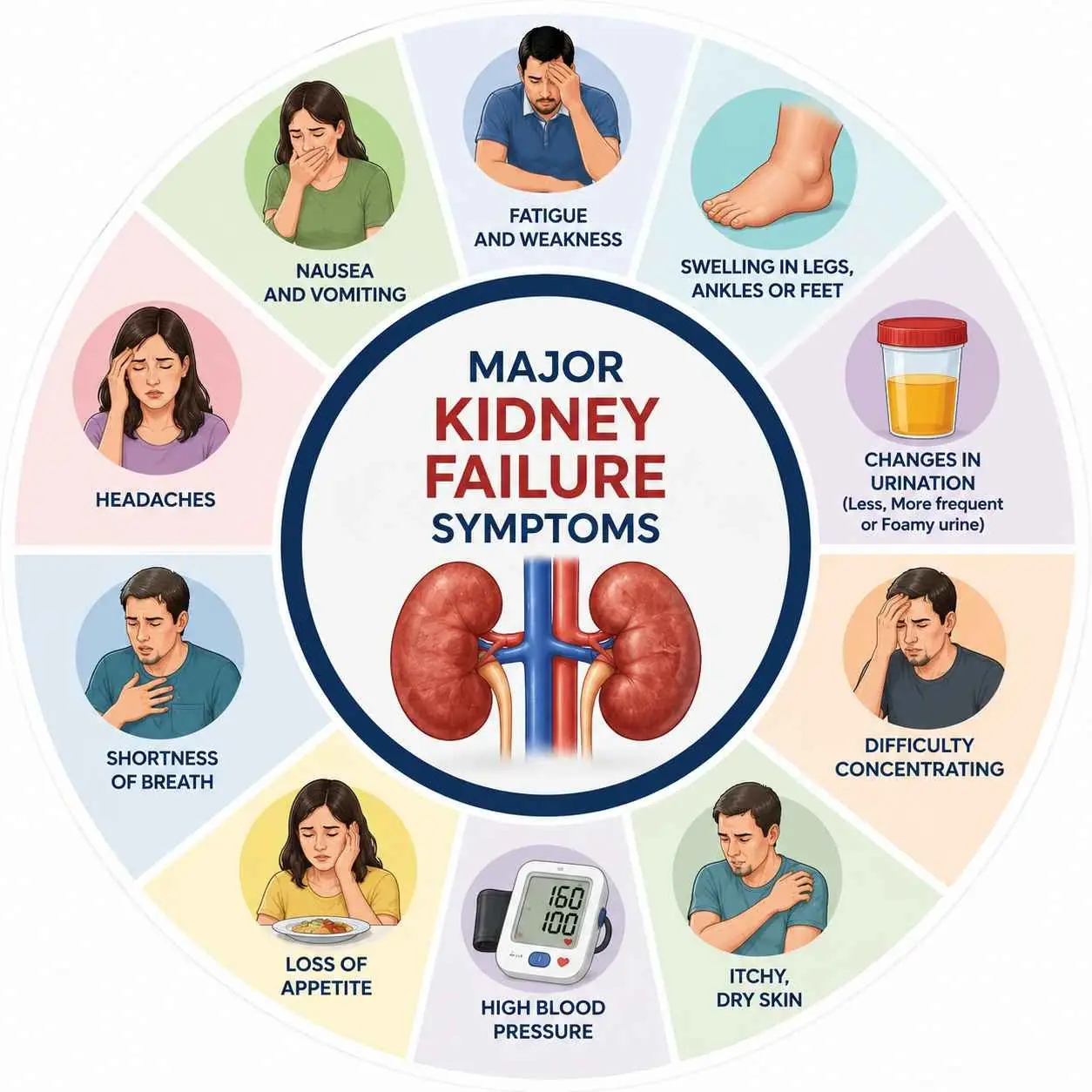
Why Kidney Problems Can Be Difficult to Recognize
The kidneys are two bean-shaped organs located toward the back of the abdomen, one on each side of the spine. Although they are relatively small, their responsibilities are enormous. They filter waste products and excess water from the blood, help regulate blood pressure, maintain the balance of minerals and electrolytes, support red blood cell production, and contribute to bone health.
Every day, the kidneys process a large amount of blood and remove substances the body no longer needs. The waste and extra fluid are carried out of the body through urine. When the kidneys become damaged, these processes may gradually become less effective.
Chronic kidney disease, often abbreviated as CKD, usually develops over months or years. It can be associated with diabetes, high blood pressure, cardiovascular disease, certain inherited conditions, inflammation, and other causes. The difficulty is that the body can compensate for a considerable loss of kidney function. A person may feel completely normal even when kidney damage is already present.
This is why symptoms alone are not enough to determine whether someone has kidney disease. Some people discover a problem only after a routine blood or urine test. Others begin noticing symptoms when kidney function has declined more significantly.
The signs below are therefore best understood as possible warning clues, not a checklist that can diagnose kidney failure. Some are associated with advanced kidney disease, while others may have many unrelated explanations.
23 Strange Signs Your Kidneys Might Be in Trouble
1. Persistent swelling in the feet and ankles
One of the more recognizable signs associated with kidney problems is swelling in the lower legs, ankles, and feet. This swelling is known medically as edema.
Healthy kidneys help remove excess salt and water from the body. When kidney function becomes impaired, the body may retain more fluid than it needs. That extra fluid can collect in tissues, especially in areas affected by gravity, such as the feet and ankles.
People may notice that their shoes feel tighter than usual, their socks leave deeper marks, or their ankles look unusually puffy at the end of the day. In some cases, pressing a finger gently against the swollen area leaves a temporary indentation.
However, swollen feet do not automatically mean kidney disease. Long periods of sitting or standing, vein problems, heart conditions, certain medications, and other health issues can also cause edema. Swelling that is persistent, unexplained, worsening, or accompanied by breathlessness should be assessed by a healthcare professional.
2. Puffy eyes, especially in the morning
Some people notice swelling around their eyes after waking up. While occasional puffiness may be related to poor sleep, allergies, crying, or eating a salty meal, persistent swelling around the eyes can sometimes be associated with kidney problems.
The kidneys normally help regulate fluid balance and prevent excessive loss of important substances through urine. When the kidney filters become damaged, protein may leak into the urine. A significant loss of protein can contribute to fluid collecting in body tissues.
The area around the eyes is relatively delicate, so fluid accumulation may be noticeable there. A person might see puffiness under the eyes or swollen eyelids that appear repeatedly.
It is important not to interpret every episode of morning puffiness as a kidney warning. Allergies and sinus conditions are common explanations. Persistent swelling, particularly when combined with foamy urine or swelling elsewhere, deserves medical attention.
3. Urine that looks unusually foamy
A change in the appearance of urine can sometimes provide an important clue.
Occasional bubbles in the toilet are normal. They may appear because urine hits the water with force, or because cleaning products are present in the toilet bowl. However, urine that repeatedly looks very foamy, especially when the foam is thick or does not disappear quickly, may indicate protein in the urine.
This condition is called proteinuria. One possible cause is damage to the kidney's filtering units, which normally prevent large amounts of protein from passing into urine.
Proteinuria does not always cause visible foam, and foamy urine does not always mean kidney disease. A laboratory urine test is needed to determine whether protein is present and how much is being lost.
If the change happens repeatedly, rather than just once, it is sensible to arrange a urine test. Detecting protein leakage can help identify kidney damage before more obvious symptoms develop.
4. Urinating more often than usual
A noticeable change in urination frequency may be worth discussing with a doctor.
Some people with kidney conditions find themselves needing to urinate more often, particularly at night. They may wake up several times to use the bathroom even though their evening fluid intake has not changed.
This can happen because the kidneys are less able to concentrate urine efficiently. Instead of conserving water in the usual way, they may produce larger amounts of more diluted urine.
Nevertheless, frequent urination has many possible causes. Diabetes, urinary tract infections, an enlarged prostate, pregnancy, certain medications, and drinking large amounts of fluid can all affect bathroom habits.
The pattern matters. A sudden or persistent change, especially when accompanied by unusual thirst, pain, blood in the urine, or other symptoms, should not be ignored.
5. Producing much less urine than usual
A significant reduction in urine output can be more concerning than simply visiting the bathroom more frequently.