If the kidneys suddenly lose their ability to filter blood effectively, the amount of urine produced may decrease. In severe cases, a person may pass very little urine or none at all.
This can occur in acute kidney injury, which develops over hours or days. Possible causes include severe dehydration, serious infections, major blood loss, certain medications, urinary obstruction, or other serious medical problems.
A person should not assume that reduced urination is harmless simply because they have been busy or have not paid attention to their fluid intake.
A sudden and substantial decrease in urine, particularly when accompanied by swelling, weakness, vomiting, confusion, or feeling seriously unwell, requires urgent medical assessment.
6. Blood in the urine
Urine that looks pink, red, brown, or tea-colored may contain blood. This is known as hematuria.
Blood in urine can sometimes be associated with inflammation or damage involving the kidneys. Conditions affecting the kidney's filtering structures may allow blood cells to pass into the urine.
However, the source of blood may also be elsewhere in the urinary system. Urinary tract infections, kidney stones, bladder conditions, prostate problems, and other disorders can cause visible or microscopic blood.
Some people have blood in their urine without noticing any color change. It may only be discovered through a urine test.
Visible blood should be medically evaluated, even if it appears only once and is not painful. It is not possible to identify the cause simply by looking at the urine.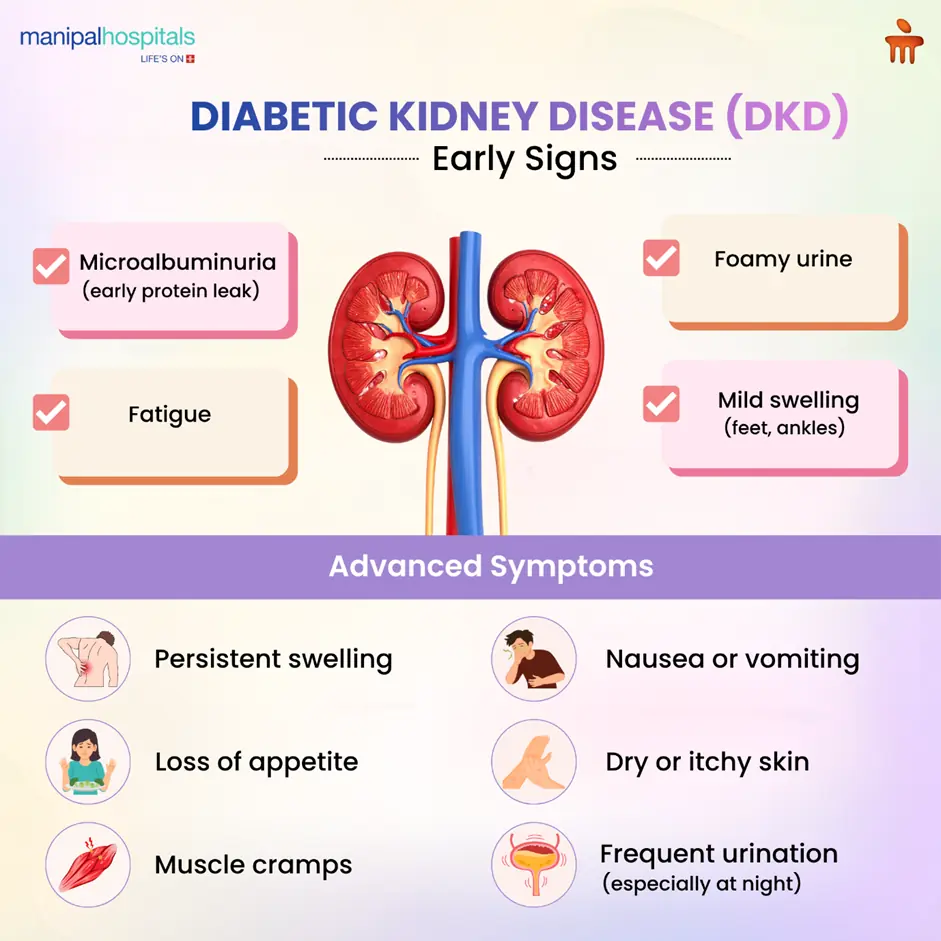
7. Unusual tiredness that does not improve with rest
Persistent fatigue is another possible sign of advanced kidney disease.
The kidneys help produce a hormone called erythropoietin, which signals the bone marrow to make red blood cells. These cells carry oxygen throughout the body. When kidney function declines, the body may produce less erythropoietin, contributing to anemia.
Anemia can leave people feeling weak, exhausted, dizzy, or short of breath during ordinary activities.
Kidney disease may also contribute to fatigue through the accumulation of waste products, disturbed sleep, inflammation, and changes in mineral balance.
Of course, tiredness is extremely common and has many possible causes, including stress, insufficient sleep, anemia unrelated to kidney disease, thyroid disorders, infections, and nutritional deficiencies.
The important clue is persistence. If exhaustion continues for weeks, affects daily life, or occurs alongside swelling or changes in urination, a medical assessment may help identify the cause.
8. Persistent itching without an obvious explanation
The illustration shows a person with visible skin irritation. It is tempting to assume that every rash or itchy patch is connected to the kidneys, but the medical picture is more complicated.
People with advanced kidney disease can develop persistent itching, sometimes called CKD-associated pruritus. It may affect large areas of the body and can be particularly uncomfortable at night.
Possible contributing factors include changes in mineral balance, inflammation, dry skin, and the buildup of substances that the kidneys would normally help remove.
The itching may occur without a clearly visible rash. Repeated scratching can then cause redness, small wounds, or irritated patches.
However, ordinary skin allergies, eczema, insect bites, fungal infections, medication reactions, and many other conditions are much more common explanations for isolated itching.
A new rash should not be treated as proof that the kidneys are failing. Persistent generalized itching, especially in someone with known kidney disease, should be discussed with a clinician.
9. Dry, rough, or unusually flaky skin
Skin dryness can occur for many reasons, including weather, frequent bathing, harsh soaps, dehydration, and skin conditions.
In more advanced kidney disease, however, changes in mineral and fluid balance may contribute to dry, uncomfortable skin. People may notice roughness, scaling, or a persistent sensation of tightness.
When dry skin occurs alongside widespread itching, it can become difficult to distinguish the original problem from irritation caused by scratching.
Moisturizers may help relieve ordinary dryness, but they cannot correct an underlying kidney problem. If skin changes are persistent and accompanied by other warning signs, a medical evaluation is more useful than repeatedly changing skincare products.
10. Muscle cramps, especially in the legs
Sudden cramps in the calves, feet, or other muscles can be painful and disruptive.
The kidneys help maintain the balance of electrolytes and minerals such as potassium, sodium, calcium, and phosphorus. When kidney function declines, these balances may become disturbed.
Changes in mineral levels can contribute to muscle discomfort, cramps, weakness, or twitching. Some people with advanced kidney disease experience symptoms that become more noticeable at night.
Yet cramps are not specific to kidney disease. Exercise, dehydration, prolonged sitting, pregnancy, circulation problems, and certain medications can also cause them.
Frequent or severe cramps should be assessed in context. A clinician may recommend blood tests to check kidney function and electrolyte levels rather than assuming the problem is caused by a lack of one particular mineral.
11. Nausea or feeling sick after eating
When the kidneys cannot remove waste products effectively, substances may accumulate in the bloodstream. In advanced disease, this can affect the digestive system and contribute to nausea.
Some people describe feeling sick in the morning, losing interest in meals, or becoming nauseated after eating only a small amount.
Nausea may also be accompanied by an unpleasant taste in the mouth or a general feeling of being unwell.
There are many other possible explanations, including stomach infections, acid reflux, medication side effects, pregnancy, liver or gallbladder conditions, and digestive disorders.
Persistent nausea that occurs with unexplained weight loss, poor appetite, swelling, or changes in urination should be investigated rather than repeatedly treated as an ordinary stomach problem.
12. Loss of appetite
A person whose kidneys are functioning poorly may gradually lose interest in food.
Waste accumulation, nausea, changes in taste, and inflammation can make meals less appealing. Some people feel full quickly or find that foods they previously enjoyed no longer taste the same.
Over time, poor appetite may contribute to unintended weight loss and nutritional problems.
It is important to recognize that appetite changes can also be linked to depression, anxiety, infections, digestive conditions, medication effects, and many other causes.
A persistent loss of appetite deserves attention, particularly if it is accompanied by weakness or unexplained weight changes.
13. Unintentional weight loss
Weight loss without a deliberate change in diet or exercise should not automatically be celebrated.
In advanced kidney disease, nausea, reduced appetite, changes in taste, and general illness can lead to a lower intake of food. Some people lose muscle as well as body fat.
Fluid retention can make the situation more confusing. A person may gain weight because of excess fluid while simultaneously losing muscle and nutritional reserves.
Unexpected weight loss can also be associated with thyroid disorders, diabetes, digestive diseases, infections, and other serious conditions.
If weight changes occur without a clear explanation, a medical assessment is appropriate. The goal is to identify the cause rather than assume that the kidneys are responsible.