Sometimes you may notice mold only after removing the outer layers of skin.
Other times, the problem may be visible on the outside of the bulb.
The important thing is not to assume that removing one small spot automatically makes the entire bulb safe.
Garlic is made up of tightly packed cloves, and once visible mold or significant decay is present, it can be difficult to know how far contamination has spread.
If only the dry outer skin looks discolored while the cloves underneath are firm and healthy, that is different from finding actual fuzzy mold or decaying tissue.
But if multiple cloves show mold, softness, discoloration, or deterioration, the safer choice is to discard the affected bulb rather than trying to salvage it.
This becomes especially important when garlic has been stored in a warm or humid environment.
Moisture creates conditions that can encourage microbial growth and spoilage.
What to look for:
- Fuzzy patches
- Green, blue, black, or unusual growth
- Mold between cloves
- Damp or deteriorating tissue
- Multiple cloves showing signs of decay
When shopping, choose bulbs that are dry, intact, and free from obvious mold.
2. Garlic That Is Soft, Wet, or Rotting
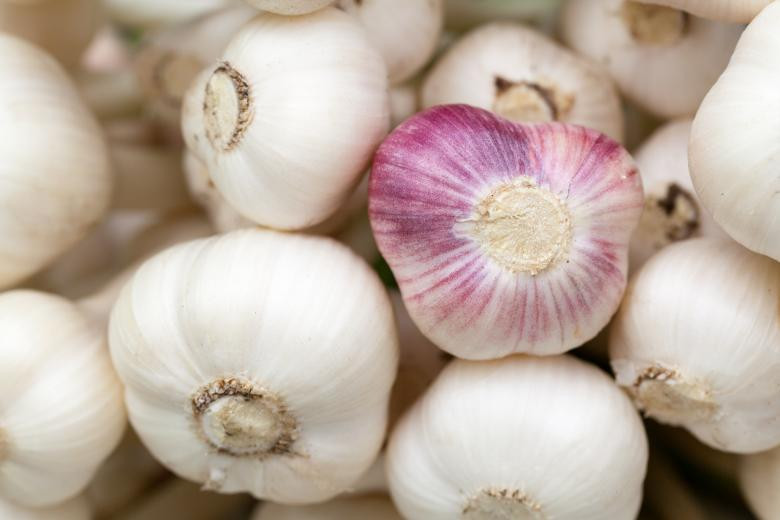
Fresh whole garlic should generally feel firm and relatively dry.
One simple trick when shopping is to gently squeeze the bulb.
It should feel solid rather than mushy.
If the bulb collapses easily under light pressure, feels unusually soft, or has wet areas, it may already be deteriorating.
Once you remove the outer skin, you may notice additional signs of spoilage.
These can include:
- Brown or black discoloration
- Water-soaked tissue
- Mushy cloves
- Slimy surfaces
- Visible decay
- An unpleasant odor
- Cloves that have collapsed or become unusually soft
Not every cosmetic imperfection means the garlic is unsafe.