If you travel for long enough you'll experience all these problems and more. You'll also learn that every problem has a solution. Here are 5 of the most common travel problems and ways to avoid them.
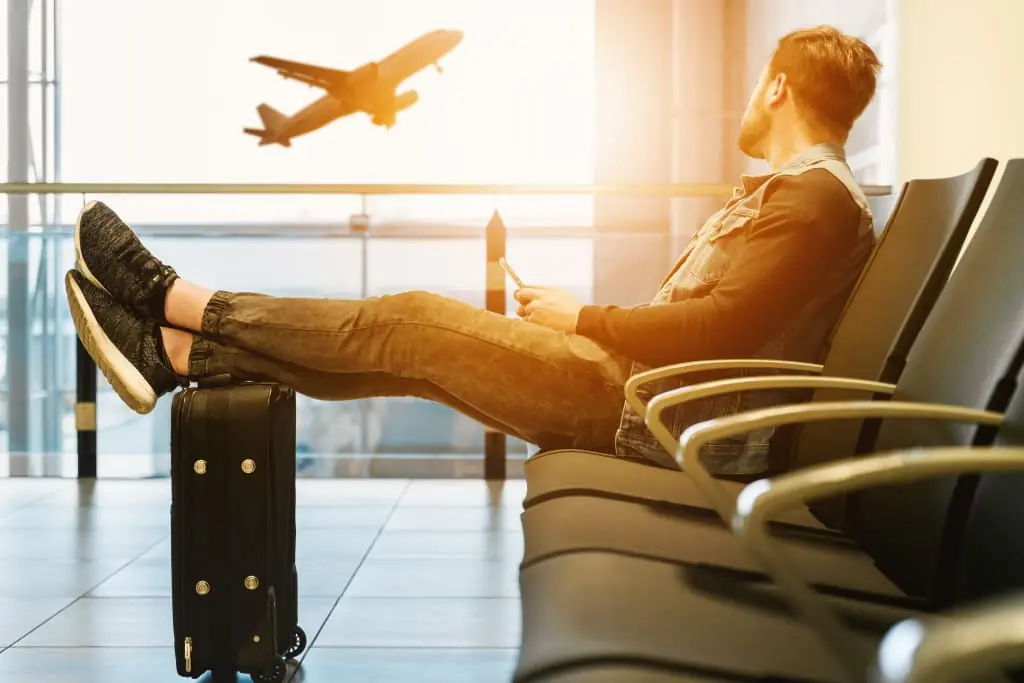
When it comes to travel problems, I've experienced them all!
When you commit to a life of travel you have to accept that it won't always be a smooth operation. Some trips go perfectly without a single problem, but many don't. Some things you can prepare for, others you just have to react to.
The best solution to most travel problems is preparation. Sometimes you'll need to be creative and resourceful with your solutions but this is also one of the joys of traveling.
You can't prepare for every eventuality, but no problem is insurmountable.
While the situations and specific circumstances may differ, there are common problems that happen to all travelers eventually.
We'll discuss 5 of the most common travel problems and ways to avoid them.
1. Getting lost
Some people have fantastic spatial awareness, others not so much, but most people have got lost at least once in their life. It can be a horrible feeling — your heart beating faster as the panic starts to rise. You can get lost anywhere: a supermarket, airport, town center or in the wilderness.
With modern technology this is one of the easier travel problems to avoid. In the past you'd need a map for each country. Nowadays almost everyone has a smartphone. Before you leave, download Google Maps and then download the offline map for whichever cities you'll be visiting. The offline maps are tiny — normally between 20 to 50mb.
With the offline map on your phone you can browse even without an internet connection.
A word of warning though, this is not a foolproof plan! If your battery dies the plan comes crashing down. A pen and paper may be ancient technology, but they don't require batteries. Write down your destination just in case.
The most important thing is to not panic. If you can, take a seat and take some slow breathes. Strangers are generally nice and helpful so, if it's safe to do so, ask for directions. If you don't speak the language you can show them the written address (it's not advisable to flash your phone around).
2. Getting mugged
In nearly 20 years I've only been mugged four times. Two of them were in my hometown, minutes from my house.
Some countries are more dangerous than others. It's important to check for any government warnings before you visit. It's also advisable to check Facebook groups and other forums for the opinions of other travelers.
A word of advice though — don't believe everything you read.
If I'd listened to every bit of advice about South America I never would have got on the plane. I've read hundreds of horror stories about Brazil yet I lived there for over a year without a single problem.
There are lots of articles about how to stay safe when traveling, but what should you do if you actually get attacked?
Don't panic!
The first thing you need to do is report it to the police. You'll need a Crime Reference Number to claim on your insurance. If you're traveling with Worldpackers, your host will know the nearest police station and be able to help you with any translation issues.
Once that's done it's time to deal with the emotional side. After I was attacked in Chile I became quite emotional. I was attacked after leaving a bar, beaten up and robbed. For days afterwards I didn't want to leave the hostel and I was suspicious of everyone in the street.
I questioned myself. Why me? What did I do wrong? Was it my fault?
It wasn't my fault. I was just in the wrong place at the wrong time. It took me a while to accept it, but it wasn't my fault. It wasn't personal. They didn't know me. I was just a random tourist to target. Once I accepted that it was just business for them I felt a weight lift from my shoulders. That may seem silly, but it's an important emotional shift to make.
You're allowed to feel anger, rage and frustration, but you have to learn to let it go. They're destructive emotions. The majority of the world are awesome people. Don't let a few idiots ruin your journey.
3. Losing your phone
This may seem like a silly one to add to a list of travel problems. Why not a camera? Laptop? Bag? Because most people do everything through their phone.
I had a phone stolen recently in Argentina. Without it I couldn't:
- tell the time
- top up my prepay debit card
- find the nearest police station
- alert my family that it had been stolen
- access my travel e-tickets
- cancel my contract
- tell anybody about it because my translator was on my phone
I had to use the public computer in the hostel, which then caused all kinds of security alerts with my online accounts. Logging in from a foreign computer usually requires answering additional security questions, and then they helpfully offer to text a code to your phone.
Not helpful when the phone is lost!
Make sure you:
- know all your passwords
- update all your account details before leaving
- have a backup email address to receive those annoying security codes
This is one of the more common travel problems as mobile phones are big business all over the world. Your shiny new iPhone could be a year's worth of wages for a local.
The solution is to use common sense and not wave it around in public. As with all valuables, keep them out of plain sight and, wherever possible, on your person or locked in a safe.
4. Getting sick
Travel sickness is caused when signals from your inner ear don't match up with your visual signals. For some people it happens every time they travel. Others only suffer on certain types of transport. I used to hate buses. The smell of the engine and the rocking motion would cause me to hold my breath. This was a problem for any trip longer than 30 seconds.
If you don't have travel sickness medication then there are a few things you can try. First I would try and limit the stimulation. Looking out the window at the passing buildings made me worse, so I would focus on the chair in front and focus on my breathing.
For other people the opposite is true. Distract yourself and take your mind off the feeling, either via conversation, music, counting things out the window, etc. Replace the sensory malfunction with another sensory input.
If you can get access to fresh air and a drink of water then hopefully you can calm the feeling and focus on other happier thoughts.
5. Not speaking the language
This is a travel problem I've lived with for years.
Not being able to communicate with the people around you can lead to all kinds of emotions:
- Loneliness (see below)
- Anger
- Frustration
- Determination
- Encouragement
- Elation
Hopefully you noticed how that list went from negative to positive.
While being unable to speak the local language can cause lots of negative emotions, it can also be the catalyst to greatness.
Body language, sign language, gestures and smiles. They are all powerful ways to communicate. Use every single one of them. If you're afraid of speaking new languages abroad, don't shy away from meeting new people because you don't know words. Use these other forms of communication as an ice-breaker.
Study languages as much as you can before you travel. It's an incredible form of respect that will be appreciated worldwide if you make the effort. Even if it's just a few words or phrases it will help. There are hundreds of apps, guides and language programs you can try.
The best way to learn a language while traveling? Speak. It can be slow, painful or lead to lots of laughter. It all depends on what attitude you approach it with. While some languages are much harder to grasp than others, a lack of words is a travel problem with an easy solution.