6 Types of Warts: Signs, Symptoms, Home Remedies, and Treatment
A tiny rough bump on your finger, a hard patch on the sole of your foot, or a cluster of unusual growths around your nails may look harmless at first. But sometimes, what appears to be an ordinary skin imperfection is actually a wart — a growth caused by certain types of human papillomavirus (HPV).
The important detail is that not all warts look alike, appear in the same places, or respond to the same treatment. Some are small and almost painless; others can become thick, uncomfortable, or spread to nearby areas. A few types also need special medical attention, particularly when they appear around the genital area.
The image accompanying this article shows several rough, raised skin growths, including lesions that resemble common and plantar warts. Their appearance can be a clue, but a photograph alone cannot confirm a diagnosis. Many other skin conditions can look similar, and assuming every unusual bump is a wart may delay the right care.
So, what exactly causes these growths? How can you tell the six main types apart, and which home treatments are worth considering? Understanding the differences is the first step toward protecting your skin and avoiding unnecessary irritation.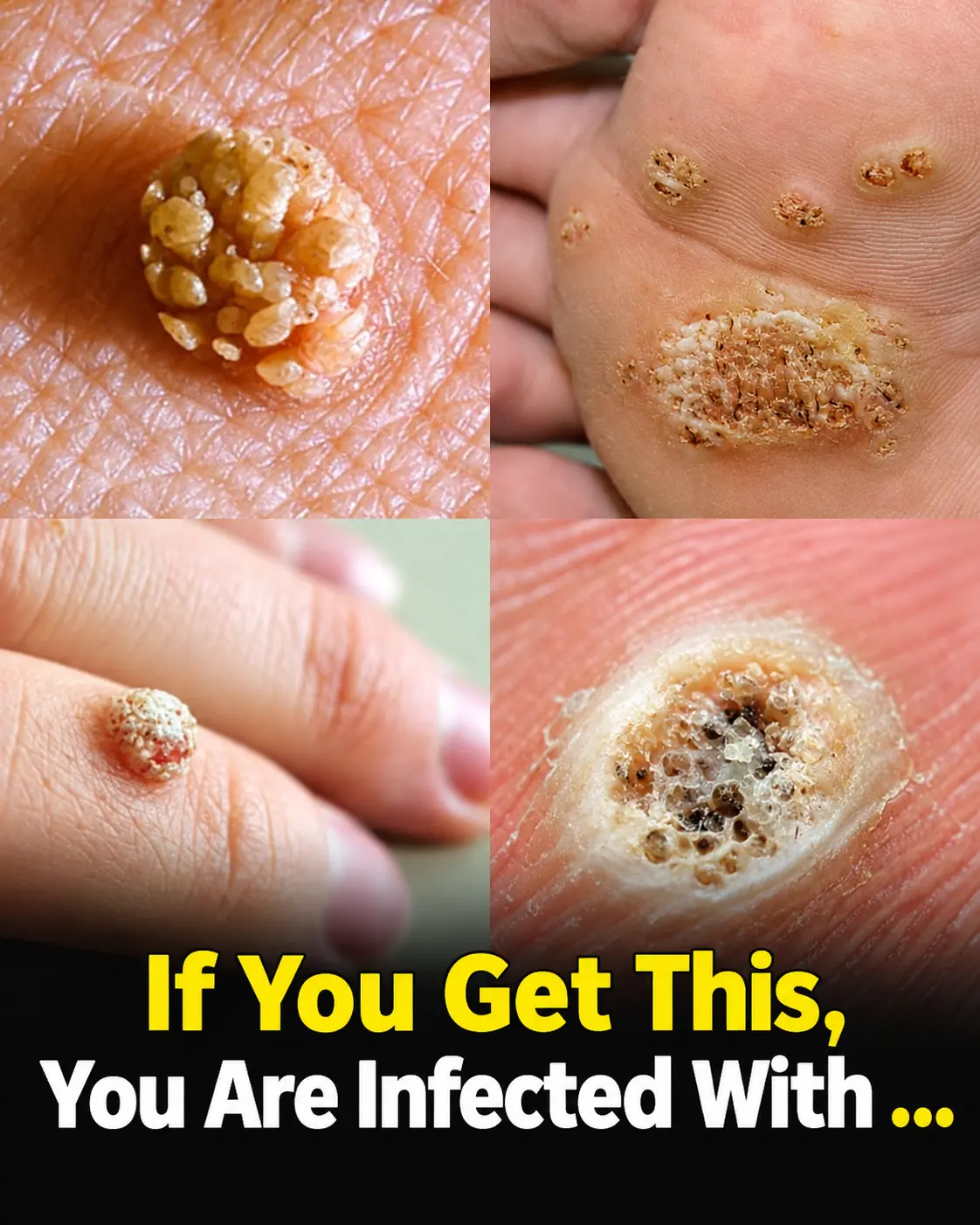
What Exactly Is a Wart?
A wart is a small growth on the skin caused by an infection with certain types of human papillomavirus, commonly known as HPV. The virus enters the outer layer of the skin through tiny cuts, scratches, cracks, or other small breaks that may be too minor to notice.
Once the virus reaches skin cells, it can encourage them to grow more quickly than usual. This produces a localized area of thickened skin that may feel rough, firm, grainy, or slightly raised.
Warts are generally noncancerous skin growths. Many eventually disappear without treatment as the immune system recognizes and controls the virus. However, this process can take months or even years, and some warts remain stubborn despite repeated attempts to remove them.
It is also important to understand that HPV is not just one virus. There are many different HPV types. Some are associated with ordinary skin warts on the hands and feet, while others are associated with genital warts or certain cancers. These groups should not be confused with one another.
Having a common wart on your finger does not automatically mean you have a sexually transmitted infection. Likewise, the HPV types that cause ordinary hand or foot warts are generally different from the types most commonly associated with genital warts.
How Do Warts Develop and Spread?
Warts can develop when HPV comes into contact with skin that allows the virus to enter. The virus may spread through direct skin-to-skin contact or through contact with contaminated surfaces, particularly in places where people walk barefoot or share personal items.
For example, someone with a plantar wart may shed virus-containing skin cells in a damp environment. Another person who walks barefoot across the same surface may come into contact with the virus, especially if the skin on their feet has small cracks or abrasions.
However, contact does not guarantee that a wart will develop. A person's immune response, skin condition, and the amount of exposure can all influence whether an infection takes hold.
Warts may also spread from one area of the body to another. Picking, biting, scratching, or shaving over a wart can move virus particles to nearby skin. This is one reason dermatologists generally advise against cutting or pulling at these growths.
The time between exposure and the appearance of a wart can vary considerably. A person may not notice a new growth until weeks or months after contact with the virus. That makes it difficult to identify exactly when or where the infection occurred.
The Six Main Types of Warts
Although warts share the same general cause, they can look very different depending on the HPV type involved and the part of the body where the growth develops. Some form a single raised bump, while others appear in groups or spread across a wider patch of skin.
The six types below are useful categories for understanding the different appearances. They are not the only wart variations, and some people may have more than one type at the same time.
1. Common Warts: Rough Bumps Often Found on the Hands
Common warts, medically known as verruca vulgaris, are among the most recognizable forms. They frequently appear on the fingers, backs of the hands, around the nails, elbows, and knees.
A common wart usually looks like a firm, raised bump with a rough or grainy surface. Its color may be close to the surrounding skin, slightly pink, grayish, yellowish, or brown. Some are only a few millimeters wide, while others grow larger or develop an irregular outline.
One feature that often attracts attention is the presence of tiny dark dots inside the wart. These are sometimes described as seeds, but they are not seeds or insect eggs. They are small blood vessels that have become visible within the thickened skin. Their appearance can help a clinician recognize a wart, although dark dots alone are not enough to establish a diagnosis.
Common warts may appear individually or in groups. They can develop after the skin has been damaged by a small cut, a hangnail, a scratch, or repeated irritation. Children and teenagers often develop them, but adults can be affected too.
The area around a common wart may feel rough without causing significant discomfort. However, a wart close to a fingernail can become painful if it is repeatedly knocked, bitten, or picked. When it grows near the nail edge, it may also interfere with normal nail growth.
What should you do?
A small common wart that is not painful may not require immediate treatment. Some disappear naturally as the immune system responds to the virus. If it becomes bothersome, a pharmacist or dermatologist can discuss suitable treatments, including salicylic acid or professional freezing.
Avoid cutting the wart with scissors, nail clippers, or a blade. This can cause bleeding, introduce bacteria, and potentially spread the virus to nearby skin. It can also leave a scar that is more troublesome than the original growth.
2. Plantar Warts: Growths on the Soles of the Feet
Plantar warts develop on the bottom of the feet, particularly on areas that carry body weight, such as the heels and the balls of the feet. They are often called verrucas.
Unlike many common warts, plantar warts may grow inward because the pressure of standing and walking pushes the thickened skin toward the deeper layers. As a result, they can look flatter than expected, even when the affected area is quite thick.
A plantar wart may appear as a small, rough, round patch surrounded by hardened skin. Tiny dark dots may be visible in the center. The normal lines of the skin can appear interrupted as they pass through the growth.
The most noticeable symptom is sometimes discomfort when walking. A person may feel as though a small stone, thorn, or sharp object is trapped beneath the foot. Pain can become more pronounced when the wart sits on a pressure-bearing area.
Some plantar warts are barely noticeable, while others become thick and painful. A single lesion may also develop into a larger patch if several warts appear close together.
Why can plantar warts be difficult to treat?
The skin on the soles is naturally thicker than the skin on many other parts of the body. This protective layer can make it harder for topical treatments to reach the affected tissue. Repeated pressure from walking may also contribute to discomfort and make the wart seem more stubborn.
Treatment may involve salicylic acid products specifically intended for plantar warts, professional freezing, or other methods selected by a healthcare professional. Thickened skin sometimes needs careful management before treatment can work effectively.
People with diabetes, reduced sensation in their feet, poor circulation, or other conditions that affect wound healing should not attempt to remove plantar warts themselves. Even a small injury to the sole can become a serious problem when circulation or sensation is impaired.
How can you reduce the risk of spreading plantar warts?
Wear sandals or other suitable footwear in communal showers, changing rooms, and swimming-pool areas. Do not share shoes, socks, towels, or foot-care tools. Keep your feet clean and dry, and avoid picking at the affected skin.
If a growth on the sole becomes increasingly painful, bleeds, changes in appearance, or makes walking difficult, seek medical advice rather than repeatedly trying stronger home treatments.