A person with genital warts should follow medical advice, but should not assume that the lesions mean cancer is present.
HPV Vaccination Is Important, but It Does Not Treat Existing Warts
HPV vaccination protects against several important HPV types, including types associated with many HPV-related cancers and, depending on the vaccine, types that cause most genital warts.
However, the vaccine is preventive. It does not remove a wart that is already present or treat an established HPV infection.
People can ask a healthcare professional about vaccination according to their age, medical history, and local recommendations. Even vaccinated people should continue recommended screening where applicable, because vaccination does not protect against every HPV type.
A Wart Does Not Reveal When Someone Was Infected
A wart may appear long after the initial exposure. This is especially important when discussing genital HPV, because visible lesions may develop weeks or months after contact, and the timing can be difficult to determine.
The appearance of a wart cannot reliably establish when infection occurred or who transmitted it. It should not be used as proof of infidelity or as a basis for blaming a partner.
When Should You See a Doctor?
Many ordinary warts are harmless, but certain warning signs make professional assessment important.
Arrange a medical appointment if:
-
The growth is on your face, eyelid, lips, genitals, or around the anus.
-
It changes in size, shape, color, or texture.
-
It bleeds, becomes ulcerated, or repeatedly forms a crust.
-
It is painful, itchy, burning, or increasingly irritated.
-
You have many growths or they are spreading quickly.
-
You are unsure whether the lesion is a wart.
-
Home treatment has not worked or has damaged the surrounding skin.
-
You have diabetes, poor circulation, reduced sensation in your feet, or a weakened immune system.
Seek prompt medical advice if the area becomes increasingly red, hot, swollen, very painful, or produces pus, as these can be signs of a secondary infection.
A clinician will usually examine the growth and ask about its history. In many cases, the appearance and location provide enough information for an initial diagnosis. If the lesion looks unusual or there is uncertainty, additional assessment or a skin biopsy may be considered.
Do not delay an examination simply because a growth resembles a wart in an online photograph. A correct diagnosis is more important than trying to remove it quickly.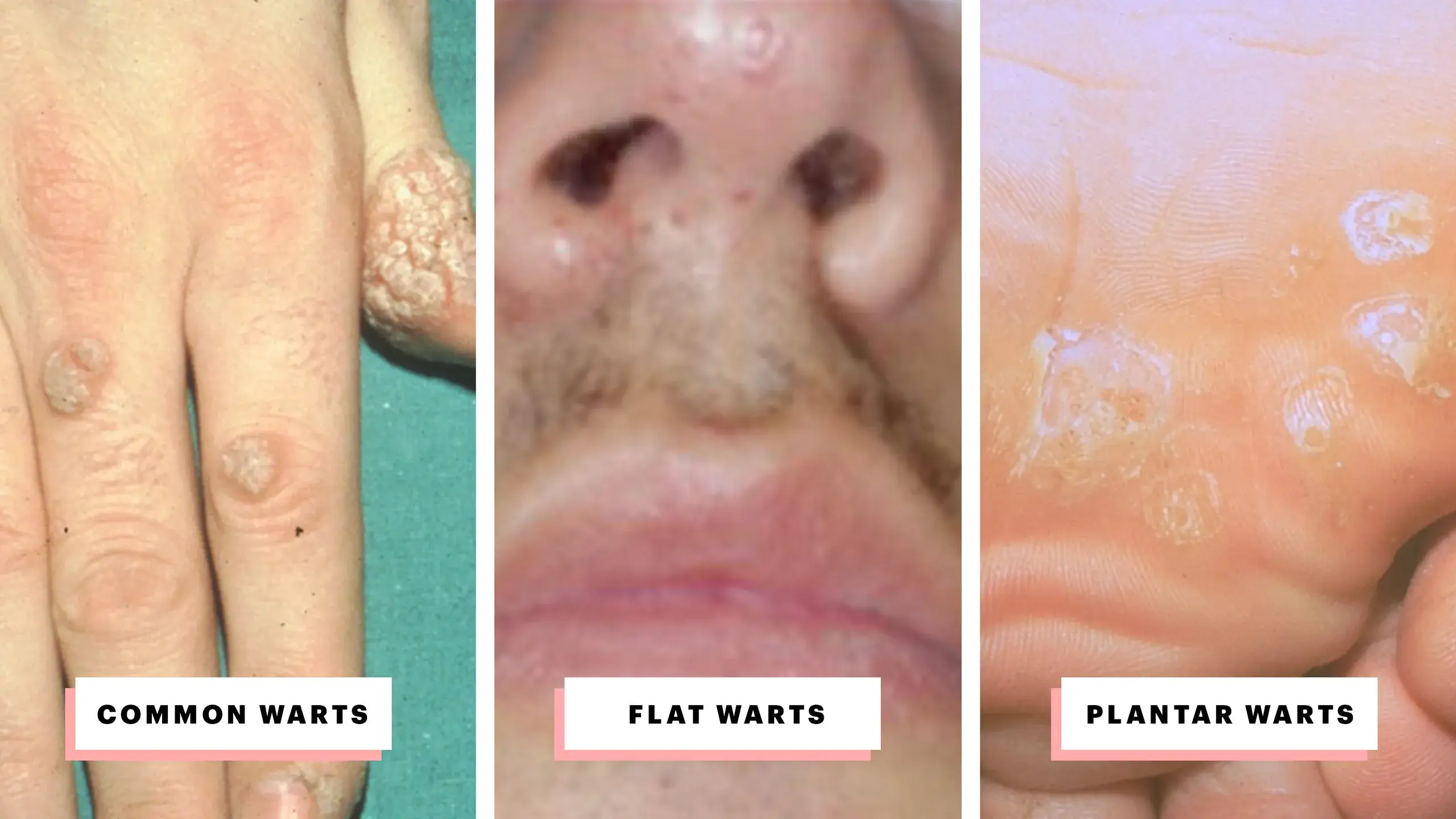
Special Considerations for Children and Older Adults
Warts can affect people at any age, but the approach to treatment may differ depending on the person's age and general health.
Warts in Children
Children frequently develop common warts on their fingers, hands, knees, and feet. Small lesions may appear after minor scratches or skin irritation. In many cases, they are painless and eventually disappear without treatment.
Parents should avoid trying to cut, burn, or aggressively scrape a child's wart. These methods can cause pain, bleeding, infection, and fear of future treatment.
If a wart is uncomfortable, spreading, or affecting the child's ability to walk or use their hands, a healthcare professional can recommend an age-appropriate option. Some treatments are not suitable for very young children or for sensitive areas.
It is also helpful to teach children not to pick at warts, bite affected nails, or share personal items such as towels and nail clippers. These habits can reduce the chance of spreading the virus.
Warts in Older Adults
A new rough or raised growth in an older adult should not automatically be considered a wart. Other skin conditions become more common with age, and some may resemble ordinary viral growths.
A lesion that is new, changing, bleeding, painful, or slow to heal deserves examination. This is especially important for growths on areas that receive frequent sunlight.
Older adults with diabetes, circulation problems, or reduced sensation in their feet should be particularly careful. A small wound caused by aggressive wart treatment can become difficult to heal.
Common Myths About Warts — and the Facts Behind Them
Misunderstandings about warts can lead people to use unsafe treatments or become unnecessarily frightened. These are some of the most common myths worth correcting.
Myth: Every rough bump on the skin is a wart.
Fact: Many conditions can create rough or raised skin. Corns, calluses, skin tags, molluscum contagiosum, and some skin cancers can resemble warts. A clinician should assess an unusual or changing lesion.
Myth: The black dots inside a wart are seeds.
Fact: These tiny dark points are usually small blood vessels within the thickened tissue. They are not seeds, insect eggs, or parasites.
Myth: Only people with poor hygiene get warts.
Fact: Warts are viral skin infections. They can affect people who maintain good hygiene. Small skin injuries, direct contact, exposure to contaminated surfaces, and individual immune responses all play a role.
Myth: A common wart on the hand means someone has a sexually transmitted infection.
Fact: Ordinary skin warts and genital warts are usually associated with different HPV types. A typical wart on a finger does not automatically indicate genital HPV.
Myth: Removing the visible wart always removes the virus.
Fact: Treatment can remove the growth, but HPV may remain in nearby skin. This is one reason warts sometimes return after apparently successful treatment.
Myth: Burning a wart at home makes it disappear faster.
Fact: Burning, cutting, or applying harsh chemicals can injure healthy tissue. These methods may cause infection, scarring, and delayed healing.
Myth: Every wart needs immediate removal.
Fact: Many ordinary warts disappear naturally. Treatment is often considered when a wart is painful, persistent, spreading, or causing concern. The decision should take its location and the person's health into account.
A Practical Guide to Choosing the Next Step
When you notice a possible wart, the safest response is not necessarily to rush into treatment. Start by considering where it is, whether it is changing, and whether you are certain that it is a wart.
For a small, typical-looking growth on a finger or hand that is not painful, a pharmacist can help you understand whether an over-the-counter treatment is appropriate. Salicylic acid is commonly used for ordinary warts, but it requires consistent application and careful attention to the product instructions.
For a rough, painful area on the sole of the foot, do not assume that it is a plantar wart. A corn, callus, foreign body, or another skin condition may produce similar discomfort. If walking is affected, a healthcare professional can assess the cause and recommend appropriate care.
For a growth near the face, eyes, mouth, nails, or genitals, professional advice is generally the safer option. These areas are more delicate, and treatment can cause unnecessary damage if the lesion has not been correctly identified.
If a growth bleeds, changes rapidly, develops an open sore, or does not heal, do not continue experimenting with home remedies. Arrange an examination.
A useful rule is to treat the skin gently until you know what you are dealing with. Avoid picking, cutting, scraping, or applying untested substances. Keep the area clean, reduce friction, and protect it from repeated irritation.
The Most Important Message: Recognize the Growth, but Do Not Diagnose From a Picture
The six wart types described in this article can look quite different. Common warts often appear as rough bumps on the hands and fingers. Plantar warts develop on the soles and may cause pain when walking. Flat warts are smaller and smoother, while filiform warts form narrow projections, often on the face. Periungual and subungual warts affect the skin around or beneath the nails. Genital warts are associated with particular HPV types and require a separate medical approach.
The photographs in the original social media post are useful as visual examples of wart-like growths, but they cannot establish a diagnosis. The dramatic caption suggesting that a person is definitely infected simply because they have a particular-looking bump goes further than the evidence allows.
If a growth is genuinely a wart, it is generally linked to an HPV type that infects skin. That does not mean every wart is dangerous, and it does not mean that ordinary hand or foot warts are the same as genital HPV infections. Most common skin warts are benign, and many eventually clear without treatment.
What matters most is recognizing when a growth is typical and when it needs professional attention. A small, painless wart may be manageable with appropriate care or observation. A changing, bleeding, painful, facial, genital, or uncertain lesion deserves a proper examination.
Do not let an alarming online caption make you panic, but do not ignore a skin change that concerns you either. Understanding the different types of warts, knowing which treatments are appropriate, and avoiding unsafe home-removal methods can help protect your skin and prevent unnecessary complications.