On the evening of April 15, 2014, hundreds of passengers gathered at the port of Incheon, South Korea, preparing to board a ferry bound for Jeju Island. Among them were 325 students from Danwon High School in Ansan, accompanied by their teachers. They were looking forward to a school trip that had been planned as a celebration of their final years together - a chance to escape their demanding classrooms, enjoy the sea, and create memories before graduation.
For the teenagers, the journey represented something more than transportation. It was an opportunity to spend time with friends outside the familiar routines of school. Some had carefully packed their favorite clothes, while others carried cameras, snacks, and small gifts. They imagined taking photographs against Jeju’s beautiful coastal scenery, exploring the island, and laughing about the trip long after they returned home.
Jeju was famous for its volcanic landscapes, beaches, green fields, and peaceful atmosphere. To the students, it must have seemed like the perfect destination after years of examinations and academic pressure. Parents watched their children board the ferry, perhaps reminding them to eat properly, stay together, and call home when they arrived. Nobody standing on the dock could have imagined how painful those ordinary goodbyes would become.
The vessel was the MV Sewol, a passenger ferry that had been operating between Incheon and Jeju. It was a large ship with several decks, passenger cabins, dining facilities, and vehicle storage areas. On that voyage, it carried 476 people, including the students, teachers, other passengers, and crew members. It also transported a substantial quantity of commercial cargo.
The ferry departed Incheon at approximately 9 p.m. The evening was quiet, and the ship began its overnight journey through the waters surrounding the Korean Peninsula. Inside, passengers settled into their rooms. Some students talked excitedly, while others watched videos, shared food, or prepared to sleep. For many, it was simply the beginning of an enjoyable school adventure.
But beneath the ordinary appearance of the vessel were serious safety concerns that passengers could not see.
The Sewol had originally been built in Japan before being purchased and modified for service in South Korea. Its structure had been altered to increase passenger capacity, including modifications that added weight higher on the vessel. Such changes affected its center of gravity and reduced its margin of stability.
The ship also carried significant amounts of cargo. Investigations later revealed that the ferry had frequently operated with cargo loads exceeding permitted limits. At the same time, the amount of ballast water—water stored in tanks to help stabilize a vessel—had been reduced. These factors made the ship more vulnerable to dangerous movements.
Cargo security was another critical issue. Heavy vehicles and other freight must be properly secured because even a relatively small shift in weight can affect a vessel's balance. In the case of the Sewol, the cargo was not adequately secured for the conditions and the ship's already weakened stability.
These problems did not appear suddenly on the morning of the disaster. They were connected to decisions, practices, and failures that had developed over time. Yet the passengers had no reason to suspect that the ship carrying them was operating under such dangerous conditions.
As midnight passed, the ferry continued south. The students were asleep or resting, believing that experienced professionals were responsible for their safety. Their families were at home, expecting to hear that the trip had gone smoothly.
The ship was approaching one of the most consequential mornings in modern South Korean history.
And although the passengers had boarded expecting a peaceful journey, the conditions that would turn the Sewol into a disaster were already present beneath their feet.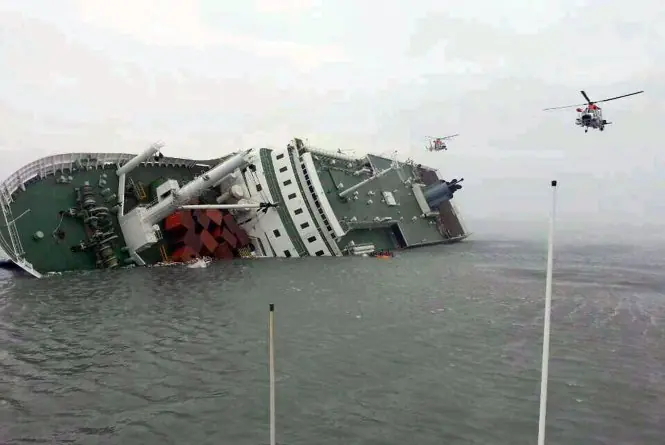
Chapter 2: The Sudden Turn That Changed Everything
Morning arrived on April 16, 2014. The Sewol was traveling through waters near the southwestern coast of South Korea, approaching the Maenggol Channel, an area known for challenging currents and demanding navigation conditions.
The ferry was not being commanded by its captain at the time of the critical maneuver. Captain Lee Joon-seok was not at the helm. The vessel was under the responsibility of a third mate, with a helmsman operating the steering controls.
At approximately 8:48 a.m., the ship made a sharp turn. The exact sequence of navigational decisions became an important subject of later investigations, but the consequences were devastating. The ferry began to lean sharply to one side.