The captain and several senior crew members left the vessel and were rescued. Rather than ensuring that passengers were evacuated, they abandoned the ship while many people remained trapped inside. The captain's actions would later become central to the criminal proceedings and public anger surrounding the disaster.
The contrast was devastating. The people with the greatest responsibility for the passengers' safety were among those who escaped, while hundreds of others were still waiting for help.
Not everyone onboard acted selfishly. Some crew members and members of the school staff tried to help passengers. A number of teachers and other individuals worked to guide students toward safer areas, and some gave their life jackets to young people who needed them.
One of the most remembered figures was Park Ji-young, a young cafeteria worker aboard the ferry. She helped passengers and gave her life jacket to a student. Her actions became a symbol of courage and compassion amid the failures surrounding the evacuation.
Other students also demonstrated extraordinary concern for their classmates. Some helped friends put on life jackets, supported one another through the tilted corridors, and tried to find ways toward the upper decks.
But the ship's position made escape increasingly difficult. The angle became so steep that ordinary stairways and passageways were transformed into obstacles. Water entered the lower sections, and the interior grew darker and more dangerous.
Outside, rescue boats approached. Helicopters were visible above the scene. From a distance, it might have appeared that help was arriving. But reaching a vessel and rescuing the people trapped inside are two very different things.
The initial rescue response focused heavily on people who could reach the outside or were already visible near the surface. Many passengers remained inside the ferry, beyond the immediate reach of rescuers.
As the Sewol rolled farther onto its side, the possibility of reaching those passengers became smaller.
For families watching reports from home, the information was confusing. News broadcasts provided changing accounts of the number of people rescued. At one point, an incorrect report suggested that all students had been rescued, briefly giving families hope before the information was corrected.
That false reassurance made the waiting even more unbearable.
The ship was now approaching the point at which survival would become almost impossible for those still trapped inside. Yet many families continued to believe that their children might still be found alive.
And as the ferry disappeared farther beneath the water, the question facing the entire country became increasingly painful: why had so many passengers been left waiting when there was still time to act?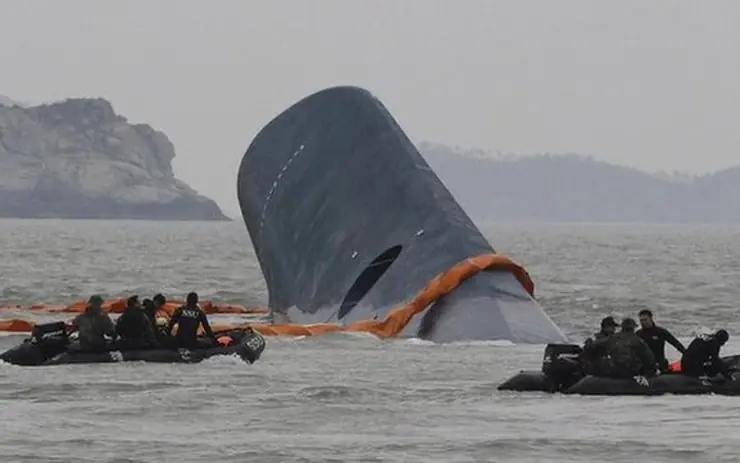
Chapter 4: The Longest Wait in South Korea
By the morning of April 16, images of the Sewol had spread across South Korea. The ferry was lying heavily on its side, surrounded by rescue vessels and helicopters. The scale of the disaster was becoming impossible to ignore.
Families began traveling toward Jindo, near the location of the sinking, desperate for information about their loved ones. Many parents had received messages from their children but had no idea whether those messages had been sent shortly before the ship sank or whether their children were still alive.
At gathering points near the coast, families waited for updates. Some held photographs of their children. Others repeatedly checked their phones, hoping to receive a call or message. The atmosphere was filled with fear, confusion, and disbelief.
The information released by authorities changed repeatedly. Reports about rescued passengers were inconsistent, and the early announcement that all students had been saved was later shown to be wrong. For parents who had briefly celebrated, the correction was devastating.
The rescue operation faced difficult physical conditions. The water was cold, visibility was poor, and currents made diving dangerous. Reaching the interior of an overturned ferry required specialized equipment and considerable expertise.
However, the difficulties of the environment did not erase the serious shortcomings in the response. Questions soon emerged about coordination, leadership, communication, and the use of available rescue resources.
The Coast Guard faced intense criticism over its handling of the emergency. There were delays and failures in coordinating the rescue, and the authorities struggled to provide families with reliable information. The absence of a clear and effective command structure became one of the most controversial aspects of the disaster.
The families were not simply waiting for a rescue operation to finish. They were waiting for the truth.