A sudden loss of sensation in one foot, especially when it becomes pale or cold, may indicate an acute vascular emergency.
It should never be treated as an ordinary temporary episode of pins and needles.
Pain in the Feet During the Night
Advanced PAD can sometimes cause pain even when a person is resting.
This is different from the discomfort that appears during walking and improves after stopping.
Some individuals experience burning or aching in their feet while lying in bed.
The pain may become more noticeable when the legs are elevated.
In certain cases, allowing the feet to hang down over the edge of the bed may temporarily reduce discomfort.
This pattern can indicate severely reduced blood flow.
It deserves prompt assessment by a healthcare professional, particularly if accompanied by wounds or color changes.
The Society for Vascular Surgery identifies pain at rest and non-healing foot sores as reasons for urgent vascular evaluation.
Who Is More Likely to Develop Circulation Problems?
Not everyone has the same risk of developing PAD or other cardiovascular conditions.
Age, genetics, lifestyle, and existing medical conditions can all influence the likelihood of artery disease.
Understanding these risk factors is important because many people with PAD do not recognize their symptoms immediately.
Smoking
Smoking is one of the major risk factors for atherosclerosis and PAD.
Chemicals in tobacco smoke damage blood vessels and contribute to processes that promote plaque buildup.
Smoking can also affect the way blood vessels function and increase the likelihood of cardiovascular complications.
People who smoke may have a higher risk of developing circulation problems than those who do not.
Quitting smoking is one of the most important steps for improving long-term cardiovascular health.
Even people who have smoked for many years can benefit from stopping.
Diabetes
Diabetes can affect both blood vessels and nerves.
High blood glucose levels over time can damage the structures responsible for maintaining healthy circulation.
This can increase the risk of PAD.
Diabetes can also cause peripheral neuropathy, which reduces sensation in the feet.
A person may develop a blister, cut, or small wound without noticing it.
If poor circulation is also present, the wound may heal slowly and become infected.
This combination makes routine foot care especially important.
People with diabetes should have their feet examined regularly and should report new wounds, color changes, or unusual swelling to their healthcare team.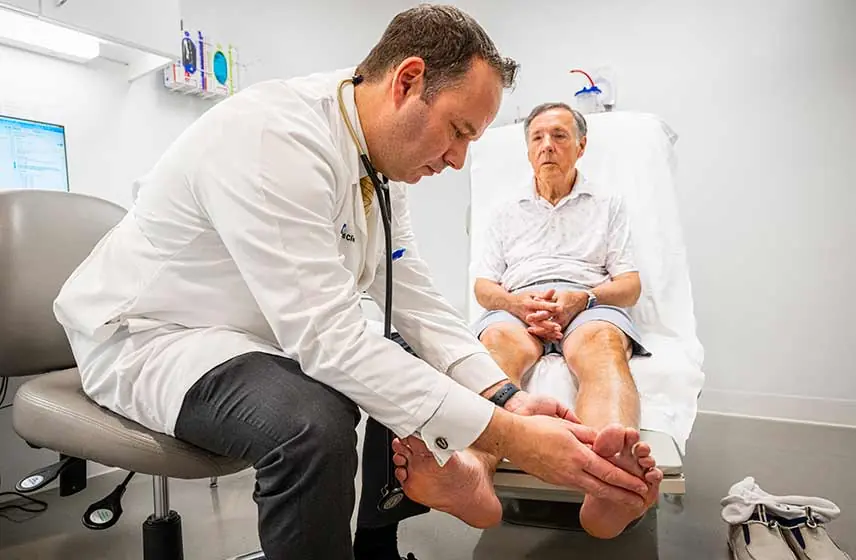
High Blood Pressure
High blood pressure places additional strain on the cardiovascular system.
Over time, uncontrolled hypertension can damage artery walls and contribute to cardiovascular disease.
It is also associated with an increased risk of heart attack, stroke, and kidney problems.
The difficulty is that high blood pressure often produces no obvious symptoms.
A person can feel completely normal while their blood pressure remains elevated.
Regular measurement is therefore important.
High Cholesterol
Cholesterol is necessary for normal bodily functions, but unhealthy cholesterol levels can contribute to plaque accumulation in arteries.
Low-density lipoprotein cholesterol, commonly known as LDL, is particularly important in the development of atherosclerosis.
When LDL levels remain elevated, fatty deposits may accumulate inside blood vessel walls.
Over time, these deposits can restrict blood flow.
A healthcare professional can assess cholesterol levels through blood testing and determine whether lifestyle changes or medication are appropriate.
Age and Family History
The risk of PAD generally increases with age.
People with a family history of cardiovascular disease may also have a greater likelihood of developing related conditions.
This does not mean that everyone with an affected relative will develop heart disease.
However, family history is useful information when assessing overall risk.
A person with several risk factors may benefit from earlier cardiovascular evaluation.
The CDC identifies smoking, diabetes, high blood pressure, high cholesterol, and older age among important PAD risk factors.
How Doctors Determine Whether Your Feet Are Showing Signs of Poor Circulation
If someone notices persistent changes in their feet, a medical examination can help determine whether the problem involves arteries, veins, nerves, or another part of the body.
The appearance of the feet alone is not enough to establish a diagnosis.
Doctors usually consider the person's symptoms, medical history, physical examination, and, when necessary, additional tests.
1. Checking the Pulses in Your Feet
One of the simplest parts of a vascular examination is checking the pulses in the feet.
Doctors commonly assess two important arteries:
-
The dorsalis pedis artery, located on the upper surface of the foot.
-
The posterior tibial artery, located near the inside of the ankle.
These pulses provide information about blood flow toward the lower extremities.
A weak or absent pulse may suggest reduced circulation, although anatomical differences and other factors can influence the examination.
The doctor may also compare the temperature and appearance of both feet.
Differences between the two sides can provide useful clues.
2. The Ankle-Brachial Index Test
One commonly used test for PAD is the ankle-brachial index, also known as ABI.
It compares blood pressure measured at the ankle with blood pressure measured in the arm.
The procedure is generally straightforward.
A healthcare professional places blood pressure cuffs around the arm and ankle and uses a Doppler device to measure blood flow.
The resulting measurements help determine whether blood pressure in the lower extremities is unusually low.
A reduced ABI may suggest that arteries supplying the legs are narrowed.
The test is particularly useful because PAD can exist even when symptoms are relatively mild.
The NHLBI identifies ABI testing as an important method used to evaluate suspected peripheral artery disease.
3. Doppler Ultrasound
A Doppler ultrasound uses sound waves to examine blood flow through blood vessels.
It can help doctors identify areas where circulation is reduced or where an artery may be narrowed or blocked.
Unlike some imaging procedures, Doppler ultrasound does not require surgical incisions.
The examination can provide information about the direction and speed of blood flow.
Depending on the findings, additional imaging may be recommended.
4. Blood Tests
Blood tests can help identify conditions that contribute to cardiovascular disease.
Doctors may check:
-
Cholesterol levels.
-
Blood glucose.
-
Long-term blood sugar levels through HbA1c.
-
Kidney function.
-
Other relevant health markers.
These tests do not independently diagnose PAD or predict an upcoming heart attack.
However, they help identify risk factors that may need treatment.
5. Heart Examinations
If a patient has symptoms suggesting cardiovascular disease, the doctor may also assess the heart.
Depending on the situation, this could involve an electrocardiogram, echocardiogram, or other cardiovascular investigations.
An electrocardiogram records the electrical activity of the heart.
An echocardiogram uses ultrasound to examine the heart's structure and pumping function.
These examinations can help identify certain cardiac problems that may explain symptoms such as breathlessness, fatigue, or fluid retention.