Witnesses can also be affected. Seeing a person attacked, hearing gunfire, or watching emergency workers attempt to help the injured can leave a lasting emotional impression. Some people may experience anxiety, sleep disruption, or recurring memories after witnessing a violent event.
The wider community can feel the consequences too. Businesses may close temporarily, pedestrians may avoid the area, and visitors may become more cautious in a place they had previously considered familiar.
In a city as large and busy as New York, residents cannot eliminate every risk. But incidents like this can lead people to ask how emergency services respond, how bystanders can safely seek help, and what steps authorities take to prevent further harm.
The next part of the story concerns the confrontation itself: what officers tried before firing, and why the official timeline has become so important.
The Police Confrontation: Why Officers Used Tasers Before Firearms
The encounter between Cisneros and police officers became one of the most closely examined parts of the incident.
According to the Attorney General's preliminary account, officers repeatedly ordered her to put down the knives. When she did not comply, three officers deployed Tasers. The devices apparently failed to stop her. The official account says she then allegedly moved toward officers while continuing to hold the weapons, after which two officers fired their service weapons.
This sequence is significant because it shows that the shooting did not occur at the exact moment officers first encountered her. There was an interval during which officers attempted to get her to surrender the knives.
Later reporting provided additional details about the confrontation. NBC New York reported in September that the NYPD had released body-camera footage showing officers speaking with Cisneros for approximately four minutes. An officer could be heard trying to persuade her to put down the weapons. The report said she refused and challenged the officers before moving toward them.
Body-camera recordings can be important in cases like this because they preserve evidence that may otherwise depend on different people's recollections. They can help investigators establish the order of events, the distance between individuals, the words spoken, the movements made, and the timing of decisions.
But a recording does not automatically answer every question. The angle of a camera may not show everything an officer could see. Audio may be difficult to interpret amid shouting, traffic, sirens, and the confusion of an emergency. A video may capture only part of the scene, and investigators may need to compare several recordings with physical evidence and witness statements.
The use of a Taser also deserves careful explanation. A conducted-energy device is generally intended to temporarily disrupt a person's ability to control their muscles. However, its effectiveness is not guaranteed. Clothing, distance, movement, the placement of probes, and other circumstances can affect whether it works as intended.
A failed Taser deployment does not, by itself, prove that a firearm was the only possible response. Nor does it prove that officers acted improperly. Investigators must examine the full circumstances, including whether officers reasonably perceived an immediate threat of serious injury or death and whether there was time or opportunity to use another response.
In this case, the official preliminary description says Cisneros allegedly advanced toward officers with knives after the Tasers had no apparent effect. That detail is central to the authorities' account of why officers fired.
It is equally important to remember that the Attorney General's initial announcement described the facts as preliminary and subject to change. An investigation is necessary precisely because an official first account is not the same thing as a final independent finding.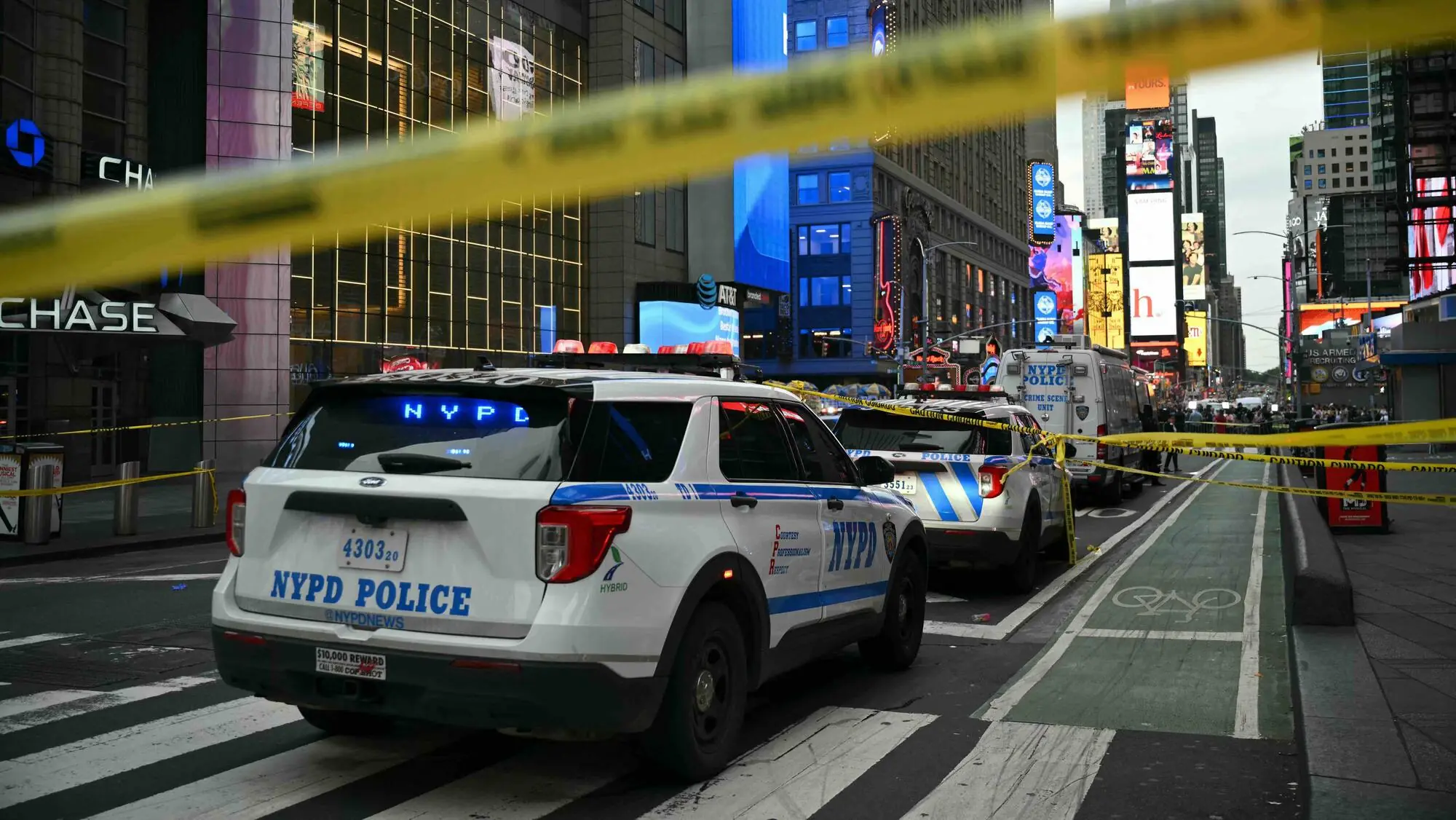
What Body-Camera Footage Can—and Cannot—Reveal
The release of body-camera footage in a serious police incident often changes the public discussion.
Before video becomes available, people may hear only a short summary: a person was armed, officers gave commands, less-lethal force was attempted, and shots were fired. That summary can leave many questions unanswered.
Footage may provide a clearer picture of the moments leading up to the shooting. It may show whether officers were close to the person, whether they had cover, whether other people were nearby, and how quickly the situation changed.
In the Times Square case, NBC New York reported that the released footage captured officers attempting to communicate with Cisneros before the shooting. The report described a tense exchange and said officers had tried to persuade her to drop the knives.
That footage matters for several reasons.
First, it can help establish whether officers gave clear instructions. Commands to drop a weapon may be repeated because a person does not hear them, does not understand them, or refuses to follow them. The exact words and timing can help investigators assess the interaction.
Second, video may help clarify the movements that preceded the use of force. Whether a person was standing still, walking away, turning, or moving toward officers can be important. Investigators may compare the video with the physical layout of the street and the positions of the officers.
Third, recordings may help identify the moment at which officers believed that the danger had become immediate. In a fast-moving encounter, the difference between a perceived threat and an actual movement may be measured in seconds.
However, viewers should be cautious about reaching firm conclusions after watching a short clip online. A video can be disturbing and emotionally powerful, but it is not necessarily a complete record of everything that happened before or after the recorded segment.
A responsible review considers the full footage, witness accounts, dispatch communications, physical evidence, medical information where relevant, and applicable legal standards.
The public may want an immediate answer, especially when a person has died. But a credible investigation must be able to withstand scrutiny rather than simply confirm the first interpretation that circulates online.
Why the New York Attorney General Opened an Investigation
The police shooting did not end the matter when Cisneros was taken to hospital.