Finding a snake inside your home can be an extremely unsettling experience. One moment everything seems normal, and the next you notice something moving across the floor, behind a piece of furniture, or near a doorway. Your first instinct may be to grab a broom, throw something at it, or search for a household substance that will supposedly make it leave immediately.
But the safest response is usually much simpler: keep your distance, give the snake an escape route when possible, and avoid actions that could make it feel trapped or threatened.
Snakes generally do not enter houses because they are looking for people. They may wander indoors while searching for food, water, shelter, or a place with a more suitable temperature. In many cases, the snake is simply trying to find somewhere quiet and protected.
Knowing what to do and what not to do - can make the situation much safer for you, your family, your pets, and the snake.
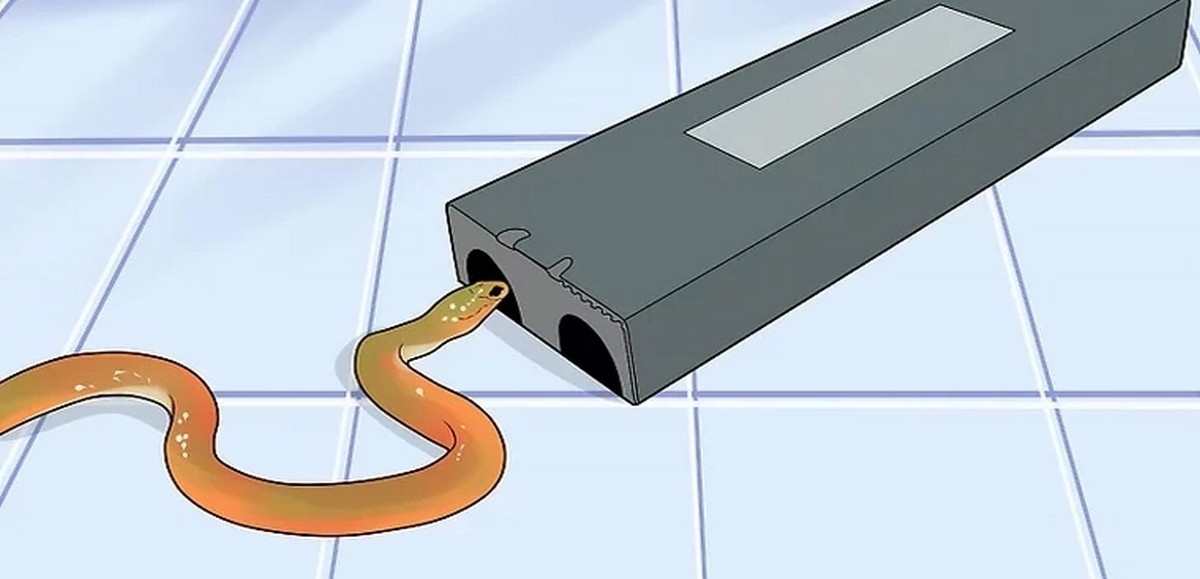
Why Would a Snake Enter a House?
Before dealing with the snake, it helps to understand why it may have come inside in the first place.
A house can unintentionally provide several things snakes need.
1. Food
One of the biggest reasons snakes appear around homes is the availability of prey.
Depending on the species, snakes may feed on:
-
Mice and rats
-
Small birds
-
Frogs
-
Lizards
-
Insects
-
Other small animals
If rodents are frequently seen around your home, a snake may follow the food source.
This means that seeing a snake can sometimes be a sign that there is another problem nearby—such as a rodent population or areas where small animals can easily hide.
2. Shelter
Snakes prefer quiet, protected spaces.
A cluttered garage, storage room, basement, shed, woodpile, or area underneath furniture can provide excellent hiding places.
Outdoor clutter can also create shelter around your home, including piles of:
-
Firewood
-
Leaves
-
Construction materials
-
Boxes
-
Garden equipment
-
Debris
Reducing these hiding places can make your property less attractive to snakes.
3. Temperature
Snakes are ectothermic animals, meaning they rely heavily on their surroundings to regulate body temperature.
During very hot weather, a cooler building may provide temporary shelter.
During colder periods, protected areas can offer a more suitable environment.
That is one reason snakes may occasionally turn up in garages, sheds, porches, or other sheltered areas.
What Should You Do If You See a Snake Indoors?
The first rule is simple:
Do not panic—and do not approach it.
A frightened person may instinctively move toward the snake to chase it away. That can be dangerous because the snake may interpret a person approaching it as a threat.
Instead, try to create distance.
Move children and pets away from the area and keep other people from entering the room.
If you can safely do so, close doors that lead to the rest of the house so the snake has fewer places to disappear.
The goal is to contain the situation rather than chase the animal around your home.
Do Not Try to Grab the Snake
Even if the snake appears small, harmless, or sluggish, you should not pick it up unless you are specifically trained and equipped to handle that species.
A snake's appearance alone is not always enough to determine whether it is dangerous.
Trying to catch it with your hands can result in a bite, and attempting to corner it can make it defensive.
Even a nonvenomous snake can bite if it feels threatened.
Give the Snake an Exit—If It Is Safe to Do So
If the snake is in a room with a door leading directly outdoors, and you can do this without approaching the animal, you may be able to provide a clear route outside.
For example, if a snake is near the far side of a room and there is an exterior door nearby that can be opened from a safe position, opening that door may give it an opportunity to leave on its own.
Then give it space.
Do not stand directly in front of the exit.
Do not try to push the snake toward the doorway.
Do not chase it with a broom.
The less threatened the animal feels, the less reason it has to defend itself.
However, if opening a door requires you to move close to the snake, do not attempt it.
Your safety comes first.
What If the Snake Disappears?
This can be one of the most stressful parts of the situation.
You may see the snake one moment and then lose sight of it behind a cabinet, appliance, box, or piece of furniture.
If that happens, don't start moving everything around immediately.
A snake that feels threatened may move farther into the house or into a difficult-to-reach space.
Instead, keep the area as controlled as possible.
If practical, close the room and prevent children and pets from entering.
If the snake is potentially venomous, cannot be identified, or has disappeared into an inaccessible area, contacting a qualified wildlife or animal-control professional is the safest option.
Should You Sprinkle Something Around to Make the Snake Leave?
There are many claims online that certain powders, household chemicals, strong-smelling substances, or other materials will make snakes immediately flee.
These claims are often much more reliable as internet folklore than as a guaranteed solution.
Products such as mothballs, bleach, ammonia, gasoline, or other chemicals should not be scattered or poured around your home in an attempt to drive out a snake.
They can create hazards for people, children, pets, and wildlife, and they may not solve the underlying problem.
The same caution applies to homemade mixtures promoted as instant snake repellents.
If you want to reduce the likelihood of snakes entering your home, physical exclusion and habitat management are generally more sensible strategies than relying on strong smells.

Never Use Fire or Smoke to Drive Out a Snake
Another dangerous response is attempting to smoke the snake out of a hiding place.
This can create a serious fire or respiratory hazard.
Using flames, burning materials, gasoline, or other combustible substances indoors is particularly dangerous.
The risk to your house can become far greater than the original snake problem.
If the animal has entered a wall, ceiling, ventilation system, or other inaccessible location, professional assistance is a much safer solution.
What About a Snake in the Garage?
Garages are particularly attractive to snakes because they often contain quiet hiding places and may provide access to rodents.
If you discover a snake in your garage, first move people and pets away.
Avoid blocking the animal's path with your body.
If there is a large garage door that can be opened from a safe distance, an open route to the outside may allow the snake to leave.
Afterward, inspect the garage for possible entry points and food sources.
Look for gaps around:
-
Garage doors
-
Pipes
-
Vents
-
Wall openings
-
Foundation areas
-
Utility lines
Also consider whether rodents are present.
A snake may be attracted to your property because something it eats is already living there.