Wash your hands before providing care. Gently rinse the area with clean water and mild soap. Avoid pulling away the remaining skin covering unless a clinician advises otherwise.
The loose surface skin can still provide some protection while the underlying tissue heals. Cover the area with a clean, non-stick dressing.
Change the dressing as needed, especially if it becomes wet or dirty. Keep the foot protected from the footwear or activity that caused the original problem.
If the area becomes increasingly red, hot, swollen, painful, or starts producing pus, seek medical advice. Fever or a child who appears unwell makes assessment more urgent.
Do not apply random household substances, powders, or strong antiseptics to the open area. A clean dressing and appropriate medical advice are safer than experimenting with products that may irritate damaged skin.
When Should Parents Seek Immediate Medical Care?
Most small friction blisters are not emergencies. However, certain symptoms should never be ignored.
The most important warning signs relate to infection, severe pain, an injury that may involve deeper structures, or a child who appears seriously unwell.
1. Fever Along With a Worsening Foot Lesion
A fever combined with increasing redness, swelling, warmth, or discharge can indicate infection.
The child may also become unusually tired, irritable, or less interested in eating and drinking.
Do not assume that fever is unrelated to the skin problem. Contact a healthcare professional promptly for advice.
2. Redness That Spreads
A small area of redness immediately around an irritated blister may occur, but redness that continues spreading is more concerning.
Red streaks extending away from the lesion can be a warning sign that infection is spreading through the surrounding tissue.
This requires prompt medical assessment, particularly if the child also has pain, swelling, or fever.
3. Pus or Cloudy Fluid
A simple blood blister contains blood beneath the skin. It should not be confused with a lesion that develops thick yellow or green discharge.
Pus, increasing warmth, and worsening tenderness may indicate a bacterial infection.
Do not squeeze the lesion to drain it. A clinician can determine whether treatment such as antibiotics or drainage is needed.
4. Severe or Increasing Pain
A small blister may be tender, but severe pain or pain that becomes progressively worse deserves attention.
If the child cries whenever the foot touches the floor, refuses to walk, or has pain that seems excessive for the visible spot, seek medical care.
A foreign object, deeper injury, abscess, or another problem may be responsible.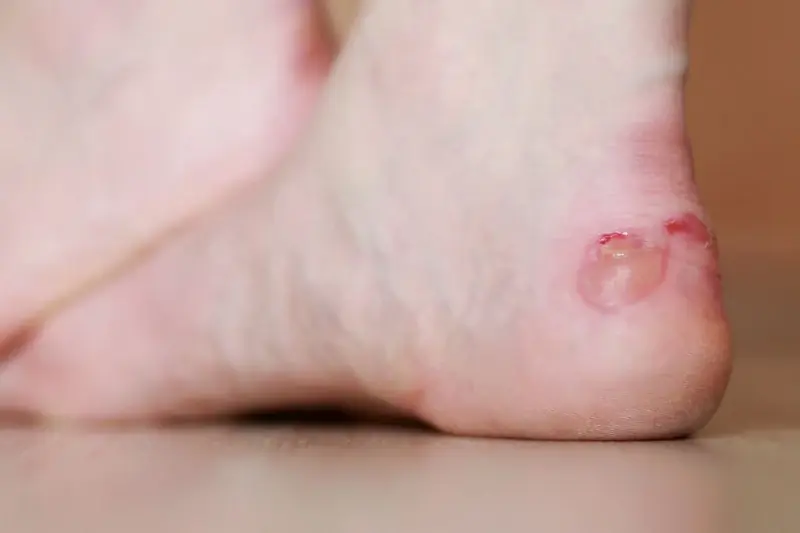
5. The Child Cannot Bear Weight
A child who cannot stand or walk because of foot pain should be assessed promptly.
Do not force the child to walk to see whether the pain improves. Keep pressure off the foot and seek medical advice.
If there has been an injury, a fracture or deeper tissue problem may need to be ruled out.
6. A Deep Puncture Wound or Embedded Object
A visible needle, deep splinter, toothpick, glass fragment, or other embedded object should not be pulled out blindly.
Objects in the foot can be particularly painful when weight is placed on them. Some can also introduce bacteria deep into the tissue.
Seek urgent medical care if the object is deeply embedded, the wound is severe, or you cannot remove it safely.
7. The Child Appears Seriously Unwell
If the child is difficult to wake, confused, unusually weak, breathing abnormally, or showing other signs of serious illness, seek emergency help.
A skin lesion may be only one part of a wider medical problem. The child's overall condition matters more than the appearance of the blister.
8. A Sudden Allergic Reaction
If a suspected insect bite is followed by difficulty breathing, swelling of the tongue or throat, widespread hives, faintness, or collapse, treat it as an emergency.
Use prescribed emergency allergy medication if the child has been given it and follow the emergency plan. Call local emergency services immediately.
9. A Dark Spot With No Clear Cause That Changes
A dark lesion that grows, changes shape, bleeds, develops an open sore, or does not heal should be examined.
This is not a reason to assume the worst. It is a reason not to keep treating an uncertain lesion as a simple blood blister.
A clinician can decide whether the lesion needs closer examination or referral to a dermatologist.
What Will a Doctor Check During an Examination?
If you take your child to a doctor, the examination will usually begin with questions about when the spot appeared, how painful it is, and whether anything happened before it developed.
You may be asked:
-
When did you first notice the spot?
-
Did your child wear new shoes or take part in unusual physical activity?
-
Has your child been walking barefoot?
-
Was there a fall, pinch, puncture, or other injury?
-
Does the child feel pain when standing, walking, or touching the area?
-
Has the spot changed in size or color?
-
Has your child had a fever or other symptoms?
-
Have similar spots appeared elsewhere?
These questions help the clinician narrow down possible causes.
Examining the Skin
The doctor will look at the lesion's size, color, shape, surface, and position. They may gently examine the surrounding skin to check for warmth, swelling, tenderness, or signs of infection.
If a foreign object is suspected, the clinician may look for an entry point or a visible fragment. If a wart is suspected, the surface texture and natural skin lines may provide useful clues.
A photograph taken when the lesion first appeared can be helpful, particularly if its appearance has changed before the appointment.
Checking How the Foot Moves
The clinician may ask the child to move their toes or gently examine the foot to see where the pain occurs.
If there has been an injury or the child cannot bear weight, further assessment may be necessary to check for damage to deeper tissues or bones.
Not every blister requires imaging or laboratory testing. In many cases, the appearance and history are enough to guide the next step. However, a suspected foreign object, deeper injury, or unusual lesion may require additional investigation.
When a Specialist May Be Needed
A pediatrician may refer the child to a dermatologist if the lesion is unusual, persistent, changing, or difficult to identify.
A podiatrist or another foot-care specialist may be involved when the problem relates to repeated pressure, footwear, walking mechanics, or a persistent lesion on the sole.
If infection is suspected, the doctor will determine whether antibiotics or another treatment is necessary.
The important thing is that treatment should match the actual cause. A blood blister, plantar wart, splinter, and infected wound should not all be managed in the same way.
How to Prevent Painful Blisters on Children's Feet
Parents cannot prevent every blister, but many friction-related problems can be reduced through a few practical habits.
Choose Shoes That Fit Properly
Shoes that are too tight can press against the toes and the ball of the foot. Shoes that are too loose can allow the foot to slide, creating repeated friction.
Check the fit regularly because children's feet grow quickly. A pair that fitted comfortably a few months ago may now be too small.
When buying new shoes, allow enough room for the toes to move naturally. The heel should feel secure without rubbing, and the shoe should not squeeze the sides of the foot.
Introduce New Shoes Gradually
New footwear may be stiff or have seams that rub against the skin.
Rather than wearing new shoes for an entire day immediately, let the child wear them for short periods at first. Check the feet afterward for redness, tenderness, or early signs of friction.
If a particular area repeatedly becomes sore, the shoes may need adjustment or replacement.
Choose Comfortable Socks
Socks can help reduce friction between the foot and the shoe.
Choose socks that fit properly without bunching around the toes or slipping down into the heel. Damp socks may increase rubbing, so change them when they become wet from sweat or outdoor play.
For sports and longer activities, comfortable socks designed to manage moisture may help reduce irritation.
Check Shoes Before Your Child Puts Them On
A small object inside a shoe can cause unexpected pain.
Check for pebbles, pieces of gravel, rough seams, damaged insoles, or anything that may press against the foot.
This simple habit is particularly useful after outdoor play, visits to playgrounds, or activities where shoes may collect debris.
Keep Toenails Trimmed Comfortably
Toenails that are too long can press against neighboring toes or the inside of footwear. However, cutting nails too short can also irritate the surrounding skin.
Trim them carefully and avoid cutting into the corners. If a nail becomes painful, swollen, or appears infected, seek advice rather than attempting aggressive trimming.
Encourage Footwear in Appropriate Places
Walking barefoot at home may be comfortable and safe on clean, suitable surfaces. However, children should wear appropriate footwear in places where sharp objects, rough surfaces, or contaminated floors may be present.