But the post does not explain what the courtiers were responding to, where the alleged announcement happened, or which palace bells supposedly sounded.
Such dramatic language can create a feeling of authority without providing verifiable information. It gives readers a scene to imagine, but not facts they can check.
If an event truly caused a major royal response, a reliable account would normally provide details such as the date, location, people involved, and the nature of the announcement. The reader should not have to rely on theatrical descriptions to understand what occurred.
The phrase “the nation froze” is similarly broad. It implies a public reaction on a national scale, but the screenshot provides no evidence of that response. There are no identifiable public statements, reports, or records showing that the country reacted to a confirmed announcement about Louis.
This language may be effective as entertainment, but it should not be treated as factual reporting.
The difference between a dramatic narrative and a verified news story is not whether the writing is emotional. Real news can be deeply emotional. The difference is whether the claims can be supported.
In the supplied post, the most dramatic elements are also the least substantiated.
Chapter 11: Why Claims About a Child Need an Especially High Standard of Care
When a viral story concerns an adult public figure, inaccurate claims can still cause harm. When it concerns a child, the risks are even more serious.
Prince Louis did not choose to become a public figure. His position is the result of his birth into the royal family. He has appeared at public events because of his family's role, but that does not mean he should be the subject of unverified stories about private matters.
A headline suggesting that a mother has revealed a devastating truth about her child can cause readers to assume that the child has a serious problem. Even if the post never explains what that problem supposedly is, the suggestion alone can generate anxiety and speculation.
People may begin guessing about health, education, behavior, family relationships, or other sensitive subjects. Those guesses can spread through comments and reposts, eventually becoming detached from the original post.
This is unfair to the child and potentially distressing for the family.
Responsible publishers should avoid making unsupported claims about a minor's private life. They should not imply a diagnosis, disclose an alleged personal problem, or present a family crisis as fact without strong evidence and a clear reason to publish it.
The same standard should apply to photographs. Images of children should not be used to suggest an emotional or medical condition that the photograph cannot establish.
The viral post does not provide enough information to justify any claim about Louis's private circumstances. The responsible approach is to avoid speculation and focus on the absence of evidence.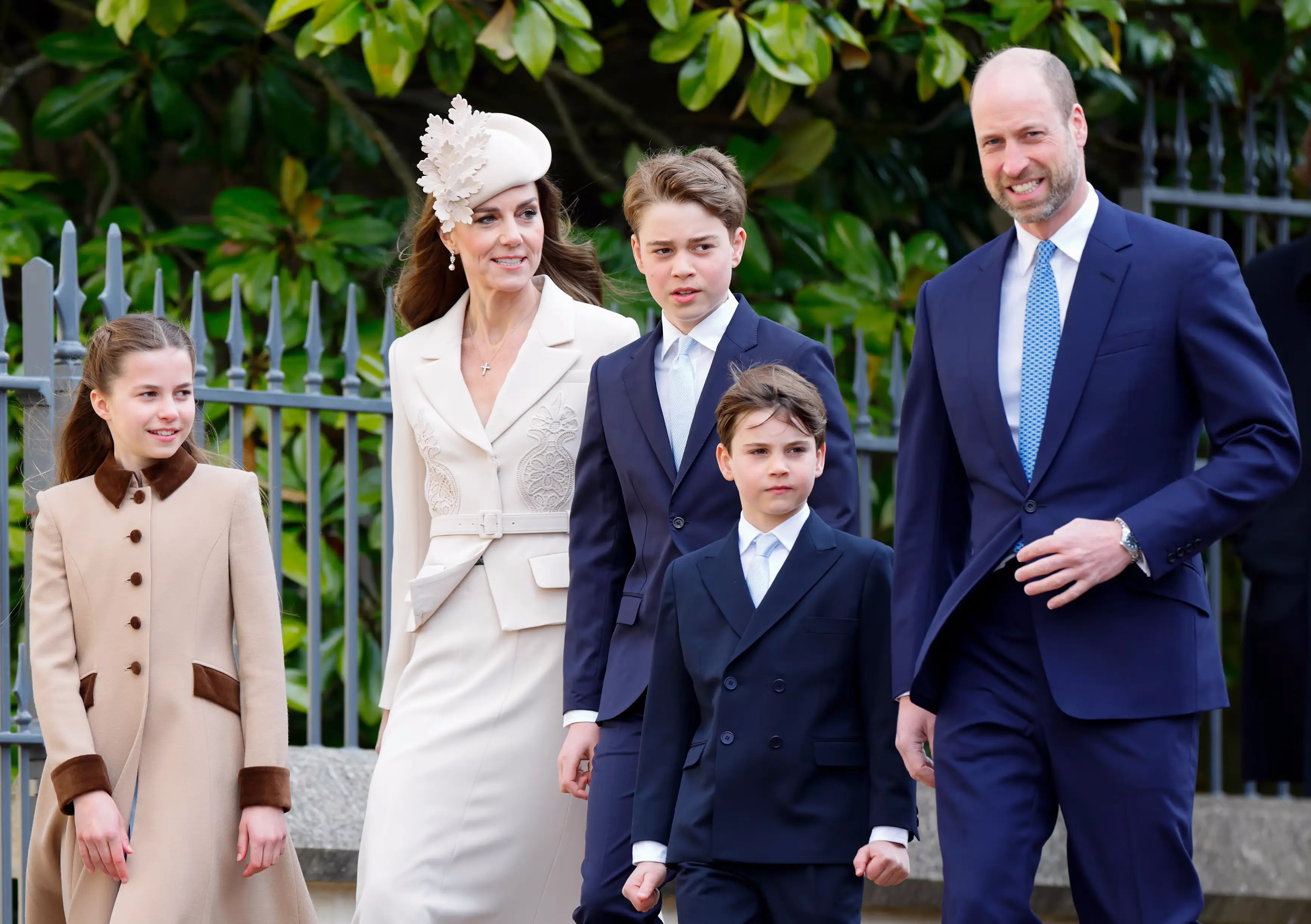
Chapter 12: How to Check Whether a Royal Announcement Is Genuine
Readers do not need specialist knowledge to identify many warning signs in viral royal stories. A few basic checks can help distinguish an actual announcement from an unsupported social-media narrative.
First, look for the original statement. If a post says Catherine made a major announcement, it should be possible to identify where she said it. An official account, a recorded speech, or a credible interview would provide a starting point.
Second, check the date. A claim about a ten-year secret should have a coherent timeline. In this case, Louis was born in April 2018 and is eight years old in November 2026. That makes the unexplained ten-year framing especially questionable.
Third, look for complete quotations. A sentence ending with “the truth is…” does not tell readers what was actually said. The full wording and context are essential.
Fourth, check the images separately. Search for the original photographs and identify when they were taken. A photograph can be authentic but unrelated to the claim.
Fifth, examine the source. Does the publisher identify its reporting, provide an attributable statement, or explain where the information came from? A dramatic headline without a verifiable source should be treated cautiously.
Sixth, look for independent confirmation. A major royal announcement would ordinarily be examined by established news organizations. If the claim appears only in anonymous posts or pages using similar wording, that is a reason to pause.
Finally, avoid sharing before checking. Sharing an unverified claim can give it a much larger audience, even when the person sharing it only wants to ask whether it is true.
These checks are particularly important when a post combines real photographs with an extraordinary claim. Visual familiarity can make a story feel credible, but the photographs and the words still need to be verified separately.
Chapter 13: What the Royal Family's Recent Public Appearances Tell Us
The public record offers a more ordinary picture of the Wales family than the dramatic story suggested by the viral caption.
In June 2026, Catherine and Prince Louis appeared together during Trooping the Colour. The event is an annual military ceremony marking the monarch's official birthday. Photographs and coverage from that day documented the family's participation in a public royal occasion.
In April 2026, the Prince and Princess of Wales marked Louis's eighth birthday with a new photograph. Reports described the image as having been taken during a family holiday in Cornwall. The public message was simple: a birthday greeting for their youngest child.
Then, in October 2026, the family shared the Halloween photograph of Louis at one year old, photographed by Catherine. Again, the post was a straightforward family update rather than an announcement about a hidden crisis.
These examples are useful because they show what identifiable royal communication looks like. There is a specific occasion, an image with an explained context, and a message that can be checked.
They do not prove that the royal family shares every private detail. Quite the opposite: they demonstrate that public updates are selective. A family can share a birthday portrait or a holiday photograph while keeping many personal matters private.
That privacy should not be interpreted as evidence that a dramatic secret exists. The fact that the public does not know every detail of a child's life is normal. It does not justify inventing a story to fill the gaps.
Chapter 14: The Difference Between Privacy and a Cover-Up
The viral caption repeatedly suggests that a secret was protected behind palace gates for a decade. This framing encourages readers to interpret privacy as concealment.