Some sleep curled up on their sides. Others stretch out on their backs, while many prefer sleeping on their stomachs with one arm tucked beneath a pillow.
These habits may feel completely natural. After all, most people choose a sleeping position without giving it much thought.
But have you ever wondered whether the way you sleep could be contributing to your morning neck pain, stiff shoulders, back discomfort, nighttime heartburn, or even problems with breathing?
Sleep is essential for the body's recovery, and the position you maintain throughout the night can influence comfort, spinal alignment, breathing, and certain medical symptoms. For some people, making a small adjustment to their sleeping position or pillow can make a meaningful difference.
However, there is an important distinction between a sleeping position that aggravates an existing problem and one that causes a serious disease. Not every uncomfortable position is dangerous, and there is no single sleeping position that is best for everyone.
According to the Cleveland Clinic, the ideal sleeping position depends on a person's individual needs, including pain, breathing difficulties, and other medical conditions.
Understanding these differences can help you make better decisions about your nightly routine.
Here are the potential risks associated with common sleeping positions, the people who may benefit from changing them, and practical ways to make your sleep more comfortable.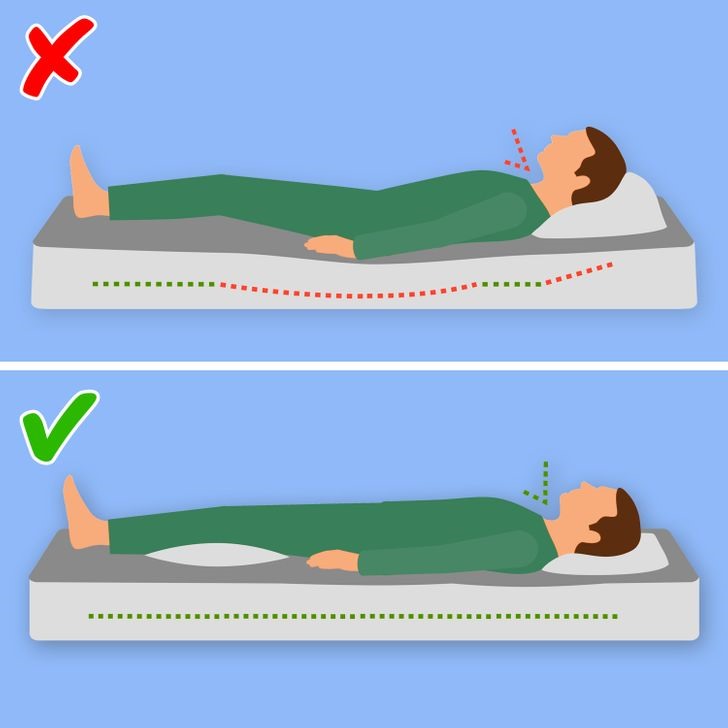
1. Sleeping on Your Stomach May Strain Your Neck and Back
Sleeping on your stomach can feel comfortable, particularly if you have followed this habit for many years.
Some people find that lying face down helps them relax. Others feel that it makes them less likely to roll around during the night.
However, this position can place additional strain on the neck and lower back.
Think about what happens when you sleep face down.
Unless your mattress and pillow arrangement allow you to breathe comfortably without turning your head, you will generally need to rotate your neck to one side for an extended period.
Your neck may remain twisted for hours.
At the same time, the natural curve of your lower back can become exaggerated, particularly if your abdomen sinks into a soft mattress.
These positions may contribute to stiffness, muscle tension, and discomfort when you wake up.
You might notice that turning your head feels difficult in the morning. Perhaps one shoulder feels tighter than the other, or you experience an ache that gradually improves as you move around.
For some people, sleeping on the stomach may aggravate existing neck or back pain.
The position can also place pressure on the shoulders and make it harder to maintain a neutral spinal alignment.
However, stomach sleeping does not automatically cause an injury. Some people tolerate it without significant discomfort.
The important question is whether your sleeping position consistently leaves you feeling worse.
How can you make stomach sleeping more comfortable?
If you prefer sleeping on your stomach, consider using a very thin pillow or no pillow beneath your head if that feels comfortable and keeps your neck from bending excessively.
A thin pillow beneath the pelvis or lower abdomen may help some people reduce strain on the lower back.
Avoid forcing yourself into a new position if it causes more discomfort. Instead, experiment gradually with alternatives.
Side sleeping or back sleeping may be more comfortable for many people with neck or back pain, although the best option depends on the location and cause of the discomfort.
If you regularly wake up with significant pain, numbness, tingling, or weakness, consult a healthcare professional rather than assuming that your pillow is the only problem.
The bottom line: Stomach sleeping may aggravate neck and back discomfort in some people. If you frequently wake up stiff or sore, experimenting with a better-supported position may help.
2. Sleeping on Your Back Can Worsen Snoring and Sleep Apnea
Sleeping on your back is often considered a neutral position because it allows the body to rest symmetrically.
For some people, it can help distribute pressure evenly and reduce strain on the shoulders.
A person with certain types of back pain may also find back sleeping comfortable when the head and neck are properly supported.
However, there is one important exception: breathing problems during sleep.
When you lie on your back, gravity can allow the tongue and other soft tissues in the upper airway to move backward. In susceptible individuals, this can narrow the airway and make breathing more difficult.
This is one reason some people snore more loudly when sleeping on their backs.
It can also worsen obstructive sleep apnea, a condition in which the upper airway repeatedly becomes blocked during sleep.
People with sleep apnea may experience repeated interruptions in breathing, fragmented sleep, and reduced oxygen levels.
They may not remember waking up throughout the night, yet they can feel exhausted the following morning.
Possible symptoms include: