If nighttime reflux is a problem, consider these measures:
-
Avoid lying down immediately after a large meal.
-
Try finishing meals at least three hours before bedtime.
-
Consider sleeping on your left side.
-
Elevate your upper body with a suitable wedge or bed arrangement.
-
Identify foods and drinks that consistently trigger your symptoms.
-
Seek medical advice if symptoms occur frequently or interfere with sleep.
Adding several ordinary pillows may bend your body at the waist rather than elevating your entire upper torso, so a purpose-designed wedge or properly adjusted bed may be more effective.
If you experience frequent heartburn, difficulty swallowing, persistent vomiting, unexplained weight loss, or other concerning symptoms, seek medical advice.
Chest pain should never automatically be attributed to acid reflux. If it is new, severe, or accompanied by shortness of breath, sweating, faintness, or pain spreading to the arm or jaw, seek emergency care.
The bottom line: For people with nighttime reflux, left-side sleeping and elevating the upper body may help. Persistent symptoms deserve evaluation rather than relying on sleeping position alone.
5. Does Sleeping on One Side Put Pressure on Your Heart?
Claims about heart health and sleeping position frequently circulate online.
Some posts suggest that sleeping on the left side is dangerous because it puts pressure on the heart. Others claim that sleeping on the right side protects the heart or that one specific position prevents cardiovascular disease.
These statements oversimplify the evidence.
For most people, sleeping on the left or right side is a matter of comfort rather than a choice that determines whether they develop heart disease.
The American Heart Association explains that sleep position may matter in particular medical circumstances, but research on the effects of position on long-term heart and brain health remains limited. <Cite refs={["turn928272search0","turn928272search10"]}/>
There are some important exceptions.
People with heart failure may experience shortness of breath when lying flat or in certain positions. Some find one side more comfortable than the other.
This does not mean that the preferred position is damaging their heart.
Rather, the position may change how they experience breathing difficulties or the sensation of their heartbeat.
If someone can breathe comfortably only while sitting upright or sleeping in a recliner, that may indicate an underlying medical problem that needs evaluation.
The relationship between sleep apnea and cardiovascular health is also important.
Untreated obstructive sleep apnea is associated with conditions including high blood pressure, heart disease, and stroke risk. In some individuals, sleeping on the back worsens the breathing interruptions that occur during sleep.
However, the evidence does not establish that simply changing sleeping position protects everyone from heart disease.
What should you do?
If you have a diagnosed heart or lung condition, follow your clinician's advice about sleep positioning.
If you develop new breathlessness when lying flat, wake up gasping, or experience unexplained nighttime breathing difficulties, seek medical evaluation.
Do not assume that changing sides will resolve a potentially serious condition.
For otherwise healthy people who sleep comfortably, there is no strong evidence that one ordinary sleeping position universally protects the heart better than all others.
The bottom line: Sleeping position can affect comfort and certain symptoms in people with existing medical conditions, but claims that a particular side universally protects or damages the heart are not supported by strong evidence.
6. Side Sleeping May Help Keep Your Spine Comfortable
Side sleeping is one of the most common sleeping positions, and it can be comfortable for many people.
When the head, shoulders, hips, and legs are appropriately supported, side sleeping may help maintain a relatively neutral spinal position.
It may also reduce snoring and breathing interruptions in some people.
However, side sleeping is not automatically perfect.
If your mattress is too firm, pressure may build around your shoulder and hip.
If it is too soft, your body may sink unevenly.
Your upper leg may also pull your pelvis forward, particularly if your knees are stacked awkwardly.
These factors may contribute to discomfort when you wake up.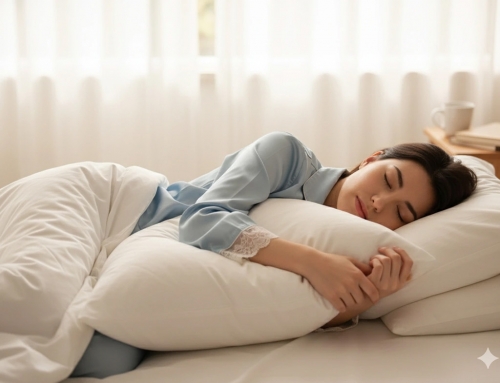
A simple pillow adjustment
If you sleep on your side and experience lower back discomfort, try placing a pillow between your knees.
This can help support the upper leg and reduce unwanted rotation of the pelvis.
Make sure your head pillow is high enough to support your neck without forcing it sharply upward or downward.
If you have shoulder pain, experiment with your arm position. Avoid placing your entire body weight directly on a painful shoulder when possible.
You can also try hugging a body pillow to support your upper arm and help maintain a comfortable position.
The best arrangement depends on the source of your discomfort.
For some people, side sleeping provides relief. Others feel better on their backs with a pillow beneath their knees.
If you have sciatica, arthritis, a shoulder injury, or another chronic condition, the most comfortable position may be different from that of someone without those problems.
Do not assume that you must sleep in a particular position simply because it is popular.