However, convenience can create a false sense of security. Many people assume that if a plug fits into a power strip, the appliance is safe to use with it. Unfortunately, that is not always true.
Power strips have electrical limits. When too many devices are connected, or when appliances with high electricity demands are used improperly, the strip can overheat. In some circumstances, overheating may damage insulation, melt plastic components, produce sparks, or start an electrical fire.
The danger is not always obvious. A power strip may look perfectly normal while carrying more electrical current than it was designed to handle. Some warning signs, such as a warm plug, a burning smell, or a discolored socket, may appear only after the problem has already begun.
Understanding which household appliances should generally be plugged directly into a properly installed wall outlet is an important part of home fire prevention. It can help protect electrical equipment, reduce unnecessary risks, and prevent avoidable accidents.
Here are several common household items that require special attention when it comes to power strips.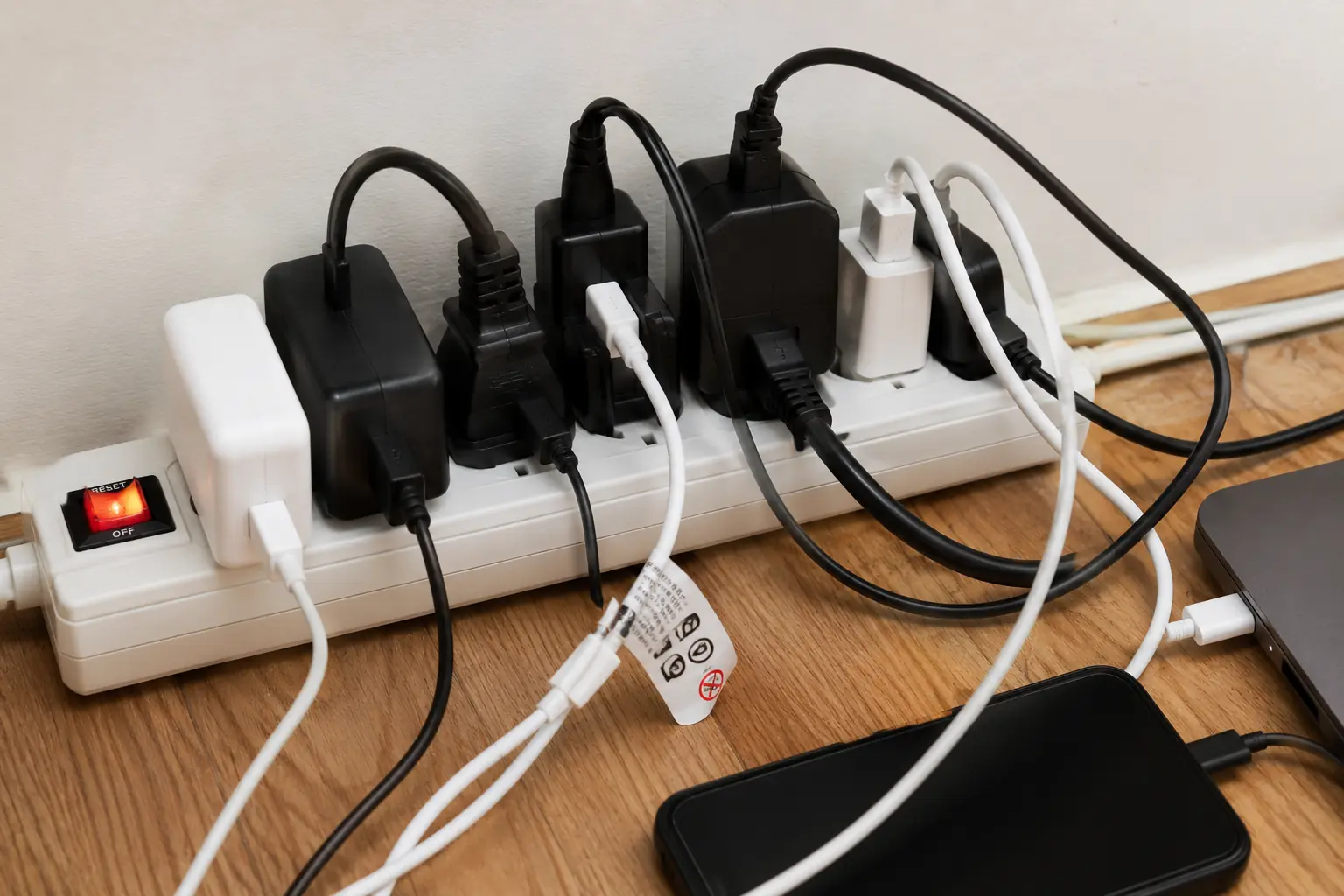
Chapter 1: Space Heaters – One of the Biggest Power Strip Risks
Portable space heaters are among the appliances that deserve the greatest caution around power strips.
These devices generate heat by consuming a substantial amount of electrical power. Many household space heaters operate at approximately 1,500 watts when set to their highest setting, although the actual power consumption varies by model.
A typical power strip may not be designed to safely handle this kind of continuous electrical demand. Even if the strip has several available sockets, that does not mean it can support a high-wattage heating appliance.
When a space heater draws more current than the power strip is designed to carry, the internal conductors and electrical contacts can become excessively hot. Poor connections, worn components, and overloaded circuits can make the situation even more dangerous.
The problem becomes particularly concerning when a space heater operates for several hours. People often turn on these appliances before going to sleep, while working, or when leaving a room. If the electrical connection begins overheating, the user may not notice the warning signs immediately.
For this reason, many space heater manufacturers specifically instruct consumers to plug their products directly into a suitable wall outlet rather than an extension cord or power strip.
Safer approach:
-
Plug the heater directly into a properly grounded wall outlet, following the manufacturer's instructions.
-
Keep curtains, blankets, clothing, furniture, and other combustible materials away from the heater.
-
Never leave a portable heater operating unattended or while sleeping unless the manufacturer's instructions and applicable safety guidance explicitly permit it.
-
Stop using the appliance if the plug, outlet, or surrounding area becomes unusually hot.
-
Avoid using a heater with a damaged cord or loose plug.
A space heater may seem like a small household appliance, but its electrical demand can be comparable to that of several smaller devices operating simultaneously. Treating it casually can create unnecessary risks.
Chapter 2: Air Conditioners – High Electrical Demand Requires the Right Connection
Air conditioners are another category of appliances that generally should not be connected to ordinary power strips.
Unlike phone chargers or small electronic accessories, air conditioners can draw considerable electrical current. Their electricity consumption depends on cooling capacity, compressor design, efficiency, operating conditions, and whether the unit is starting or running.
Window air conditioners and portable air conditioners may place significant demands on household electrical circuits. Some models also require dedicated circuits or particular outlet configurations.
One important detail is that an air conditioner's compressor can create a temporary increase in electrical demand when it starts. A power strip that appears to work during normal operation may not be suitable for these electrical conditions.
Using an ordinary power strip can introduce additional resistance at the plug and socket connections. If the connections are loose, damaged, or underrated, heat can accumulate and potentially damage the equipment.
Another common mistake is connecting an air conditioner through multiple extension cords or adapters because the original cable does not reach the outlet. This can create an unreliable electrical connection and increase the possibility of overheating.
Safer approach:
-
Follow the air conditioner's installation manual and electrical requirements.
-
Use the properly rated wall outlet specified by the manufacturer.
-
Have an electrician assess the circuit if the outlet becomes warm, the breaker trips repeatedly, or the electrical system appears inadequate.
-
Never modify the plug or use an adapter to force an incompatible connection.
-
Avoid running an air conditioner through an ordinary power strip.
If an air conditioner repeatedly trips a circuit breaker, do not simply replace the breaker with one having a higher rating. The breaker may be protecting wiring that cannot safely carry additional current. A qualified electrician should identify the actual cause.
Chapter 3: Refrigerators and Freezers – Appliances That Operate Around the Clock
Refrigerators and freezers are often overlooked when people think about electrical fire hazards.
Because these appliances operate quietly and continuously, many homeowners connect them to whatever outlet is most convenient. In some kitchens, that may be a power strip shared with other appliances.
This is not a good arrangement unless the manufacturer specifically approves the electrical connection and the equipment is properly rated.
Refrigerators contain compressors that cycle on and off throughout the day. When the compressor starts, the appliance may briefly draw more current than it uses during normal operation.
A power strip that is already carrying the load of other devices may have little room for additional demand. Over time, poor electrical contacts or excessive loading can cause overheating.