Computers and monitors: These devices are often suitable for a properly rated surge protector. Make sure the total connected load remains within the manufacturer's limits.
Televisions: Most modern televisions consume considerably less electricity than high-wattage heating appliances. A suitable surge protector may be appropriate.
Phone chargers: Genuine, undamaged chargers generally consume relatively little power. However, avoid counterfeit products and chargers with damaged cables or loose plugs.
Gaming consoles: These can generally be connected to a suitable power strip or surge protector, provided the strip has adequate capacity and is used according to the manufacturer's instructions.
Printers: Some printers, particularly laser printers, can draw substantially more power during operation than people expect. Check the manufacturer's specifications before connecting them to a shared power strip.
The key is to evaluate the actual electrical requirements of each device rather than assuming that all electronics are automatically safe.
A small phone charger and a powerful laser printer should not be treated as equivalent electrical loads.
Chapter 14: What to Do If a Power Strip Starts Smoking or Catches Fire
An electrical fire requires a different response from an ordinary household fire.
If a power strip begins smoking, producing flames, or making unusual electrical noises, personal safety must come first.
1. Do not touch the burning power strip.
Never grab the device, its plug, or connected cables while it is smoking or burning.
Damaged electrical equipment may remain energized, creating a risk of severe electric shock.
2. Disconnect power only if it is safe.
If you can safely reach the relevant circuit breaker or main electrical switch without approaching flames, smoke, or exposed wiring, turn off the electricity.
Do not attempt to unplug a burning power strip directly.
3. Never pour water onto an energized electrical fire.
Water can conduct electricity and may expose people to electric shock.
Do not throw water onto a power strip, electrical outlet, or connected appliance that may still be energized.
4. Use an appropriate fire extinguisher only if trained and safe to do so.
An extinguisher rated for electrical equipment, such as an appropriately labeled Class C extinguisher in systems using that classification, may be suitable for certain electrical fires.
Extinguisher classifications differ by country. Follow the extinguisher's label and local fire-safety guidance.
Do not attempt to fight a fire that is spreading, producing heavy smoke, or blocking your escape route.
5. Evacuate and call emergency services.
If the fire cannot be controlled immediately and safely, leave the building.
Warn other occupants, close doors behind you if possible, and contact the local fire service.
Do not return inside until emergency responders confirm that it is safe.
6. Have the electrical system inspected.
Even after a small electrical fire has been extinguished, the outlet, wiring, and connected appliances may have hidden damage.
A qualified electrician should inspect the affected area before power is restored.
Replacing only the visibly damaged power strip may not address the underlying problem.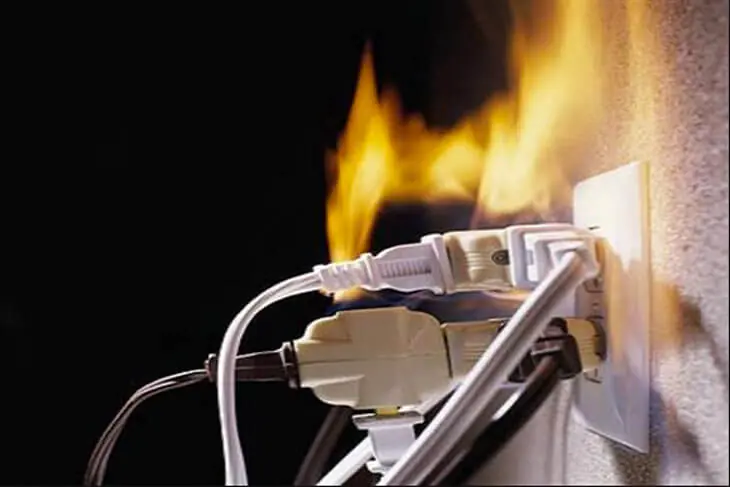
Chapter 15: Simple Daily Habits That Can Help Prevent Electrical Fires
Electrical safety does not always require expensive equipment or complicated changes.
Many preventable incidents can be avoided through consistent habits.
Avoid overloading outlets.
Do not connect several high-demand appliances to one power strip or circuit without confirming that the electrical system can safely support the load.
Keep power strips uncovered.
Do not place them under carpets, behind tightly packed furniture, or beneath piles of clothing.
Heat must be able to dissipate properly.
Keep electrical equipment away from water.
Do not use ordinary power strips in wet areas or where splashes, leaks, or condensation may reach them.
Replace damaged products immediately.
A power strip with a cracked housing, loose sockets, damaged cord, or burn marks should not remain in service.
Do not ignore unusual smells or sounds.
Buzzing, crackling, repeated sparks, or burning odors may indicate a developing electrical fault.
Avoid counterfeit electrical products.
Products with unclear ratings, unreliable construction, or misleading safety claims may not provide adequate protection.
Use the right outlet for the right appliance.
High-demand heating appliances and equipment with specific electrical requirements should be connected according to their manufacturers' instructions.
Schedule electrical inspections when necessary.
Older homes, frequently tripping breakers, loose outlets, and repeated overheating problems deserve professional attention.
A qualified electrician can determine whether the wiring, circuit protection, and outlets are suitable for modern household electrical demands.
Conclusion: A Few Extra Seconds Can Help Protect Your Home
Power strips are useful household accessories, but they are not designed to replace properly installed electrical outlets or support every appliance.
Space heaters, air conditioners, refrigerators, microwaves, toasters, electric kettles, coffee makers, and hair dryers can place substantial demands on electrical connections. These appliances should generally be plugged directly into suitable wall outlets whenever their manufacturers recommend it.
Connecting multiple power strips together, ignoring damaged cords, covering electrical equipment, or exceeding a product's rated capacity can create unnecessary fire and shock hazards.
The most important thing to remember is that the number of available sockets does not determine how much electricity a power strip can safely handle.
A device may have six, eight, or even twelve outlets, but its total electrical capacity remains limited by its design and rating.
Take a moment to inspect the power strips in your home. Check their labels, examine the cords, remove unnecessary connections, and identify appliances that should be plugged directly into wall outlets.
If you notice melting plastic, unusual heat, a burning smell, damaged insulation, or repeated breaker trips, stop using the affected equipment and seek professional help.
Electrical fires can develop from problems that initially seem minor. A loose plug, an overloaded connection, or an underrated power strip may not appear dangerous until it is too late.
A few simple precautions can make a meaningful difference. When it comes to electricity, choosing the correct connection is not just about convenience. It is an important part of keeping your home, your belongings, and the people around you safe.