The initial official explanation connected the failure to high water levels and powerful currents that changed the riverbed.
That provides an important account of the event.
However, it would be inaccurate to claim that one specific factor, such as a single maintenance decision or a particular engineering error, was definitively responsible without the findings of a complete investigation.
A careful assessment must consider the bridge's design, foundation conditions, maintenance history, river behaviour, and the exceptional flood conditions.
The disaster demonstrated the importance of understanding how extreme river events can affect infrastructure.
Chapter 9: The Emergency Response and Government Action
The collapse prompted an immediate response from local and national authorities.
Phu Tho officials, police, military personnel, firefighters, medical teams, and other agencies were mobilized to support the rescue operation.
The Prime Minister issued an urgent directive calling for the mobilization of forces and equipment to search for victims and address the consequences of the collapse.
Deputy Prime Minister Ho Duc Phoc travelled to the scene to oversee the response.
The visit reflected the seriousness of the incident and the need for coordination across different agencies.
Coordinating the rescue operation
A disaster involving a major bridge requires more than one emergency service.
Firefighters may be responsible for technical rescue and access to damaged structures. Police manage security, traffic control, and information gathering. Military units may provide specialist personnel, boats, divers, and logistical support.
Medical teams assess and treat injured people.
Local authorities coordinate the response and communicate with affected communities.
All these activities need to work together.
Protecting the remaining structure
After the collapse, the remaining sections of the bridge were dangerous.
Authorities needed to prevent other vehicles and pedestrians from approaching the damaged crossing.
A damaged bridge may contain unstable components that can move or fail further.
Traffic restrictions were therefore necessary to protect the public and allow emergency teams to work.
Keeping boats away from the danger zone
The river itself was also a hazard.
Officials directed waterway traffic away from the collapse area so that passing vessels would not interfere with rescue operations or enter dangerous sections of the river.
Boats operating near submerged structural components could be damaged or trapped.
Keeping the area clear also allowed rescue teams to focus on searching and recovery.
A coordinated national response
The government response included not only immediate rescue but also instructions to restore transport links and address the wider effects of flooding.
The collapse had interrupted an important connection between communities.
Authorities needed to consider temporary transport arrangements while planning a longer-term solution.
The challenge was to respond to the immediate humanitarian emergency while also restoring a route that residents and businesses depended on.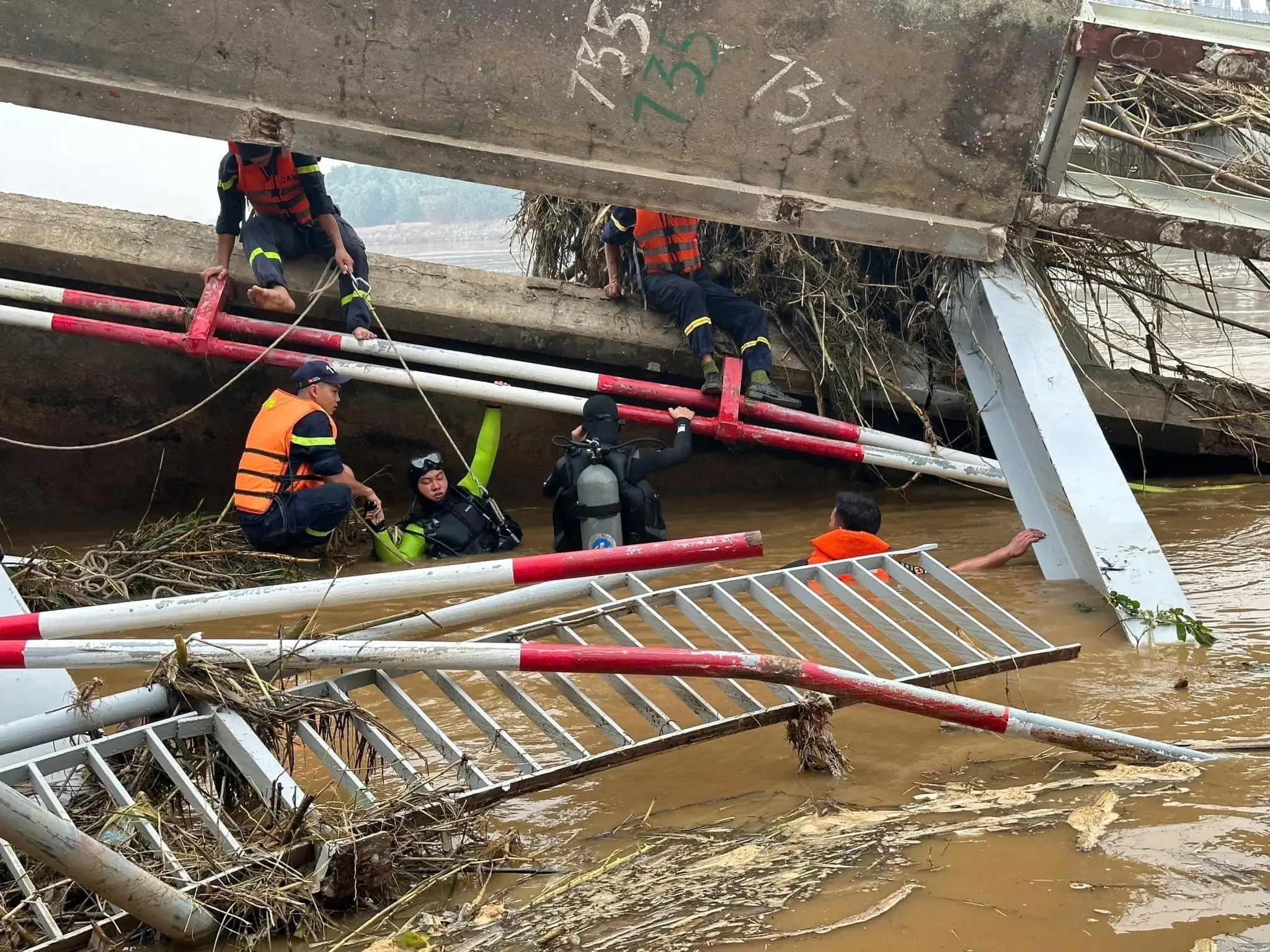
Chapter 10: The Bridge Collapse Disrupted Everyday Life
For local residents, the loss of Phong Chau Bridge created practical problems that extended beyond the collapse site.
The bridge connected communities on opposite sides of the Red River. Without it, residents had to consider alternative routes, some of which could involve longer journeys.
A person travelling to work might need to leave earlier. A student might face a more complicated trip to school. A business transporting goods could experience delays and additional costs.
The effects were especially serious because the collapse occurred during a period when the wider region was already dealing with storm damage.
Longer journeys and transport disruption
When an important bridge is closed, traffic must be redirected.
Depending on the local road network, drivers may need to travel to another crossing, use smaller roads, or change their travel plans entirely.
This can increase journey times and place additional pressure on alternative routes.
Emergency vehicles may also need to adjust their routes.
For people requiring medical care, the loss of a convenient crossing can be particularly important.
Economic consequences
Bridges support more than private travel.
They are important for the movement of agricultural products, construction materials, commercial goods, and workers.
When a bridge becomes unavailable, transport operators may face higher fuel costs and longer delivery times.
Businesses may experience delays in receiving supplies or sending products to customers.
Small businesses can be particularly vulnerable because they may have fewer alternative transport arrangements.
The social importance of a crossing
A bridge also connects people socially.
Families may live on opposite sides of a river. Residents may visit relatives, attend community events, or travel to local services.
The loss of a crossing can make these activities more difficult.
For people who depend on the bridge every day, the collapse changed familiar routines almost immediately.
Restoring a safe connection was therefore important not only for transport efficiency but also for community life.
Chapter 11: Temporary Solutions and the Challenge of Restoring Access
After the collapse, authorities needed to restore a crossing as quickly as possible without compromising safety.
One of the immediate measures considered was the use of a pontoon bridge.
A pontoon bridge is supported by floating units rather than conventional foundations in the riverbed. It can provide a temporary crossing when a permanent bridge is unavailable.
Military engineering units have experience building such structures in emergency situations.
However, a pontoon bridge is not suitable for every river condition.
Water levels, current speed, debris, navigation requirements, and the river's width all affect whether such a structure can be used safely.
Why temporary bridges matter
A temporary bridge can reduce the disruption caused by a damaged crossing.
It may allow residents, emergency vehicles, and some types of traffic to move between communities while a permanent replacement is planned.
But its capacity and operating conditions may differ from those of the original bridge.
Authorities may need to impose limits on vehicle weight, speed, and traffic direction.
Alternative transport arrangements
Depending on conditions, other options may include detours, temporary road connections, or carefully managed ferry services.
Each option has advantages and limitations.
A longer road detour may be reliable but inconvenient. A ferry may help pedestrians or smaller vehicles but could be unsafe during severe flooding.
A pontoon bridge may offer a direct crossing but require regular monitoring and restrictions.
The right choice depends on the river conditions and the needs of the communities.
Rebuilding a permanent crossing
The long-term solution required a new bridge.
The project had to consider not only the need to restore the route but also the lessons from the collapse.
A replacement structure needed suitable foundations, appropriate capacity, and a design capable of serving the area's transport needs.
The work also had to be completed in a way that minimized disruption for local residents.
Chapter 12: The New Phong Chau Bridge and the Return of the Connection
The story of Phong Chau Bridge did not end with the September 2024 collapse.
After the disaster, authorities moved forward with plans to build a new crossing on National Highway 32C.
The project was treated as an emergency construction project because restoring the connection was important for transport and local economic activity.
Construction of the new bridge began on December 21, 2024.
The replacement bridge was designed to be approximately 652.88 metres long as a project, with the bridge structure itself measuring about 383.3 metres. It was designed with four traffic lanes and a width of approximately 20.5 metres.
The project had a total investment of more than VND635 billion.
A demanding construction schedule
Building a major bridge requires careful coordination.
The project involved planning, foundation work, construction of supporting structures, installation of the bridge superstructure, road connections, and safety inspections.
The emergency nature of the project placed pressure on the schedule.
At the same time, the work needed to meet technical and safety requirements.
A bridge that is completed quickly but does not meet the necessary standards would not provide the lasting solution residents needed.
Opening in September 2025
The new Phong Chau Bridge was inaugurated and opened to traffic on September 28, 2025.
The project was completed three months ahead of the contractual schedule.
The opening restored an important transport connection between the communities served by National Highway 32C.
For local residents, the new bridge represented the return of a familiar route, although the structure itself was different from the one that had collapsed.
It also marked a major step in the recovery from the infrastructure damage caused by Typhoon Yagi.
Why the replacement matters
A bridge is often taken for granted until it is no longer available.
The new Phong Chau Bridge restored a route used by residents, businesses, and transport operators.
It helped reconnect communities and reduced the need for long detours.