But the new structure also serves as a reminder that infrastructure must be designed and maintained with changing environmental conditions in mind.
The collapse showed how powerful a major flood can be and how important it is to understand the risks facing bridges over large rivers.
Chapter 13: What the Disaster Revealed About Bridge Safety
The collapse of Phong Chau Bridge raised important questions about the safety of infrastructure exposed to extreme weather.
Bridges are designed to serve for many decades, but their safety depends on more than the strength of the visible structure.
Foundations, river conditions, maintenance, inspection, and environmental changes all matter.
Regular inspection must include foundations
A bridge inspection should not focus only on the road surface, railings, and visible steel components.
The foundations beneath the water are equally important.
Underwater inspections can help identify erosion, damage, exposed foundation elements, and changes in the riverbed.
These inspections may require divers, sonar equipment, or other specialist methods.
Monitoring river conditions
For bridges crossing large rivers, water levels and current conditions can provide important information.
Monitoring systems can help authorities identify unusual changes during floods.
Where appropriate, sensors may be used to measure movement, vibration, or other structural indicators.
Such systems do not eliminate risk, but they can support better decision-making.
Understanding extreme weather
Infrastructure designed around historical conditions may face new challenges as extreme weather events become more severe or unpredictable.
Engineers and planners must consider a range of possible conditions, including major floods and changing river behaviour.
This does not mean every bridge can be designed to withstand every imaginable event.
It means that risk assessments must consider the consequences of failure and the conditions that could threaten critical components.
Maintenance and accountability
Maintenance records are important because they help establish what work has been completed and what problems have been identified.
When a major failure occurs, investigators may examine those records alongside the physical evidence.
The purpose is to understand whether the structure was properly maintained, whether inspections were adequate, and whether additional safety measures may be needed.
These questions should be answered through technical evidence rather than speculation.
Chapter 14: Lessons for Drivers and People Living Near Rivers
The Phong Chau collapse was primarily a structural failure during extreme flooding, but it also offers lessons for people travelling and living near rivers.
Severe weather can change road conditions rapidly. A route that appears familiar may become dangerous when water levels rise or a bridge is exposed to unusually strong currents.
Pay attention to official warnings
When authorities close a bridge or issue a warning about flooding, drivers should follow the instructions.
A road closure is not simply an inconvenience. It may indicate that the structure or surrounding area is no longer safe.
Drivers should never attempt to cross a flooded road or approach a damaged bridge to take photographs.
Do not underestimate moving water
Floodwater can be much more powerful than it appears.
The depth may be difficult to judge, and the current may be stronger than expected.
A vehicle can lose traction or be swept away in water that looks relatively shallow.
People should avoid entering floodwater on foot or in vehicles unless an authorized emergency operation requires it.
Avoid dangerous rescue attempts
When someone falls into a river, bystanders may feel an understandable urge to jump in and help.
But a strong current can put another person in danger.
The safer response is to contact emergency services and provide information about the person's location.
If it can be done without entering the water, a flotation device or other suitable object may sometimes be used to assist from a safe position.
Untrained people should not attempt underwater searches around collapsed structures.
Prepare for transport disruption
People living in areas where bridges are important transport links can benefit from knowing alternative routes.
During severe weather, residents should monitor official announcements about road closures and river conditions.
Planning ahead can reduce confusion when a route suddenly becomes unavailable.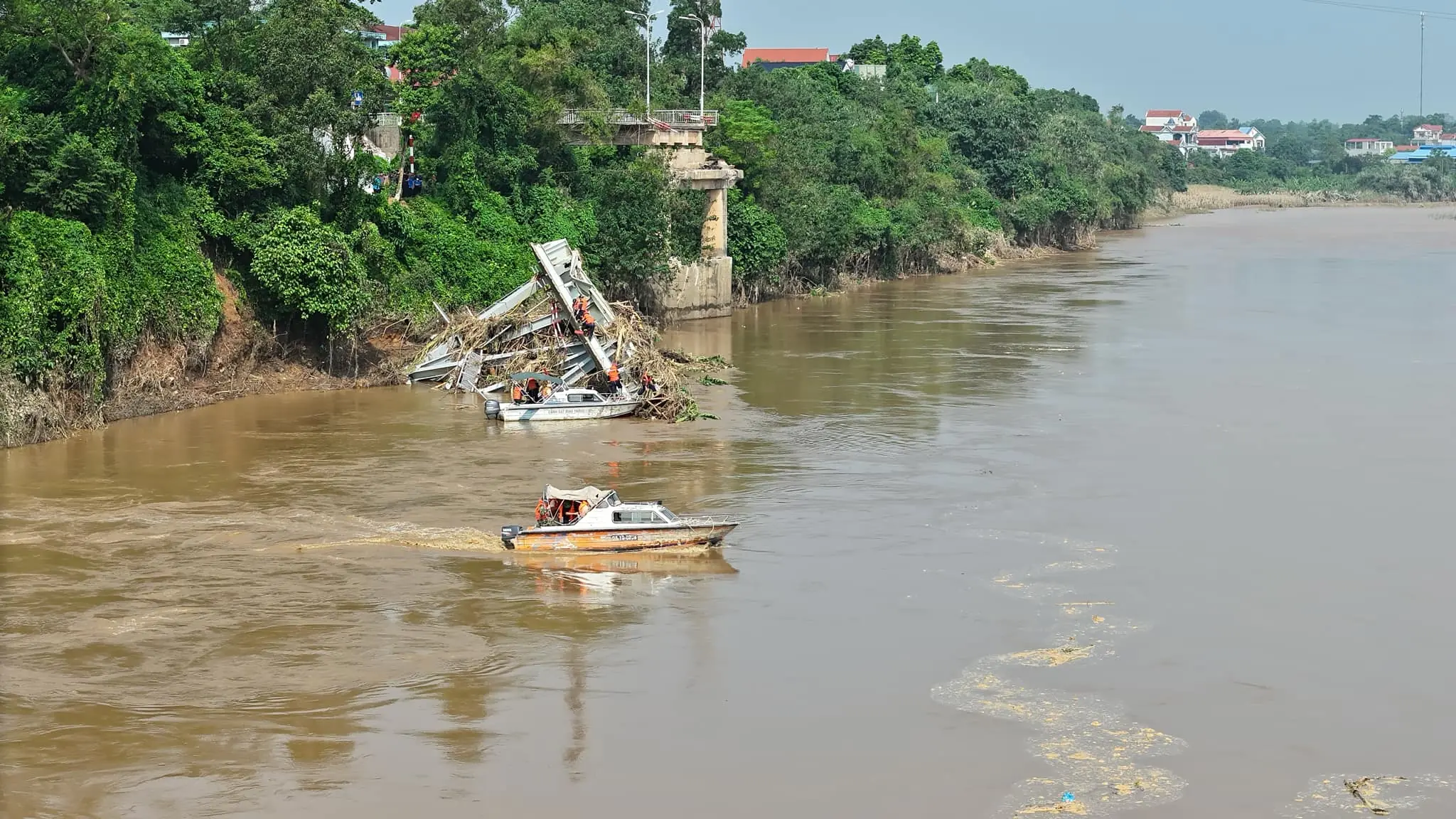
Chapter 15: Remembering the People and the Communities Affected
The images of Phong Chau Bridge after the collapse are difficult to forget.
A section of steel structure lay at an angle near the riverbank. The muddy Red River continued flowing beneath the remaining bridge. Rescue teams moved through the debris, searching for people and vehicles.
The photographs showed the physical destruction, but they could not fully communicate the emotional experience of families waiting for news.
For the people connected to the missing passengers, every update mattered.
They needed to know whether someone had been found, whether a relative had survived, and where they could receive reliable information.
For survivors, the event could become a memory that remained with them for years.
For local residents, the loss of the bridge disrupted everyday movement and changed their relationship with a crossing that had once been familiar.
The disaster also affected people whose livelihoods depended on transport across the river.
Farmers, workers, traders, students, and businesses all needed to adapt to the loss of an important route.
The reopening of the new bridge in September 2025 restored that connection, but it did not erase what happened in 2024.
A tragedy that became a lesson
The collapse of Phong Chau Bridge demonstrated the destructive power of extreme flooding.
It showed how rapidly a river can change, how vulnerable bridge foundations can become, and how difficult rescue operations are when vehicles and structural debris enter powerful water.
It also demonstrated the importance of emergency coordination.
Police, firefighters, military personnel, medical teams, local officials, and residents all played roles in responding to the disaster.
The event raised questions about infrastructure inspection and flood resilience that remain relevant to communities across Vietnam.
The importance of accurate remembrance
The first hours of a disaster are often filled with uncertainty.
Early reports may contain different estimates of vehicles, missing people, and survivors. As authorities gather more information, those figures may change.
That is why the initial report of eight missing people and three injured survivors should be understood as a preliminary official assessment made while rescue operations were still underway.
The important point is not to repeat an early number as though it were the final outcome. It is to explain how the situation developed and why the search was so difficult.
The collapse was a real disaster that affected real people. Its story deserves to be told with accuracy and respect.
Chapter 16: A Bridge Can Be Rebuilt, but the Memory Remains
On September 9, 2024, a familiar crossing over the Red River became the scene of a devastating emergency.
The failure of pier T7 brought down two main spans of Phong Chau Bridge. Vehicles travelling across the structure fell into the water, and the powerful current made rescue and recovery operations extremely difficult.
The collapse interrupted daily life in communities on both sides of the river. Families waited for information, survivors required medical attention, and emergency teams worked under dangerous conditions.
The disaster also raised serious questions about the relationship between extreme weather and infrastructure safety.
The initial official assessment linked the failure to the high water level and strong current associated with Typhoon Yagi, which changed the riverbed conditions near the bridge.
The old bridge had been in service since 1995 and had undergone repairs in 2013, 2019, and 2023. Its collapse demonstrated that even structures that have been maintained and inspected can face extraordinary forces during major natural disasters.
The new Phong Chau Bridge, opened on September 28, 2025, restored the important connection on National Highway 32C. Its completion marked a significant step toward recovery for the region.
But the new structure also carries a lasting reminder of the people affected by the collapse and the importance of preparing infrastructure for extreme conditions.
A bridge is built to connect communities. When it fails, the consequences extend far beyond the damaged structure.
The story of Phong Chau Bridge is therefore not only about a dramatic collapse. It is about the people who depended on that crossing, the rescuers who searched the river, the communities that faced sudden disruption, and the effort to rebuild what had been lost.
The river continues to flow beneath the new bridge. The route has returned, but the events of September 9, 2024, remain an important reminder of how quickly ordinary life can change when nature and infrastructure meet under extreme pressure.