'Never Getting in Those Planes Again': Are Private Jets More Dangerous Than Commercial Aircraft? Experts Weigh In Following a Terrifying Florida Crash
The family trip began like countless others — a journey to another destination, a flight aboard a private aircraft, and the expectation of arriving safely. But a devastating crash in Florida turned that ordinary plan into a tragedy, raising urgent questions about private aviation, flight safety, and the risks passengers may never see.
The images are difficult to forget.
A huge fireball rises above a roadside, illuminating the sky with a violent orange glow. Thick, dark smoke spreads across the scene as flames engulf the wreckage. In another image, the view from above reveals a road torn apart, broken pavement scattered across the ground, and a large crater surrounded by debris.
These are not the images most people associate with air travel.
For passengers, flying is often a matter of stepping aboard, fastening a seat belt, and trusting that the aircraft and the people operating it will carry them safely to their destination. For families traveling together, a private flight can seem especially convenient: fewer crowds, a flexible schedule, and the possibility of reaching a destination without the complications of a busy commercial airport.
Yet the devastating Florida crash described in the supplied report has brought a painful reality into focus. Private aviation is still aviation — and when something goes seriously wrong, the consequences can be catastrophic.
According to the article shown in the supplied image, a private jet crashed in Palm Beach County, Florida, on Sunday, November 1, 2026. The report states that all nine people aboard were killed. It describes a family trip from Austin, Texas, that ended when a Bombardier Learjet 60 plunged onto a road and erupted into flames.
The tragedy has prompted a question many travelers may now be asking: Are private jets actually more dangerous than commercial airliners?
The answer is more complicated than the dramatic images alone might suggest. To understand the risks, it is necessary to look beyond the flames and examine the differences between private and commercial aviation — from pilot experience and aircraft maintenance to flight operations, safety oversight, and the circumstances surrounding a crash.
The first step is to understand what happened in Florida, and why the wreckage has become the focus of such intense concern.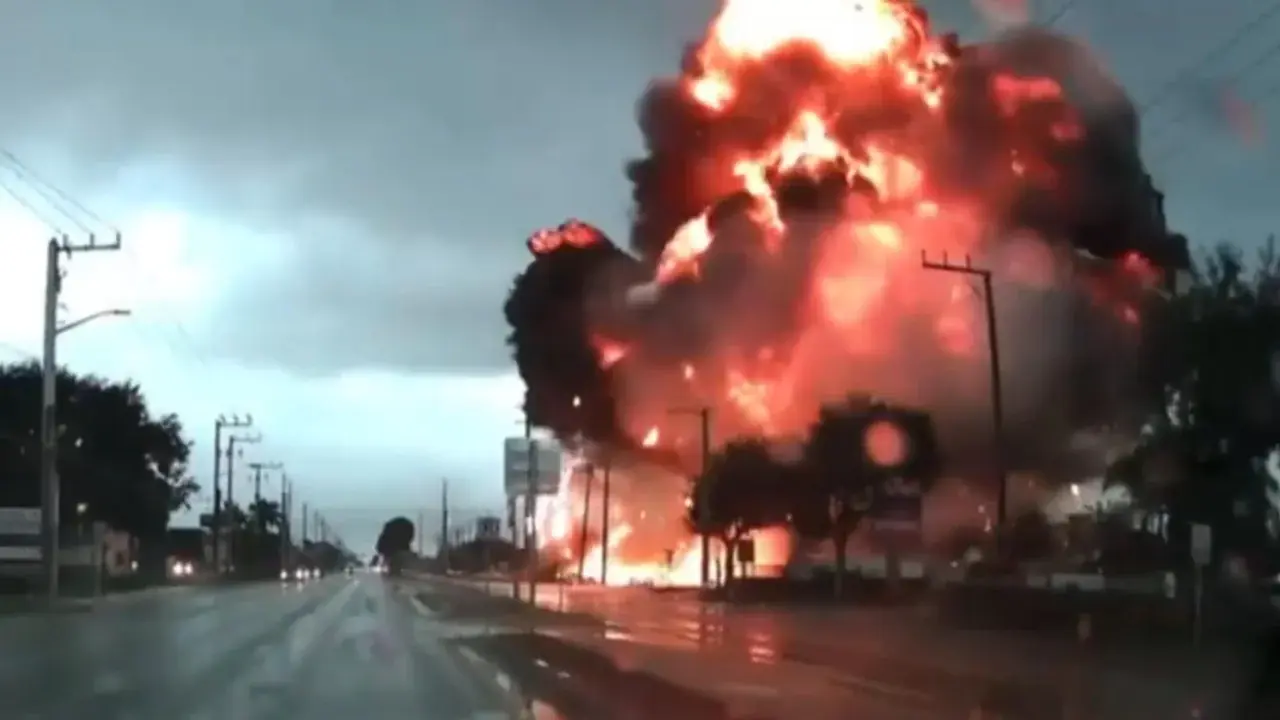
Chapter 1: A Family Flight That Ended in Catastrophe
A routine departure from Texas
The aircraft involved in the Florida tragedy was a Bombardier Learjet 60, a twin-engine business jet designed for private and corporate travel. It departed Austin-Bergstrom International Airport in Texas and was headed toward North Eleuthera in the Bahamas.
The flight was operated by Aurora Aviation, doing business as Upper Jet, according to the National Transportation Safety Board's investigation page. The aircraft was identified as N722BD.
NTSB+1
The route was not unusual for private aviation. Business jets regularly connect major cities with island destinations, resort communities, and airports that may be less convenient to reach through scheduled commercial service.
For passengers, such a journey can feel straightforward. A private aircraft may allow a group to travel together, avoid some of the crowds associated with major terminals, and depart according to a more flexible schedule.
But the convenience of a private flight does not remove the technical complexity of aviation.
The aircraft still has to operate within strict limits. Its pilots must assess weather, fuel, weight, aircraft performance, and the conditions along the route. They must also respond to changes that may develop after takeoff.
On November 1, the Learjet encountered a situation that rapidly became an emergency.
The final minutes in the sky
Early reports described the aircraft traveling at approximately 35,000 feet when the crew began communicating concerns about the weather.
According to information reported from air traffic control communications, the pilots described icing and moderate turbulence. They also reported precipitation and sought a higher altitude in an effort to find more favorable conditions.
These details are important because they show that the aircraft was not simply cruising through an uneventful flight when the emergency began.
The crew was dealing with changing conditions.
At high altitude, the atmosphere can contain moisture in forms that create significant challenges for aircraft. Turbulence can affect the aircraft's movement, while icing can interfere with aerodynamic performance if ice accumulates on critical surfaces.
The exact sequence of events aboard the Learjet remains a matter for investigators. The early reports do not establish that icing or turbulence alone caused the crash.
What they do establish is that the crew reported these conditions before the aircraft entered a rapid descent.
The descent became extraordinarily steep.
The FAA and media reports described the jet dropping from cruising altitude at a rate that increased dramatically over a very short period. Air traffic control recordings included urgent communications from the cockpit, followed by a Mayday call.
A Mayday is the internationally recognized distress call used when an aircraft is facing serious and immediate danger.
It signals that the crew needs urgent assistance.
In this case, the aircraft continued descending at an extreme rate. The pilot communicated that the jet was in an overspeed condition and that the situation was deteriorating.
The final radio messages described a desperate emergency.
The aircraft then struck the ground near a roadway in Palm Beach County.
The impact and the enormous fireball
Videos recorded from nearby vehicles showed the jet descending sharply before it hit the ground and erupted into a massive fireball.