The risks can vary according to the type of flight.
A commercial charter carrying passengers for payment may be subject to requirements that differ from those applying to certain private or corporate operations. The specific rules depend on the country, the operator, and the type of service.
This is why passengers should not assume that every private jet operates under exactly the same structure as a major airline.
Some private operators maintain excellent safety systems. Others may have less extensive organizational support.
The important question is not simply whether an aircraft is private.
It is how the aircraft is operated.
A responsible assessment considers the operator's safety record, maintenance practices, pilot training, aircraft condition, and the procedures used to manage weather and emergencies.
The danger of comparing accident numbers without context
A common reaction after a private jet crash is to compare the number of accidents involving private aircraft with the number involving commercial airlines.
But raw accident totals can be misleading.
A meaningful comparison needs to account for how much each category flies.
For example, one group may operate millions of flights each year, while another operates a much smaller number. Comparing accident totals without considering flight hours, departures, or passenger exposure can produce an inaccurate impression.
Aviation safety researchers often use measures such as accidents per flight hour or per departure to make comparisons more meaningful.
Even those measures require care.
The category called "private aviation" includes different aircraft, different types of operations, and different levels of professional oversight. A single rate may hide important differences between charter flights, corporate operations, and personal flying.
The Florida crash involved a business jet operating a private flight. It should not automatically be treated as representative of every private aircraft operation.
The same caution applies to commercial aviation.
A major airline operating large passenger jets on established routes is different from a regional operation using smaller aircraft in more challenging conditions.
A fair comparison must consider those differences.
Does flying privately automatically make a passenger less safe?
Not necessarily.
A well-maintained private jet, operated by a qualified crew under a robust safety system, can provide a high level of safety.
But private travel does not automatically provide the same operational structure as a major commercial airline.
Passengers may have less information about the operator. They may not know how the crew was selected, what safety management procedures are in place, or how the aircraft's maintenance history is reviewed.
The aircraft may also operate from smaller airports or use routes that differ from those commonly flown by commercial airlines.
These factors do not prove that a particular flight is unsafe.
They mean that passengers should consider more than the comfort and convenience of the cabin.
A private jet can be luxurious, quiet, and efficient. Yet the safety of the journey depends on the systems and decisions behind the scenes.
The most important question is not private versus commercial
The Florida tragedy has encouraged a simple question: Are private jets more dangerous than commercial aircraft?
A more useful question may be:
What safety systems are in place for the particular flight I am taking?
That question directs attention toward the factors that actually influence risk.
Is the operator properly certified for the service being offered? Are the pilots appropriately qualified and experienced? Is the aircraft maintained according to required standards? Does the operator have a clear policy for avoiding dangerous weather? Are crews encouraged to delay or cancel a flight when conditions are unsuitable?
These questions are more informative than judging an aircraft by its appearance or by the number of passengers it carries.
The Learjet crash in Florida is a devastating reminder that a private aircraft can experience a catastrophic emergency.
It is not, by itself, proof that every private jet is more dangerous than every commercial airliner.
The answer requires broader safety data and a careful understanding of the type of operation involved.
And in the Florida case, the investigation must first determine what happened to the aircraft during those final minutes.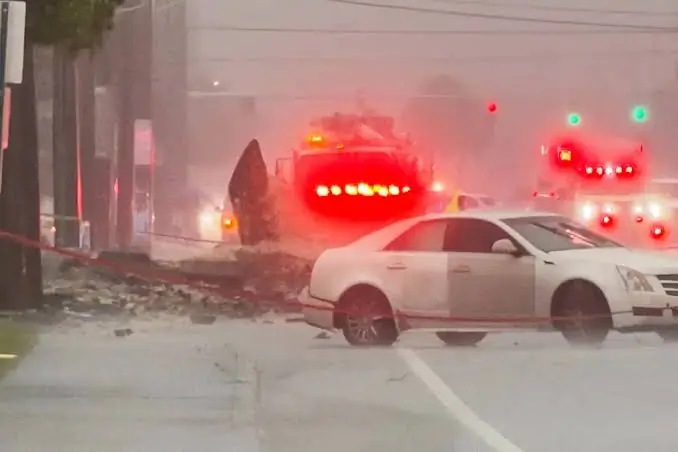
Chapter 3: Weather, Pilot Decisions, and the Aircraft's Limits
Why icing can become a serious aviation hazard
One of the most important details in the early reporting about the Florida crash is that the pilots described icing conditions before the aircraft entered its rapid descent.
Icing occurs when supercooled water droplets freeze after coming into contact with an aircraft. Depending on the conditions and the aircraft's systems, ice can accumulate on wings, engine inlets, windshields, and other surfaces.
Even a relatively small amount of ice can affect the way air moves around a wing.
The wing is designed to generate lift through a carefully shaped airflow. When ice changes that shape, the aircraft may experience reduced lift, increased drag, and changes in stall characteristics.
Modern aircraft may be equipped with systems designed to prevent or remove ice. These can include heated surfaces, pneumatic de-icing systems, or other technologies depending on the aircraft.
But those systems have limits.
They must be used correctly, maintained properly, and operated within the aircraft's approved procedures. Severe weather can create conditions that are difficult to manage, especially when icing occurs alongside turbulence and precipitation.
The Learjet crew reported light clear icing and moderate turbulence in the early communications described by aviation reports. The pilots also sought information about smoother conditions and requested a climb.
Those communications are part of the evidence investigators will examine.
They do not, by themselves, establish the cause of the crash.