This is why residents are advised to stay away from visibly damaged buildings until they have been inspected by qualified professionals.
Aftershocks can also make rescue operations more difficult. Workers may have to pause, move to safer locations, or change their approach when additional shaking occurs.
In the days following the Myanmar earthquake, continued seismic activity was reported along the Sagaing Fault.
People in affected areas were advised to remain alert and follow local safety instructions.
It is important to understand that scientists cannot predict the exact time of an aftershock. Seismologists can estimate the likelihood of further earthquakes based on the main event and the surrounding fault system, but they cannot provide a precise countdown.
Residents should therefore prepare for the possibility of additional shaking rather than assuming that the danger has ended once the first tremor stops.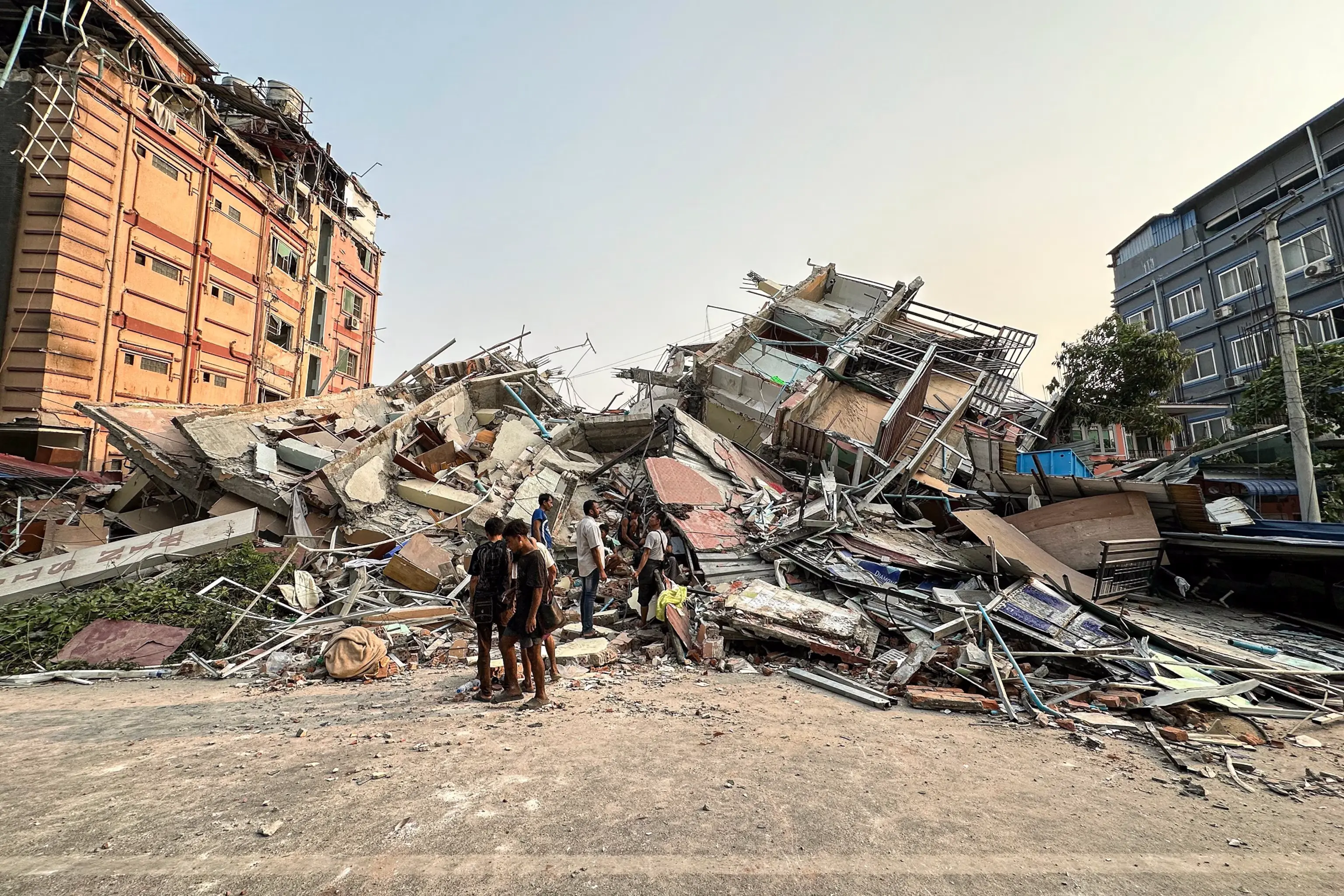
What to Do During an Earthquake
Knowing how to respond before an earthquake occurs can reduce the risk of injury.
The most widely recommended advice for people indoors is Drop, Cover, and Hold On.
Drop: Get down onto your hands and knees before the shaking knocks you over.
Cover: Protect your head and neck. If possible, move beneath a sturdy table or desk. Stay away from windows, glass doors, and heavy objects that could fall.
Hold On: Keep holding onto your shelter until the shaking stops. If the table moves, move with it.
If there is no sturdy table nearby, crouch beside an interior wall away from windows and cover your head and neck with your arms.
Do not run toward an exit while the ground is shaking. Falling objects, broken glass, and moving walls can make doorways and corridors dangerous.
If you are in bed, stay there if there is no immediate danger. Cover your head with a pillow and protect yourself from nearby objects that might fall.
If you are outdoors, move away from buildings, trees, streetlights, power lines, and other structures that could fall.
If you are driving, slow down and pull over in a safe place away from bridges, overpasses, trees, and power lines. Remain inside the vehicle until the shaking stops.
The safest action can vary depending on the building and local conditions, so people should follow the official guidance issued by their emergency authorities.
What to Do Immediately After the Shaking Stops
The end of the shaking does not necessarily mean the danger is over.
First, check yourself and the people around you for injuries.
If someone is seriously injured, seek emergency assistance. Do not move a person with a possible spinal injury unless remaining in place presents an immediate danger.
Look for hazards such as broken glass, fallen objects, damaged electrical wiring, and the smell of gas.
If you suspect a gas leak, avoid flames and electrical switches. Leave the area and contact the appropriate emergency service from a safe location.
Expect aftershocks.
If the building has visible structural damage, leave carefully when it is safe to do so. Use stairs rather than elevators, and do not re-enter until authorities or qualified inspectors have confirmed that it is safe.
Keep your phone available for emergency communication, but avoid making unnecessary calls that could overload networks.
Text messages may work when voice calls are difficult.
Listen to official announcements through radio, mobile alerts, or other available communication channels. Avoid relying on unverified social media posts for information about evacuation routes, casualty figures, or building safety.
If you are near a river, dam, or coastal area, follow local instructions about possible secondary hazards, including landslides, flooding, or tsunami warnings where relevant.
Why Older Buildings and High-Rise Structures Face Different Risks
Not every building responds to an earthquake in the same way.
A modern structure designed according to appropriate seismic standards may be able to withstand strong shaking without collapsing. It may still suffer damage, but its structural system is intended to protect occupants by allowing controlled movement and distributing forces.
Older buildings can be more vulnerable, particularly if they were constructed before modern earthquake-resistant standards were introduced.
Some older structures have weak connections between walls and floors. Others use materials that do not perform well under repeated lateral movement. Poor construction quality, inadequate maintenance, and unauthorized modifications can increase the risk.
Masonry buildings deserve particular attention. Unreinforced brick or stone walls may crack or collapse when subjected to strong horizontal forces.
High-rise buildings present a different challenge.
Tall structures naturally sway as seismic waves pass through them. Engineers design buildings to accommodate some movement, but the amount of movement depends on the building's height, materials, structural system, and the characteristics of the earthquake.
People on upper floors may feel more pronounced motion, even when the building remains structurally safe.
The March 2025 earthquake highlighted the importance of assessing buildings after severe shaking. A structure that appears intact from the outside may have hidden damage inside its columns, joints, foundations, or supporting walls.
That is why residents should not decide that a damaged building is safe simply because it is still standing.
How Families Can Prepare Before the Next Earthquake
Earthquakes cannot be prevented, but families can take practical steps to reduce their risks.
A basic emergency plan does not need to be complicated or expensive.
Start by identifying safe places in each room. A sturdy table, an interior wall away from windows, or another protected location may provide a safer place during shaking.
Secure heavy furniture to walls where possible. Tall cabinets, bookshelves, televisions, and other large objects can fall and cause serious injuries.
Move heavy objects away from high shelves, particularly above beds and seating areas.
Prepare an emergency bag containing essential items such as:
-
Drinking water.
-
Non-perishable food.
-
A flashlight and spare batteries.
-
A battery-powered or hand-crank radio.
-
A first-aid kit.
-
Necessary medications.
-
Copies of important documents.
-
A power bank and charging cables.
-
Basic hygiene supplies.
-
A whistle for signaling rescuers.
Families should also agree on a meeting place in case members become separated.
Children should know their full names, the names of their caregivers, and how to contact a trusted adult.
Older family members may need additional preparation, particularly if they rely on prescription medication, mobility equipment, hearing aids, or other essential devices.