Moving from an interesting laboratory discovery to a commercially viable food can take years or decades.
A promising protein still has to pass through extensive testing.
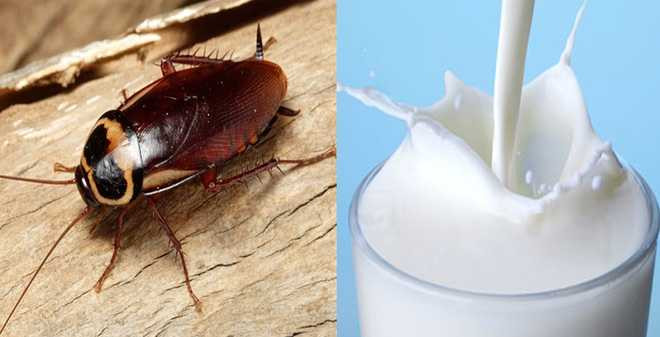
What Makes the Protein Crystals Different?
Protein crystals are usually associated with structural biology and laboratory research, where scientists crystallize proteins to study their three-dimensional structures.
The cockroach's nutritional crystals are different in purpose.
They appear to serve as biological nutrient reserves.
The crystals contain proteins that can be broken down and used by developing offspring.
This makes them interesting from a nutritional perspective because they combine storage and digestibility in an unusual biological structure.
Scientists can study how the proteins interact, how they form crystals, and how those crystals are broken down during digestion.
Understanding these mechanisms could potentially teach researchers more about protein storage and delivery.
That knowledge may eventually have applications beyond nutrition.
Is Cockroach Milk Really a “Superfood”?
The term superfood is largely a marketing expression rather than a formal scientific category.
There is no universally accepted medical definition of a superfood.
Foods such as berries, legumes, nuts, leafy vegetables, and whole grains are often described this way because they provide multiple beneficial nutrients.
But an unusual nutrient composition does not automatically make something a superior food for humans.
Cockroach milk is an excellent example of why context matters.
Its protein crystals are fascinating.
They appear to be nutritionally valuable for the cockroach offspring that evolved to consume them.
But that does not automatically mean they have been shown to improve human health.
There is currently a huge gap between biological potential and proven human nutritional benefit.
Until human studies establish safety, digestibility, appropriate dosage, and meaningful health outcomes, calling cockroach milk a human “superfood” would be premature.
There Are Still Major Safety Questions
Before any novel biological substance could become a food ingredient, safety would have to be carefully evaluated.
Researchers would need to understand its composition in detail.
Questions would include:
-
Could it trigger allergic reactions?
-
How would the proteins behave during digestion?
-
Could contaminants be introduced during production?
-
How stable would the proteins be during processing?
-
Would heating alter their nutritional properties?
-
What would be a safe serving size?
-
Could the material interact with existing food allergies?
-
How would it be regulated as a food ingredient?
These questions are not unique to cockroach milk.
Any new food ingredient—especially one derived from an unusual biological source—would need rigorous evaluation.
The fact that something is natural does not automatically mean it is safe.
The Environmental Question
There is another reason researchers are exploring unconventional sources of protein: the global demand for protein is increasing.
Traditional livestock production requires significant amounts of land, water, feed, and energy.
That has encouraged scientists and food companies to investigate alternative protein sources.