When people hear the phrase “cockroach milk,” the first reaction is usually disbelief.
Milk from a cockroach?
It sounds more like science fiction than nutrition. Yet behind this unusual idea is a genuinely fascinating area of biological research involving one particular cockroach species and an extraordinary type of nutrient-rich secretion.
Scientists have become interested in the milk-like substance produced by the Pacific beetle cockroach, Diploptera punctata. Unlike most cockroaches, this species gives birth to live young rather than laying conventional egg cases. During development, the embryos receive nourishment from a milk-like secretion produced inside the mother.
What makes the discovery especially interesting is that researchers have found that this secretion contains highly nutritious protein crystals.
These crystals have attracted attention because they appear to store nutrients in a remarkably concentrated form. Some researchers have suggested that understanding them could eventually contribute to new approaches in nutrition, food science, or protein production.
But there is a major difference between saying that cockroach milk has an interesting nutritional composition and saying that it is ready to become the next superfood.
It is not. At least not yet.
The science is intriguing, but practical production, safety, taste, scalability, cost, and consumer acceptance remain enormous questions.
So what exactly is cockroach milk, why are scientists interested in its protein crystals, and could anything derived from this unusual secretion realistically become part of future human nutrition?
What Is “Cockroach Milk”?
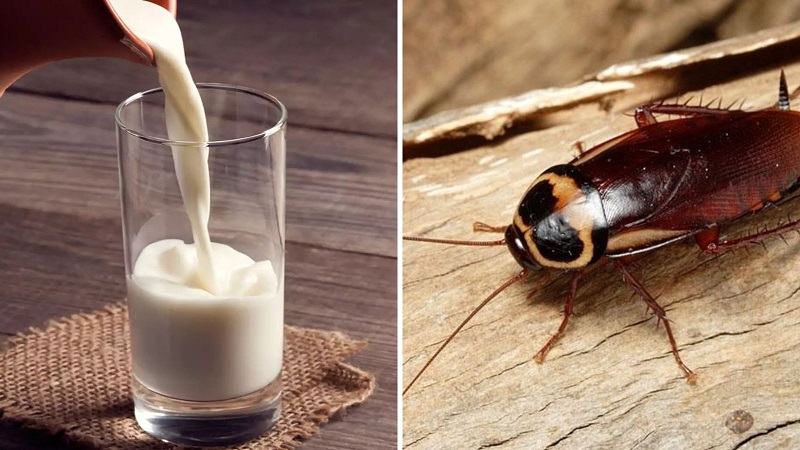
Despite its name, cockroach milk is not milk in the same sense as cow's milk, goat's milk, or human breast milk.
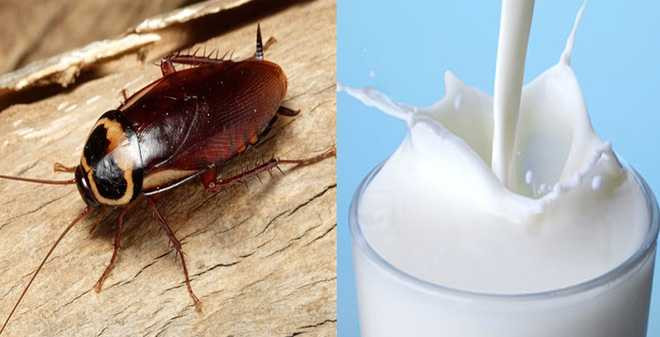
It is a milk-like secretion produced by the female Diploptera punctata, a small cockroach species native to parts of the Pacific region.
The species is unusual because it is viviparous, meaning the female gives birth to live offspring.
Inside the mother, developing embryos receive nutrients from this secretion. As the young grow, the secretion provides energy and nutrients needed for their development.
Scientists became particularly interested in it because the secretion contains microscopic protein crystals.
These crystals are not simply floating around like ordinary milk proteins. They function more like highly concentrated nutritional packages that can be consumed by the developing offspring.
That makes them biologically fascinating.
The mother is essentially producing a nutrient source that allows her young to develop within her body, and the proteins become crystallized into a form that appears to provide a concentrated source of nourishment.
Why Are Protein Crystals So Interesting?
The biggest reason cockroach milk attracted scientific attention is not the novelty of the cockroach itself.
It is the protein crystals.
Researchers studying the secretion found that these crystals contain proteins and other nutrients that can be digested by the developing young.
What makes them especially interesting is their apparent ability to function as a nutrient storage system.
Instead of having proteins remain only in a dissolved form, the cockroach packages them into crystals.
This creates a highly concentrated nutritional structure.
Some research has suggested that the crystals contain several times the energy content of an equivalent amount of conventional dairy milk, although comparisons between different biological materials should be interpreted carefully.
The important point is not that humans should immediately replace milk with cockroach secretion.
Rather, scientists are interested in understanding how nature creates and stores such concentrated protein-rich material.
That knowledge could potentially have applications far beyond cockroaches.
A Tiny Creature With an Unusual Reproductive Strategy
The biology of Diploptera punctata is one of the reasons this discovery is so fascinating.
Most people associate cockroaches with eggs, egg cases, and large numbers of offspring.
This particular species is different.
The female retains her developing young inside her reproductive tract, where they receive nourishment from a milk-like secretion.
This is an unusual reproductive strategy among insects.
Because the embryos cannot simply feed independently, the mother must provide them with an energy-rich food source.
That may help explain why the secretion is so nutritionally concentrated.
In evolutionary terms, the protein crystals make sense as a biological solution to a specific problem: how to provide growing offspring with enough nutrients during development.
Scientists are often interested in such unusual adaptations because nature can sometimes solve biological problems in ways that humans have not previously considered.
Could Humans Actually Drink Cockroach Milk?
This is where the exciting headline meets reality.
Theoretically, scientists can study the composition and biological properties of the secretion.
But that does not mean that humans can simply collect it from cockroaches and drink it safely.
There are several enormous practical obstacles.
First, the amount produced by an individual cockroach is extremely small.
A human food product would require enormous quantities of material.
Second, collecting the secretion directly from cockroaches would be highly impractical.
Third, there are questions about food safety, allergens, contamination, processing, taste, regulatory approval, and consumer acceptance.
And perhaps most importantly, there is currently no reason to conclude that drinking cockroach milk offers established health benefits for humans.
The research is primarily interesting from a biological and biochemical perspective.
The Real Potential May Be in the Proteins, Not the Milk
This is perhaps the most important distinction.
When researchers study an unusual biological substance, they do not necessarily intend to turn the original substance into a supermarket product.
Instead, they may be interested in isolating, understanding, reproducing, or modifying the useful components.
In the case of cockroach milk, the protein crystals are particularly intriguing.
Scientists could potentially investigate the proteins responsible for forming the crystals and determine how they are produced.
If those proteins can eventually be manufactured using biotechnology, researchers might be able to create similar nutritional components without needing to harvest large quantities directly from insects.
This is where concepts such as recombinant protein production, microbial fermentation, and cellular agriculture could potentially become relevant.
In other words, the future product may not come from squeezing milk out of cockroaches.
It could come from learning how cockroaches naturally produce these unusual proteins and then finding a more practical way to manufacture them.
Could Biotechnology Change the Equation?
Modern biotechnology has already demonstrated that valuable proteins can be produced using microorganisms or cultured cells.
Researchers can introduce genetic instructions into organisms such as yeast or bacteria, allowing them to manufacture specific proteins.
In principle, similar approaches could one day be investigated for proteins inspired by unusual biological systems.
If scientists can determine which genes are responsible for producing the relevant proteins and understand how the crystals form, they may be able to explore alternative production systems.
Such an approach could potentially be much more scalable than collecting secretion directly from insects.
However, this remains an area of scientific possibility rather than an established food-production technology for cockroach milk.
Moving from an interesting laboratory discovery to a commercially viable food can take years or decades.
A promising protein still has to pass through extensive testing.
What Makes the Protein Crystals Different?
Protein crystals are usually associated with structural biology and laboratory research, where scientists crystallize proteins to study their three-dimensional structures.
The cockroach's nutritional crystals are different in purpose.
They appear to serve as biological nutrient reserves.
The crystals contain proteins that can be broken down and used by developing offspring.
This makes them interesting from a nutritional perspective because they combine storage and digestibility in an unusual biological structure.
Scientists can study how the proteins interact, how they form crystals, and how those crystals are broken down during digestion.
Understanding these mechanisms could potentially teach researchers more about protein storage and delivery.
That knowledge may eventually have applications beyond nutrition.
Is Cockroach Milk Really a “Superfood”?
The term superfood is largely a marketing expression rather than a formal scientific category.
There is no universally accepted medical definition of a superfood.
Foods such as berries, legumes, nuts, leafy vegetables, and whole grains are often described this way because they provide multiple beneficial nutrients.
But an unusual nutrient composition does not automatically make something a superior food for humans.
Cockroach milk is an excellent example of why context matters.
Its protein crystals are fascinating.
They appear to be nutritionally valuable for the cockroach offspring that evolved to consume them.
But that does not automatically mean they have been shown to improve human health.
There is currently a huge gap between biological potential and proven human nutritional benefit.
Until human studies establish safety, digestibility, appropriate dosage, and meaningful health outcomes, calling cockroach milk a human “superfood” would be premature.
There Are Still Major Safety Questions
Before any novel biological substance could become a food ingredient, safety would have to be carefully evaluated.
Researchers would need to understand its composition in detail.
Questions would include:
-
Could it trigger allergic reactions?
-
How would the proteins behave during digestion?
-
Could contaminants be introduced during production?
-
How stable would the proteins be during processing?
-
Would heating alter their nutritional properties?
-
What would be a safe serving size?
-
Could the material interact with existing food allergies?
-
How would it be regulated as a food ingredient?
These questions are not unique to cockroach milk.
Any new food ingredient—especially one derived from an unusual biological source—would need rigorous evaluation.
The fact that something is natural does not automatically mean it is safe.
The Environmental Question
There is another reason researchers are exploring unconventional sources of protein: the global demand for protein is increasing.
Traditional livestock production requires significant amounts of land, water, feed, and energy.
That has encouraged scientists and food companies to investigate alternative protein sources.
These include:
-
Plant proteins
-
Insect proteins
-
Algae
-
Fermentation-derived proteins
-
Cultivated animal proteins
-
Novel microbial protein sources
Cockroach-derived proteins could theoretically fit into this broader conversation, but their practical advantages remain uncertain.
There is no evidence that cockroach milk is currently a scalable replacement for conventional protein sources.
The more realistic scientific value may lie in learning from the cockroach's biology rather than farming enormous numbers of cockroaches for milk.
Why Insects Are Receiving More Scientific Attention
Cockroaches may be one of the least appealing insects to imagine as food, but insects themselves are increasingly being studied as alternative protein sources.
Insects can convert feed into body mass efficiently, and some species are already consumed traditionally in various parts of the world.
However, edible insects and cockroach milk are not the same thing.
Edible insect farming generally involves species specifically selected for food production, controlled rearing, processing, and food-safety standards.
The idea of harvesting a secretion from cockroaches is an entirely different challenge.
That distinction is important when discussing the future of insect-based nutrition.
The Biggest Challenge May Be Consumer Acceptance
Even if scientists eventually developed a safe and affordable way to manufacture cockroach-milk proteins, there would still be a major obstacle:
Would people actually want to eat them?
Food is not only about nutrition.
Culture, psychology, appearance, taste, smell, tradition, and familiarity all influence what people are willing to consume.
For many consumers, the words “cockroach milk” create an immediate emotional reaction.
That could make a conventional food product difficult to market.
However, biotechnology could potentially change the terminology and the production process.
If a useful protein were manufactured through fermentation rather than directly collected from insects, the resulting ingredient might have little connection to an actual cockroach in the final product.
At that point, the question becomes less about eating cockroaches and more about whether a particular protein is safe, nutritious, affordable, and useful.
Could It Become an Ingredient Rather Than a Beverage?
If this research ever leads to commercial applications, the result might not resemble a glass of milk.
A more realistic possibility would be a protein ingredient incorporated into another food.
For example, scientists could theoretically explore whether specific proteins inspired by the crystals could be used in nutritional formulations, specialized foods, protein products, or other applications.
But these are possibilities, not established products.
Consider how many scientific discoveries never become consumer products.
A substance can be biologically fascinating without being economically practical.
Researchers therefore need to determine not only whether something works, but whether it can be produced consistently, safely, affordably, and at large scale.
Why This Research Matters Even If Nobody Ever Drinks It
This may actually be the most interesting part of the story.
Scientific discoveries do not have to become household products to be valuable.
Studying cockroach milk can reveal how organisms solve problems involving:
-
Protein storage
-
Nutrient delivery
-
Embryonic development
-
Molecular crystallization
-
Energy density
-
Digestion
-
Biological reproduction
Understanding these mechanisms can contribute to fundamental biology.
And fundamental research sometimes leads to applications that researchers did not initially anticipate.
A strange discovery in one species can eventually inspire an entirely different technology.
Don't Believe Every “Future Superfood” Claim
Whenever an unusual food discovery becomes popular online, headlines can quickly move faster than the science.
A laboratory finding may become a claim that scientists have discovered “the world's most nutritious food.”
A protein study may become “the next superfood.”
A theoretical application may become “the future of human nutrition.”
These transformations can make interesting research sound much more established than it actually is.
Cockroach milk is a perfect example.
The underlying science is real and fascinating.
The protein crystals are genuinely unusual.
But that does not mean a cockroach-milk beverage is about to appear in grocery stores.
There is still a tremendous amount of work between discovery and commercialization.
What the Future Could Look Like
The future of this research is likely to depend on whether scientists can move beyond simply describing the crystals and toward understanding exactly how they are produced and whether their properties can be reproduced.
If researchers can identify valuable characteristics and reproduce them through controlled biotechnology, the potential applications could become more interesting.
The final product might not contain any actual cockroach-derived secretion.
Instead, it could potentially involve proteins manufactured through fermentation or another controlled biological process.
That would address some of the biggest problems associated with direct harvesting.
Even then, researchers would still need to establish safety, nutritional value, production efficiency, stability, regulatory compliance, and consumer acceptance.
Those are significant hurdles.
The Bottom Line
Cockroach milk sounds bizarre, but the science behind it is genuinely fascinating.
The secretion produced by Diploptera punctata contains unusual protein crystals that serve as a nutrient source for developing offspring. Their concentrated nutritional properties have attracted scientific interest and raised questions about whether the underlying biology could eventually inspire new approaches to protein production.
But it is far too early to call cockroach milk a proven human superfood.
There is currently a major difference between an intriguing biological discovery and a safe, practical food for people.
The future may not involve humans drinking milk collected from cockroaches at all. Instead, scientists could potentially use biotechnology to understand and reproduce specific proteins or molecular mechanisms found in these crystals.
Whether that ultimately leads to a useful food ingredient, a new biotechnology platform, or simply a deeper understanding of insect biology remains to be seen.
For now, the most accurate way to describe cockroach milk is not as the next miracle food, but as an extraordinary example of how nature packages and delivers nutrients and a fascinating subject for future scientific research.
And sometimes, the strangest discoveries are the ones that make scientists ask the most interesting questions.