Studying cockroach milk can reveal how organisms solve problems involving:
-
Protein storage
-
Nutrient delivery
-
Embryonic development
-
Molecular crystallization
-
Energy density
-
Digestion
-
Biological reproduction
Understanding these mechanisms can contribute to fundamental biology.
And fundamental research sometimes leads to applications that researchers did not initially anticipate.
A strange discovery in one species can eventually inspire an entirely different technology.
Don't Believe Every “Future Superfood” Claim
Whenever an unusual food discovery becomes popular online, headlines can quickly move faster than the science.
A laboratory finding may become a claim that scientists have discovered “the world's most nutritious food.”
A protein study may become “the next superfood.”
A theoretical application may become “the future of human nutrition.”
These transformations can make interesting research sound much more established than it actually is.
Cockroach milk is a perfect example.
The underlying science is real and fascinating.
The protein crystals are genuinely unusual.
But that does not mean a cockroach-milk beverage is about to appear in grocery stores.
There is still a tremendous amount of work between discovery and commercialization.
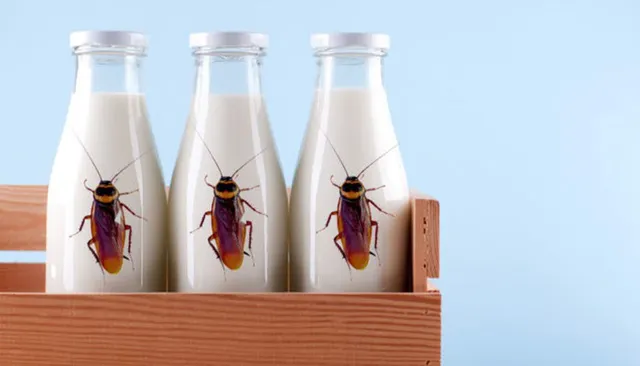
What the Future Could Look Like
The future of this research is likely to depend on whether scientists can move beyond simply describing the crystals and toward understanding exactly how they are produced and whether their properties can be reproduced.
If researchers can identify valuable characteristics and reproduce them through controlled biotechnology, the potential applications could become more interesting.
The final product might not contain any actual cockroach-derived secretion.
Instead, it could potentially involve proteins manufactured through fermentation or another controlled biological process.
That would address some of the biggest problems associated with direct harvesting.
Even then, researchers would still need to establish safety, nutritional value, production efficiency, stability, regulatory compliance, and consumer acceptance.
Those are significant hurdles.
The Bottom Line
Cockroach milk sounds bizarre, but the science behind it is genuinely fascinating.
The secretion produced by Diploptera punctata contains unusual protein crystals that serve as a nutrient source for developing offspring. Their concentrated nutritional properties have attracted scientific interest and raised questions about whether the underlying biology could eventually inspire new approaches to protein production.
But it is far too early to call cockroach milk a proven human superfood.
There is currently a major difference between an intriguing biological discovery and a safe, practical food for people.
The future may not involve humans drinking milk collected from cockroaches at all. Instead, scientists could potentially use biotechnology to understand and reproduce specific proteins or molecular mechanisms found in these crystals.
Whether that ultimately leads to a useful food ingredient, a new biotechnology platform, or simply a deeper understanding of insect biology remains to be seen.
For now, the most accurate way to describe cockroach milk is not as the next miracle food, but as an extraordinary example of how nature packages and delivers nutrients and a fascinating subject for future scientific research.
And sometimes, the strangest discoveries are the ones that make scientists ask the most interesting questions.