That is why the researchers also used human-derived cardiac models.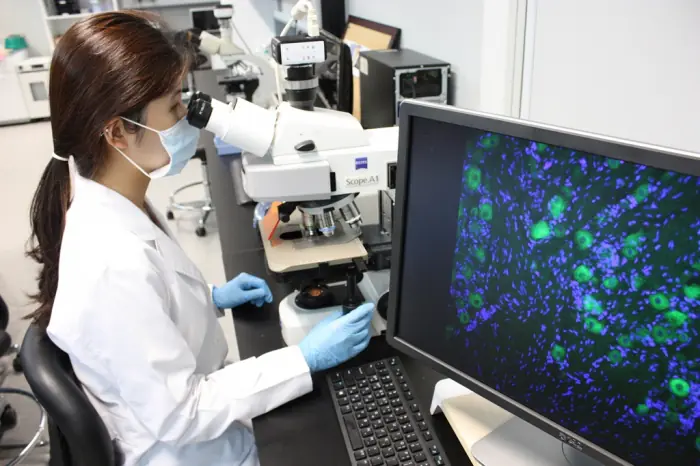
7. Miniature heart-like tissue offered another important clue
A particularly interesting part of the study involved human induced pluripotent stem cells, often abbreviated as iPSCs.
These cells can be guided in laboratory conditions to develop into different cell types. In this research, scientists used them to produce cells relevant to the heart and immune system.
They created three-dimensional cardiac spheroids—small structures containing heart-related cells that can reproduce certain features of cardiac tissue. These models included heart muscle cells, macrophages and endothelial cells, which form the inner lining of blood vessels.
The spheroids are not complete human hearts. They do not reproduce every feature of a functioning organ or the full complexity of the human body. However, they allow researchers to examine interactions between different cell types in a controlled environment.
The scientists exposed these structures to material from vaccine-stimulated immune cells. They observed increases in markers associated with cardiac stress and changes in the way the structures contracted.
The researchers also examined whether blocking the inflammatory signals could reduce those effects. Their findings suggested that inhibiting CXCL10-related signaling and IFN-γ could partially restore aspects of the spheroids' function and reduce certain markers of stress.
This was important because it provided a second experimental setting in which the inflammatory signals appeared to affect cardiac cells.
The team also investigated the behavior of individual heart cells. When human iPSC-derived cardiomyocytes were exposed to the cytokines, researchers observed impaired contractility, changes associated with abnormal electrical activity and inflammatory gene-expression patterns.
These results helped strengthen the biological explanation proposed by the team. The signals appeared capable of influencing heart muscle cells directly, not simply attracting immune cells into the tissue.
Nevertheless, a cardiac spheroid is still a laboratory model. It cannot reproduce all the conditions of a living human heart, including the full circulation system, nervous system, hormonal environment and the many interactions that occur throughout the body.
The results therefore support further investigation. They do not establish a treatment that has been proven to prevent myocarditis in vaccinated people.
8. What happened when scientists blocked the two immune signals?
One of the most significant findings was that blocking the CXCL10 and IFN-γ pathways reduced signs of cardiac injury in the experimental models.
This is why the research attracted attention beyond the identification of two inflammatory proteins. It suggested that the pathway might be a potential target for future approaches to reducing vaccine-associated myocarditis.
In the animal experiments, neutralizing the relevant signals reduced cardiac injury markers and inflammatory activity in heart tissue. In the human-derived cardiac models, inhibiting the pathways also reduced certain signs of stress and helped preserve aspects of normal contraction.
The researchers also examined whether the interventions interfered with the immune response generated by vaccination.
This is a crucial question. The purpose of a vaccine is to train the immune system to recognize a pathogen. A treatment that reduced inflammation but also substantially weakened protective immunity could create a different problem.
The study reported that the experimental interventions reduced cardiac injury while preserving important aspects of the immune response in the models examined.
That finding is scientifically interesting because it suggests that certain harmful inflammatory effects might be separable from some protective immune functions.
However, the results should not be interpreted as evidence that people should take immune-suppressing medicines or cytokine-blocking drugs before or after vaccination. These interventions were studied under controlled experimental conditions. They have not been established as routine preventive treatment for vaccine-associated myocarditis.
Blocking cytokines can have consequences beyond the heart. These molecules participate in normal immune defense, and changing their activity in people would require careful evaluation of benefits and risks.
The research therefore points towards a possible future direction, not an immediate medical recommendation.
The next question is whether a more familiar compound could influence the same pathway. That led the scientists to investigate genistein, a substance naturally found in soy.
9. The genistein discovery: an interesting lead, not a proven supplement treatment
Genistein is a naturally occurring compound found in soybeans and other plant sources. It belongs to a group of substances known as isoflavones, which have been studied for their biological effects.
The Stanford team investigated genistein because previous research had suggested that it could influence inflammatory processes and cardiovascular biology.
In the study, genistein reduced certain harmful effects associated with the CXCL10–IFN-γ pathway in laboratory models. Researchers observed reductions in markers of cardiac injury and inflammatory activity in the experimental systems.
The team also reported that genistein treatment in mice reduced some of the inflammatory changes associated with vaccination. Importantly, the experiments suggested that the treatment did not eliminate the measured antibody response to the vaccine in those animals.
This result attracted attention because genistein is associated with a familiar food source: soy.
However, the difference between a compound showing activity in laboratory experiments and a supplement being proven safe and effective for people is enormous.
A laboratory dose does not automatically translate into a suitable human dose. The amount of a compound absorbed from food or supplements can vary. Its effects may also depend on metabolism, other medicines, health conditions and individual differences.
The study did not establish that eating soybeans prevents vaccine-associated myocarditis. It did not demonstrate that soy supplements protect people who have received mRNA vaccines. Nor did it provide a basis for recommending genistein as a routine treatment.
People should therefore avoid treating this finding as a reason to start taking high-dose supplements.
Genistein has biological effects that deserve further investigation, but that does not make every product containing it appropriate for every person. Supplements can vary in concentration and quality, and they may interact with medicines or be unsuitable in certain circumstances.
The most accurate interpretation is that genistein was a promising experimental lead. Further research would be needed to establish whether it could ever become a safe and useful intervention for people.
10. Does this mean COVID-19 vaccinated people are likely to become ill?
No. That conclusion is not supported by the study.
The research examined a rare complication and investigated a possible biological mechanism. It did not find that most vaccinated people develop myocarditis, nor did it demonstrate that people who received vaccines years ago are now likely to develop heart inflammation.
The title in the screenshot—“COVID-19 vaccinated individuals may be ill”—is much broader than the actual scientific finding.
The evidence concerns a specific adverse event that has been observed rarely after certain COVID-19 vaccines, particularly mRNA vaccines. The risk has been most frequently identified in adolescent and young adult males, especially within a week after the second dose in the original schedules.
That is very different from suggesting that vaccination generally makes people ill.
It is also important to distinguish short-term side effects from myocarditis. Many people experience temporary effects such as soreness at the injection site, tiredness, headache, muscle aches or fever. These reactions generally reflect the body's response to vaccination and are not the same as inflammation of the heart muscle.
Myocarditis is a specific medical condition that requires clinical assessment. It cannot be diagnosed from ordinary tiredness, a social media post or a person's assumption that a symptom must be connected to a vaccine.