Chapter 1: What Does the X-Ray Actually Reveal?
The image accompanying the alarming online headline shows a person's lower body, with particular attention drawn to one leg. Red markings highlight areas around the knee, lower leg, and foot, while darker shapes appear in the pelvic region.
For someone seeing this image for the first time, it may look frightening. The accompanying message suggests that people who received COVID-19 vaccines could be experiencing serious health problems.
But there is an important question that should come before any conclusion: What does the image actually prove?
The answer is that it does not establish a diagnosis, identify a blood clot, or demonstrate that vaccination caused an illness.
Medical images must be interpreted by qualified professionals using the original examination, the patient's medical history, and appropriate diagnostic tests.
Why medical X-rays can be misleading
An X-ray is an imaging technique that uses a small amount of ionizing radiation to create pictures of structures inside the body.
Bones appear relatively white because they absorb more X-rays than surrounding soft tissues.
Muscles, skin, and fat appear in different shades of gray.
Air appears dark.
Doctors use X-rays to investigate several conditions, including:
-
Bone fractures.
-
Joint abnormalities.
-
Certain infections.
-
Bone tumors.
-
Structural deformities.
-
Some foreign objects.
-
Changes in bone density.
However, ordinary X-rays are not designed to diagnose most blood clots inside leg veins.
A person can have a serious deep vein thrombosis even when an ordinary leg X-ray does not show anything unusual.
Likewise, an unusual-looking X-ray does not automatically indicate a blood clot or vaccine-related illness.
Johns Hopkins Medicine explains that extremity X-rays are commonly used to evaluate bones, joints, injuries, infections, tumors, and other structural abnormalities.
Johns Hopkins Medicine+1
Could the dark areas in the image indicate something dangerous?
It would be irresponsible to identify the dark areas in the supplied image as a particular disease without the original radiology report.
Their appearance alone is insufficient to establish whether they represent anatomical structures, imaging artifacts, external objects, or another finding.
The red markings also appear to be visual annotations rather than diagnostic evidence.
A medical professional would need to review the original images and determine whether additional examinations are necessary.
This distinction is especially important when images are shared on social media.
An image may be genuine, digitally modified, taken from an unrelated medical case, or presented without its original explanation.
Even an authentic medical photograph can become misleading when its context is removed.
Why the legs are an important part of circulation health
The legs contain an extensive network of arteries, veins, muscles, and nerves.
Arteries carry oxygen-rich blood from the heart toward the tissues.
Veins return blood toward the heart.
The calf muscles also help push blood upward against gravity, particularly when a person walks.
When circulation is disrupted, symptoms may develop in the legs.
These can include swelling, discomfort, changes in skin color, unusual warmth, and pain.
However, these symptoms have many possible explanations.
A person may experience leg swelling because of prolonged sitting, an injury, venous insufficiency, infection, medication effects, or an underlying heart, kidney, or liver condition.
One-sided swelling and pain can also be signs of deep vein thrombosis, a condition that requires prompt medical assessment.
The connection with COVID-19 vaccination
COVID-19 vaccines have undergone extensive safety monitoring.
Most reported reactions are temporary, including pain at the injection site, fatigue, headache, muscle aches, chills, and fever.
These reactions generally begin within a few days and resolve relatively quickly.
Nevertheless, medical authorities have identified certain rare but serious adverse events associated with particular vaccine types.
One example is thrombosis with thrombocytopenia syndrome, commonly abbreviated as TTS.
This condition involves blood clots occurring together with unusually low platelet levels.
It has been associated with very rare cases following certain adenovirus-vector COVID-19 vaccines, including AstraZeneca and Johnson & Johnson/Janssen.
This is a documented medical concern, but it does not mean that every person who received a COVID-19 vaccine faces a high risk of developing blood clots.
World Health Organization+2
The important difference is between acknowledging a genuine, rare medical complication and claiming that an unrelated medical image proves widespread vaccine-related disease.
Those are not the same thing.
Chapter 2: Blood Clots, Leg Swelling, and the Rare Complication Doctors Recognize
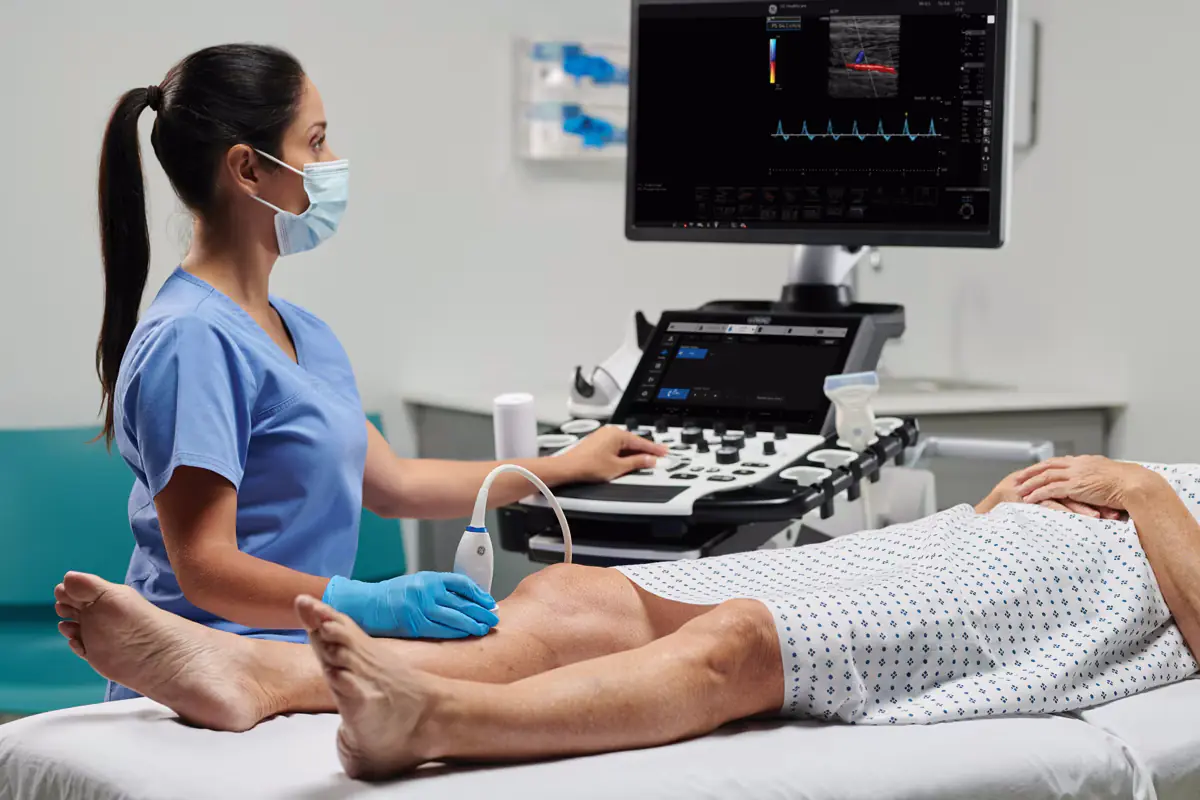
One of the most important medical conditions to understand when discussing leg problems is deep vein thrombosis, often called DVT.
DVT occurs when a blood clot forms in a deep vein, most commonly in the lower leg or thigh.
The clot can partially or completely obstruct blood flow.
In some cases, part of the clot can break away and travel through the bloodstream to the lungs, causing a potentially life-threatening pulmonary embolism.
This is why unexplained leg swelling should never be dismissed.
What causes deep vein thrombosis?
Blood clots can form when normal blood circulation is disrupted.
Several factors contribute to the development of DVT.
Prolonged immobility
Remaining seated or lying down for extended periods can slow blood flow through the legs.
This may happen during long-distance flights, lengthy car journeys, hospitalization, or recovery after major surgery.
Surgery and physical injury
Certain operations, especially those involving the hips, pelvis, or legs, can increase the risk of clot formation.
Injury can also damage blood vessels and contribute to abnormal clotting.
Pregnancy and the postpartum period
Hormonal changes and physiological changes in blood circulation increase the risk of blood clots during pregnancy and after childbirth.
Certain medical conditions
Cancer, inherited clotting disorders, previous DVT, and some chronic illnesses can increase the likelihood of thrombosis.
Hormonal medications
Some estrogen-containing medications can increase the risk of blood clots in susceptible individuals.
These risk factors are important because leg swelling is not necessarily connected to vaccination.
A doctor must consider the complete medical history before determining the likely cause.
What is thrombosis with thrombocytopenia syndrome?
TTS is different from ordinary DVT.