Chapter 1: What Happens to the Body After Receiving a COVID-19 Vaccine?
The introduction of COVID-19 vaccines marked an important development in the global response to the pandemic.
Millions of people received vaccinations to reduce their chances of developing severe illness, requiring hospitalization, or dying from COVID-19.
However, as vaccination programs expanded, questions emerged about possible side effects.
Some people experienced temporary discomfort, while a small number developed more serious medical complications.
Understanding the difference between an expected reaction and a potentially serious adverse event is essential.
How does a COVID-19 vaccine work?
COVID-19 vaccines are designed to help the immune system recognize the virus responsible for COVID-19.
Different vaccine technologies achieve this in different ways.
Messenger RNA (mRNA) vaccines provide instructions that allow cells to produce a harmless version of a viral protein. The immune system recognizes this protein and develops an immune response.
Protein-based vaccines introduce a component of the virus alongside ingredients that help stimulate immunity.
Other vaccine technologies use modified viral vectors to deliver genetic instructions.
Although these approaches differ, their purpose is similar: prepare the immune system to respond more effectively if a person encounters the virus.
Vaccination does not mean that someone can never become infected.
Instead, its principal benefit is reducing the risk of severe disease and serious complications.
Common reactions after vaccination
Some people experience side effects after receiving a COVID-19 vaccine.
Common reactions include:
-
Pain or tenderness around the injection site.
-
Mild fever.
-
Headaches.
-
Muscle aches.
-
Joint discomfort.
-
Fatigue.
-
Chills.
These reactions generally begin within one to three days and improve within a few days.
They occur because the immune system is responding to the vaccine.
Not everyone experiences these symptoms, and the absence of side effects does not mean that the vaccine has failed to produce an immune response.
The World Health Organization explains that most COVID-19 vaccine side effects are mild or moderate and resolve without special treatment.
World Health Organization+1
Why do some people experience stronger reactions?
Individual responses to vaccination can vary.
Factors such as age, immune system function, previous exposure to the virus, vaccine formulation, and the number of previous doses may influence the experience.
One person may feel tired for a day, while another may experience fever and muscle discomfort.
These differences do not necessarily indicate that one person has suffered an injury.
However, symptoms that are unusually severe, persistent, or unexpected should not automatically be dismissed as ordinary vaccine reactions.
Can a vaccine cause serious illness?
Yes, rare serious adverse reactions have been identified.
It would be inaccurate to claim that COVID-19 vaccines have absolutely no risks.
The US Centers for Disease Control and Prevention monitors several recognized adverse events, including:
-
Myocarditis and pericarditis.
-
Severe allergic reactions.
-
Guillain-Barré syndrome.
-
Thrombosis with thrombocytopenia syndrome associated with certain vaccine products.
These conditions are uncommon, and their likelihood varies according to vaccine type and individual characteristics.
The recognition of rare adverse reactions is an important part of vaccine safety monitoring.
It allows health authorities to update recommendations, identify higher-risk groups, and improve medical guidance.
CDC+1
Why people should avoid jumping to conclusions
A person may develop a medical condition several days, months, or even years after vaccination.
However, the timing alone does not establish that the vaccine caused the condition.
For example, someone who experiences leg pain after vaccination may have a muscle injury, a circulation problem, an unrelated medical condition, or, in rare circumstances, a serious complication.
The correct explanation requires medical assessment.
Doctors may review the person's medical history, examine symptoms, and order appropriate tests.
The distinction between an event occurring after vaccination and an event caused by vaccination is fundamental to understanding medical safety.
The key message: People should be informed about rare complications without being encouraged to believe that every illness occurring after vaccination is vaccine-related.
Chapter 2: Blood Clots and Circulation Problems — Understanding the Rare Risks
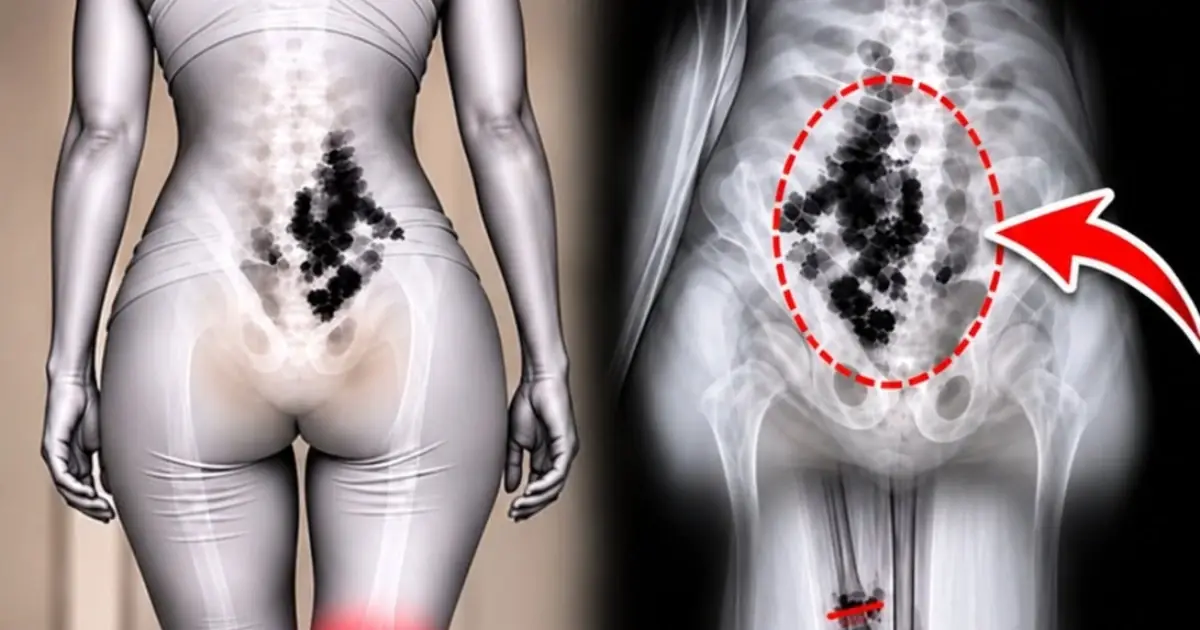
The supplied image highlights the lower body and an X-ray-style illustration showing unusual dark areas around the abdomen and pelvis.
It also emphasizes the leg and foot.
These visual elements may suggest circulation problems or blood clots, but the image does not provide a medical diagnosis.
It is important to understand that some rare vaccine-related blood-clotting complications have been documented.
One recognized condition is thrombosis with thrombocytopenia syndrome, commonly abbreviated as TTS.
What is thrombosis with thrombocytopenia syndrome?
TTS is a rare condition involving two important abnormalities:
-
Blood clots forming in blood vessels.
-
An unusually low platelet count.
Platelets are blood components that help the body control bleeding.
When blood clots develop in unusual locations while platelet levels are low, the condition can become dangerous.
TTS has been associated with certain adenovirus-vector COVID-19 vaccines, including the Johnson & Johnson/Janssen vaccine and the AstraZeneca vaccine.
This complication received considerable attention during the early stages of global vaccination programs.
The CDC identified approximately four cases of TTS per million doses of the Johnson & Johnson/Janssen vaccine in the United States, with higher rates in certain female age groups.
The vaccine was subsequently no longer available in the United States after May 2023.
These figures relate specifically to that vaccine and should not be applied to all COVID-19 vaccines.
CDC+1
Why can blood clots become dangerous?
Blood clots are not always harmful.
The body naturally forms clots to prevent excessive bleeding after an injury.