As a general rule:
-
Refrigerate cut watermelon within two hours of cutting.
-
If the surrounding temperature is above 90°F (32°C), refrigerate it within one hour.
-
Keep the refrigerator at or below 40°F (4°C).
-
Store cut pieces in clean, covered containers.
-
Use refrigerated cut watermelon within approximately three to four days, provided it has been handled and stored safely.
If cut watermelon has been left out beyond these time limits, the safest option is to discard it. Do not rely on smell or appearance to determine whether it is still safe.
Check 6: Think about where and how it was handled
Food safety begins before the watermelon reaches your refrigerator.
Was the rind washed before cutting? Was the knife clean? Did the fruit sit on a dirty countertop? Was it handled with clean hands?
The outside of a watermelon can carry dirt and microorganisms. When a knife cuts through the rind, it can transfer contamination to the flesh.
For this reason, washing the watermelon before cutting is an important step, even though the rind will not be eaten.
If you know that the fruit was exposed to dirty surfaces or contaminated equipment, be more cautious.
A simple safety checklist
<text weight="semibold">A cracked watermelon may still be suitable to eat when:</text>
-
The flesh has a normal, fresh smell.
-
The surrounding flesh remains firm and juicy.
-
There is no visible mold.
-
There are no signs of decomposition.
-
The fruit has been handled hygienically.
-
It has been stored at a safe temperature.
<text weight="semibold">Discard the watermelon when:</text>
-
It smells sour, alcoholic, fermented, or rotten.
-
The flesh is slimy or visibly decomposing.
-
Mold is growing on the flesh.
-
There is unusual discoloration combined with other spoilage signs.
-
It has been left at room temperature beyond recommended food-safety limits.
-
You cannot determine whether it has been stored safely.
Remember that these checks are not a laboratory test. Some harmful bacteria cannot be detected by sight, smell, or taste.
Chapter 4: Can Eating a Cracked Watermelon Make You Sick?
A watermelon with internal cracks is not automatically a food-poisoning risk.
If the cracks developed naturally while the fruit was growing, the main concern may be texture or appearance rather than contamination.
However, once a watermelon is cut, it becomes more vulnerable to microbial contamination.
Its moist, nutrient-rich flesh provides an environment in which microorganisms can survive and multiply, especially when the fruit is kept at temperatures that allow bacterial growth.
How contamination can happen
Several sources can introduce microorganisms to a watermelon.
Contaminated rind
The outer surface may come into contact with soil, dirty water, animal waste, or contaminated handling equipment.
If the rind is not washed before cutting, a knife can carry microorganisms from the surface into the edible flesh.
Dirty knives and cutting boards
Kitchen equipment can transfer bacteria from raw meat, poultry, seafood, or unwashed produce to watermelon.
Using the same cutting board without proper cleaning creates an avoidable cross-contamination risk.
Unwashed hands
Hands can transfer microorganisms to the fruit during cutting, handling, or serving.
Washing hands with soap and water before preparing food is a simple but important preventive measure.
Improper storage
Leaving cut watermelon on a kitchen counter, in a warm vehicle, or outdoors during hot weather can allow microorganisms to multiply.
Refrigeration slows bacterial growth but does not sterilize the fruit.
What foodborne illness symptoms should you watch for?
Eating contaminated watermelon can potentially cause foodborne illness.
Symptoms may include:
-
Diarrhea.
-
Stomach cramps.
-
Nausea.
-
Vomiting.
-
Fever.
-
General weakness.
Symptoms can begin within hours or take several days to develop, depending on the microorganism involved.
Most mild cases improve with rest and adequate fluid intake. However, some infections can become serious, particularly in young children, older adults, pregnant people, and individuals with weakened immune systems.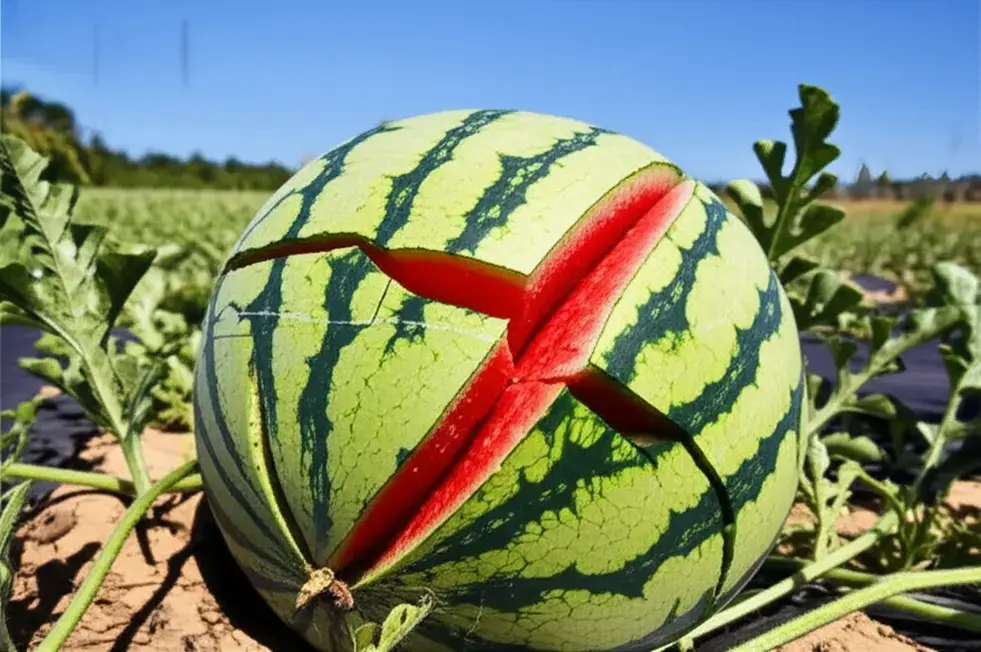
When should you seek medical attention?
Contact a healthcare professional if you develop persistent diarrhea, repeated vomiting, a high fever, or symptoms that are getting worse.
Seek prompt medical attention if you experience signs of dehydration, such as very little urination, dizziness, dry mouth, or unusual weakness.
Blood in the stool, severe abdominal pain, or an inability to keep fluids down also warrants medical evaluation.
Do not assume that symptoms are harmless simply because you only ate a small amount of watermelon.
Why tasting questionable watermelon is not a good idea
Some people try a tiny bite to determine whether a fruit has spoiled.
This is not a reliable safety method.
Foodborne pathogens may be present without changing the fruit's taste, smell, or appearance. A small taste can still expose you to microorganisms.
If the watermelon has clear signs of spoilage, discard it without tasting it.
The same principle applies to fruit that has been left unrefrigerated for too long. A normal flavor does not prove that it is safe.
What about children and older adults?
Extra caution is appropriate when serving watermelon to people who may be more vulnerable to foodborne illness.
Young children, older adults, pregnant people, and those with weakened immune systems can experience more serious complications from certain foodborne infections.
For these groups, avoid serving watermelon with uncertain storage histories, visible deterioration, or questionable handling.