A watermelon may have an unusual interior and still be edible if the flesh is fresh, properly handled, and free from signs of spoilage.
However, this does not mean every cracked watermelon should automatically be eaten.
The fruit's overall condition and storage history remain essential.
Myth 2: Cracks always mean the watermelon contains chemicals
There is no reliable basis for assuming that internal cracks prove a watermelon has been injected with chemicals or treated with a harmful substance.
Hollow heart is a recognized physiological disorder associated with fruit development.
A photograph of a cracked watermelon cannot establish whether chemicals were used during cultivation.
If you have concerns about a specific product, consider its source, handling, and any relevant food-safety information rather than relying on an unsupported visual claim.
Myth 3: A sweet smell means the watermelon is safe
A sweet aroma can be normal, but it does not guarantee food safety.
Some harmful microorganisms do not produce obvious odors.
A watermelon may smell pleasant and still be unsafe if it has been contaminated or left at room temperature for too long.
Always consider storage conditions and handling practices.
Myth 4: You can remove the cracked section and eat the rest
Whether this is reasonable depends on the condition of the fruit.
If the cracks are simply part of a hollow-heart defect and the surrounding flesh remains fresh and firm, removing an unpleasant-textured section may be acceptable.
However, if mold, sliminess, or decomposition is present, cutting away one section is not a dependable way to make the rest safe.
Watermelon is a high-moisture fruit, and contamination may extend beyond the visibly affected area.
When there are clear signs of spoilage, discard the fruit.
Myth 5: Refrigeration makes spoiled watermelon safe again
Refrigeration slows microbial growth, but it does not reverse spoilage.
It cannot reliably remove toxins that may already have formed, and it does not restore decomposed flesh.
If watermelon has been stored improperly or shows clear signs of spoilage, placing it in the refrigerator will not make it safe to eat.
Prevention is much more effective than trying to rescue fruit after it has deteriorated.
Chapter 7: What Should You Do After Discovering Cracks?
If you have just cut open a watermelon and noticed unusual cracks, there is no need to panic.
Instead, take a moment to inspect the fruit systematically.
First, look at the shape and location of the cracks. A hollow cavity surrounded by otherwise normal flesh may be consistent with hollow heart.
Next, examine the texture. The flesh should not be slimy or visibly decomposed.
Smell the fruit. A fresh watermelon should not have a strong sour, alcoholic, or rotten odor.
Look for mold, unusual liquid, and unexpected discoloration.
Finally, consider how long the watermelon has been cut and whether it has been kept at a safe temperature.
If the fruit looks and smells fresh, has a normal texture, and has been handled and stored safely, the cracks alone may not be a reason to throw it away.
If anything suggests spoilage or improper storage, do not take the risk.
What if you have already eaten some?
If you ate a few pieces of a watermelon that later appeared questionable, do not automatically assume you will become ill.
Not every unusual-looking fruit contains harmful microorganisms, and exposure does not always lead to infection.
However, stop eating the fruit if you discover clear signs of spoilage.
Monitor yourself for symptoms such as diarrhea, vomiting, abdominal cramps, and fever.
Drink fluids if you develop mild gastrointestinal symptoms, and seek medical advice if symptoms become severe, persistent, or concerning.
People at higher risk of complications should contact a healthcare professional sooner if they suspect foodborne illness.
There is no need to panic, but it is important to take symptoms seriously.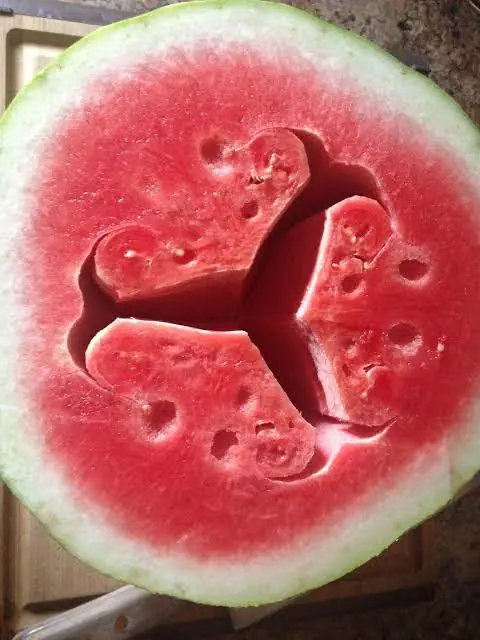
Conclusion: Cracks Inside a Watermelon Are Not Always a Reason to Panic
Discovering cracks inside a watermelon can be unpleasant, especially when you expected a perfectly smooth, juicy interior.
But the presence of internal cracks does not automatically mean the fruit is dangerous.
Some watermelons develop hollow spaces or splits because of conditions during growth, including irregularities in pollination and environmental changes. These defects can affect appearance and texture without necessarily making the flesh unsafe.
The more important question is whether the watermelon shows signs of spoilage.
A fresh smell, normal texture, absence of mold, and safe storage history are reassuring factors. On the other hand, a sour or alcoholic odor, slimy flesh, visible mold, unusual decomposition, or prolonged exposure to warm temperatures should make you discard the fruit.
Remember that appearance and smell cannot detect every foodborne pathogen. Proper handling and refrigeration are essential even when a watermelon looks completely normal.
Before cutting your next watermelon, wash the rind, use clean kitchen equipment, and refrigerate the cut fruit promptly. These simple habits can reduce contamination risks and help keep your food fresh.
Ultimately, the goal is not to fear every unusual-looking watermelon. It is to understand what natural growing defects look like, recognize genuine warning signs, and make informed decisions about what you eat.
A cracked watermelon may still be perfectly enjoyable. But when its condition is questionable, choosing safety over saving a few pieces of fruit is always the smarter decision.