Why Does Ear Hair Grow as You Get Older? What Your Body Is Really Telling You
Have you ever looked in the mirror and suddenly noticed a few hairs appearing around your ears that you never remember having before? Perhaps they are longer than the fine hairs you used to see, or perhaps they seem to be growing in places where your skin was once almost completely smooth. For many people, this small change becomes more noticeable with age—and it can raise an unexpected question: does growing ear hair mean something is changing inside the body?
The short answer is that ear hair is usually a normal part of aging. Hormones, genetics, and the way individual hair follicles respond to androgens all help determine how much hair develops around the ears. In many men, the change becomes particularly noticeable during middle age and later life. Women can experience changes in body-hair patterns as well, although the amount and distribution are often different.
But there is an important detail that is frequently overlooked: visible ear hair does not automatically mean that testosterone levels are unusually high, nor is it usually a sign of illness. A person's follicles can become more responsive to hormones over time, even when hormone levels themselves are not increasing.
Understanding this distinction can help separate ordinary changes from symptoms that deserve medical attention.
Ear hair may seem like a minor cosmetic issue, but it connects to several interesting aspects of human biology: the aging hair cycle, hormone sensitivity, inherited traits, and the protective role of hair around the ear. It also raises a practical question: how can you manage unwanted growth without damaging one of the body's most delicate areas?
Before reaching for scissors, wax, or a grooming tool, it is worth understanding what is happening—and which methods are safest.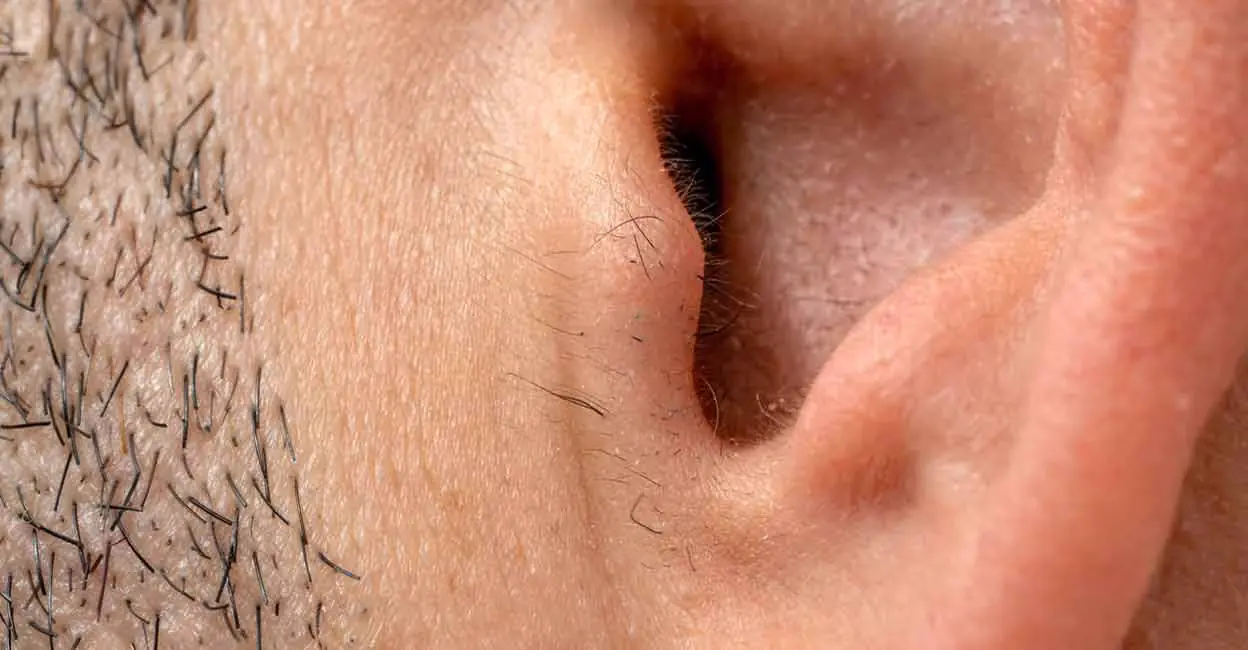
1. Why Ear Hair Often Becomes More Noticeable With Age
Hair does not grow at the same rate or in the same way throughout a person's life.
During childhood, most body hair is fine and soft. During puberty, hormonal changes cause some hair follicles to produce thicker, darker hairs. These changes are most noticeable in areas such as the face, underarms, chest, and pubic region.
As people move through adulthood, hair growth patterns continue to change. Some follicles become less active, while others may produce thicker or more visible hair. The ears are among the areas where this change can become noticeable.
A person who had almost no visible ear hair in their twenties may begin to notice longer hairs around the outer ear decades later. The change can happen gradually, which is why it may seem to appear suddenly when someone finally notices it in the mirror.
The growth is not necessarily new in every case. Fine hairs may have been present for years but were too short, light, or thin to attract attention. Over time, changes in the hair follicles can make them more visible.
In men, coarse hair around the outer ear and the entrance to the ear canal is commonly associated with aging. Some men notice a few isolated hairs, while others develop more noticeable growth along the tragus, the small area of cartilage in front of the ear canal, or around the outer rim of the ear.
Women can also develop changes in facial and body hair as they age. Hormonal changes associated with menopause may alter the balance between estrogen and androgens, making some existing hairs more noticeable.
However, there is no single age at which ear hair begins to grow. Some people notice it in their thirties or forties, while others may never develop significant growth.
The difference is largely individual.
2. The Role of Testosterone and Other Androgens
One of the main reasons ear hair is associated with aging is the influence of androgens.
Androgens are hormones that contribute to the development and maintenance of male-pattern characteristics. Testosterone is the best-known androgen, although other hormones and locally produced substances also influence hair follicles.
During puberty, androgens help transform certain fine, soft hairs into thicker terminal hairs. This process is responsible for the development of facial hair and many other changes in body-hair distribution.
The effect does not stop completely after adolescence.
Hair follicles in different parts of the body have different levels of sensitivity to androgens. Some areas respond strongly, while others respond very little. This helps explain why a person can have thick facial hair but relatively little hair on other parts of the body.
The outer ear is one area where androgen-sensitive hair growth may become more noticeable with age.
However, it is important to understand that hair growth is not a simple measurement of testosterone levels.
Two people can have similar hormone levels but very different patterns of ear hair. One may develop several thick hairs, while the other has almost none.
That difference may be related to inherited follicle sensitivity, local hormone activity, and the natural characteristics of the hair follicles.
In other words, the amount of ear hair a person has cannot be used to determine how much testosterone is in their bloodstream.
This is an important correction to a common misconception. Seeing more hair around the ears does not automatically mean that the body is producing excessive testosterone.
It is usually a normal variation in how the skin and hair follicles respond to aging.
3. Why Some People Develop Much More Ear Hair Than Others
Hormones help explain why ear hair becomes more noticeable, but they do not explain every difference between individuals.
Genetics is another important part of the picture.
Think about the people in your family. Some relatives may have thick eyebrows, dense facial hair, or visible hair on their ears. Others may have very little body hair, even at an advanced age.