For many people, regular trimming remains the simplest and most practical choice.
13. Does Ear Hair Affect Hearing?
A few visible hairs around the outer ear generally do not interfere with hearing.
Sound waves travel through the ear canal to the eardrum, and ordinary hair around the outer ear does not block that process.
However, there are situations in which dense hair inside the canal may contribute to problems.
Long, coarse hair can sometimes trap wax or moisture. In some people, this may contribute to wax accumulation or make the use of hearing aids more difficult.
A hearing aid needs to sit properly and function as intended. Excessive hair or wax around the canal may interfere with comfort or maintenance.
If a hearing aid begins to whistle, feel uncomfortable, or perform less effectively, the cause may not be ear hair alone.
Wax blockage, poor fit, device maintenance, and changes in hearing can all play a role.
A hearing-care professional can inspect the ear and the device to identify what needs attention.
People should not attempt to solve a hearing problem by inserting scissors, tweezers, or other tools into the ear canal.
If hearing becomes suddenly reduced, particularly in one ear, seek urgent medical assessment rather than assuming that hair or wax is responsible.
14. Five Common Myths About Ear Hair
Ear hair is so common that it has become the subject of many popular beliefs. Some contain a little truth, while others are misleading.
Myth 1: Ear hair means testosterone is too high.
Not necessarily. Androgen activity influences hair follicles, but visible growth depends on genetics, follicle sensitivity, and other factors. Ear hair is not a reliable way to measure testosterone.
Myth 2: Only older men develop ear hair.
Men are more likely to develop prominent coarse ear hair, but women can also experience changes in hair growth. Age, genetics, and hormonal factors influence both sexes.
Myth 3: Removing ear hair improves hearing.
Ordinary outer-ear hair does not usually affect hearing. If someone has muffled hearing, the cause should be assessed rather than assuming that hair needs to be removed.
Myth 4: Plucking is always better because the hair takes longer to return.
Plucking may remove a hair from its root, but it can also cause irritation, ingrown hairs, and infection. It is particularly risky inside the ear canal.
Myth 5: Ear hair is a sign that the body is becoming unhealthy.
In most cases, it is simply a normal variation in hair growth. It does not automatically indicate poor health, a hormone disorder, or a serious disease.
Knowing these facts can help people avoid unnecessary worry and unsafe grooming habits.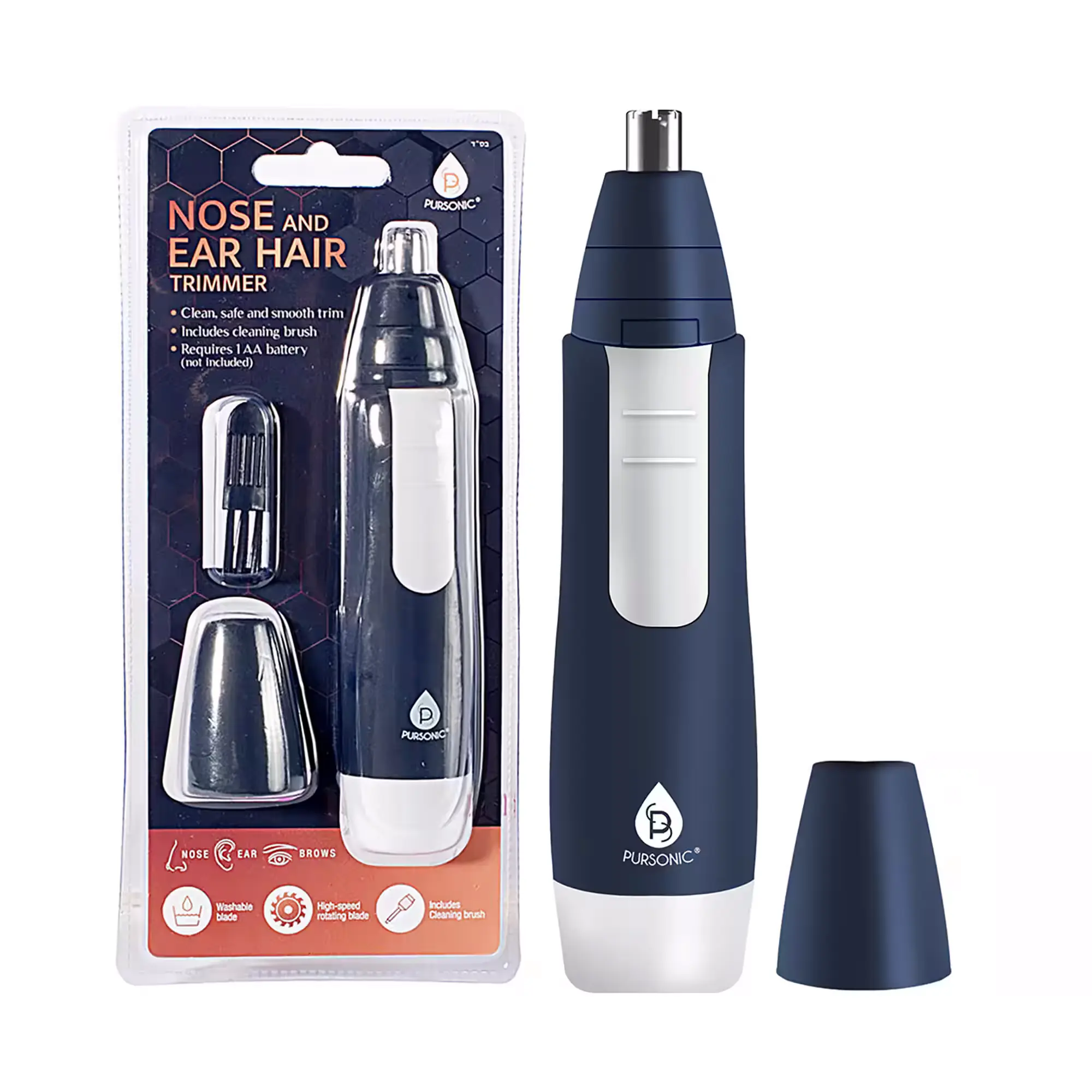
15. A Simple Ear-Grooming Routine for Older Adults
For people who prefer to keep visible ear hair under control, grooming does not need to become a complicated routine.
A simple approach is usually enough.
First, check the outer ear in good lighting.
Use a mirror to look at the visible edges, the outer folds, and the area around the earlobe. Avoid trying to inspect deep inside the canal with a tool.
Second, identify only the hairs you actually want to trim.
There is no need to remove every fine hair. Focus on long strands that extend beyond the natural outline of the ear.
Third, use a suitable grooming tool.
A small guarded trimmer designed for ear and nose grooming is often convenient. If using scissors, choose a small pair with rounded tips and work only on clearly visible outer-ear hair.
Fourth, move slowly.
Do not rush or try to remove a difficult strand by reaching deeper into the ear. If you cannot see it clearly, leave it alone.
Fifth, clean the tool after use.
Follow the manufacturer's instructions. A clean grooming attachment helps reduce the risk of irritation and contamination.
Finally, pay attention to the skin.
If you notice redness, swelling, pain, bleeding, or discharge, stop grooming and seek appropriate medical advice if the symptoms persist or are concerning.
Older adults who have reduced eyesight, limited hand movement, or difficulty maintaining balance may prefer help from a trusted professional.
The aim is not perfection. It is comfortable, safe grooming.
16. The Most Important Thing to Remember About Ear Hair
Finding longer hairs around your ears can be surprising, especially if you never noticed them when you were younger.
But in most cases, this change is simply part of the way the body develops over time.
Hormones influence hair follicles. Genetics helps determine how sensitive those follicles are. The natural hair cycle affects how thick and long individual strands become. Together, these factors explain why some people develop noticeable ear hair while others barely notice any change.
It is not a reliable indicator of testosterone levels, and it does not automatically mean that something is wrong with your health.
There is also no medical reason to remove every hair. Some hair around the ear opening helps trap debris, and the ear has natural protective mechanisms that should not be disturbed unnecessarily.
If you prefer a neater appearance, carefully trimming the hair that is visible on the outer ear is usually a practical option. Avoid inserting scissors, tweezers, cotton swabs, or other tools deep into the ear canal. Do not use ordinary hair-removal creams inside the ear, and seek professional advice if the hair is difficult to reach.
Most importantly, do not confuse a normal cosmetic change with a medical warning sign.
If hair growth changes suddenly, appears alongside other unusual symptoms, or is accompanied by pain, irritation, discharge, or hearing problems, a healthcare professional can help determine whether further assessment is needed.
Aging brings many small changes, and ear hair is one of them. Understanding why it happens can make it much easier to respond calmly, safely, and without unnecessary worry.