The amount of hair a follicle produces depends not only on the concentration of hormones in the bloodstream but also on how the follicle responds to those hormones and how its growth cycle changes.
Local hormone activity within the skin can also matter.
For that reason, someone should not assume that they have high testosterone simply because their ear hair has become thicker.
Nor should someone take hormone supplements or medication in an attempt to change ear-hair growth.
There is no established reason to alter hormone levels solely because a few hairs have appeared around the ears.
If a person has other symptoms that suggest a hormonal problem, a clinician can decide whether an examination or blood tests are appropriate. The hair itself is not enough to make that decision.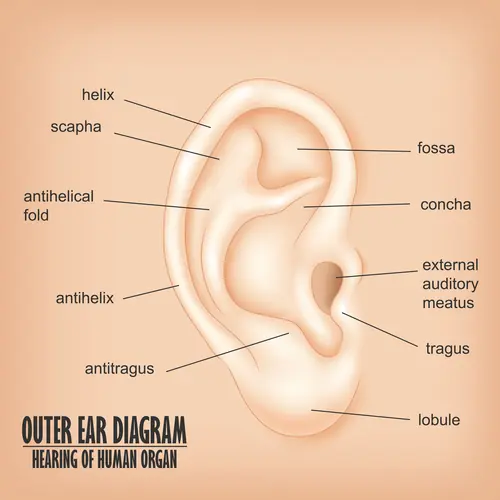
7. What Happens to Ear Hair in Women as They Get Older?
Ear hair is often discussed as a male grooming concern, but women can experience changes in hair growth too.
During the years leading up to and following menopause, levels of estrogen and other hormones change. The balance between estrogen and androgens may shift, and some women notice changes in facial or body hair.
For example, a woman who previously had only very fine hair on her chin may begin noticing a few darker strands. Some may also see more visible hair around the upper lip, jawline, or ears.
These changes are not identical for everyone.
Some women notice almost no difference. Others develop more noticeable coarse hairs in areas that previously had very little visible growth.
Genetics and individual follicle sensitivity remain important.
A few isolated hairs around the ears in an older woman are not necessarily a sign of a medical condition.
However, a sudden and substantial increase in coarse facial or body hair, particularly when accompanied by other changes, deserves medical attention.
For example, a woman who develops rapidly increasing facial hair along with a deeper voice, significant acne, or other unusual physical changes should speak with a healthcare professional.
Such symptoms may require an assessment of hormonal health.
The key is to consider the overall pattern rather than focusing on one or two hairs.
Age-related changes are common, but rapid or unexplained changes should not automatically be dismissed as aging.
8. When Is Ear Hair Completely Normal—and When Should You Be Concerned?
For most people, ear hair is a cosmetic issue rather than a medical problem.
A few visible strands on the outer ear generally do not require treatment. They do not automatically indicate disease, poor hygiene, or a problem with the body's hormones.
Still, there are circumstances in which it is sensible to seek medical advice.
Sudden, widespread hair growth is different from gradually developing a few ear hairs over many years. If unusual hair growth appears quickly in several areas of the body, a clinician may want to review medications, health conditions, and other possible causes.
Skin changes around the ear also deserve attention. Persistent redness, swelling, sores, bleeding, or a painful lump should not be attributed to ordinary hair growth without an examination.
Repeated irritation or infection can occur when the skin is injured during grooming or when moisture and debris become trapped. Pain, discharge, swelling, or a feeling of fullness in the ear should be assessed.
Hearing changes should also be investigated. Ear hair alone usually does not affect hearing, but dense hair and wax accumulation may sometimes contribute to blockage. A professional examination can determine whether wax, infection, or another problem is responsible.
A sudden change in body-hair patterns accompanied by other symptoms may justify a broader medical assessment. This is particularly relevant when changes occur rapidly or are accompanied by symptoms that suggest a hormonal disorder.
There is no reason to panic over ordinary ear hair.
The purpose of paying attention to these signs is not to make people anxious about a normal feature of aging. It is to help them recognize when a change is no longer simply a grooming concern.
9. Is It Safe to Remove Ear Hair?
Many people choose to trim ear hair because they prefer a cleaner appearance.
There is nothing wrong with that choice. The important thing is to use a method that does not damage the delicate skin of the ear.
The outer ear contains folds and curves that can make grooming awkward. The entrance to the ear canal is particularly sensitive, and a small mistake can cause a cut, irritation, or infection.
The safest approach depends on where the hair is growing.
For hairs clearly visible on the outer ear, careful trimming is usually a practical option.
For hairs deeper inside the canal, it is better to leave them alone or ask a healthcare professional for help.
Using a Dedicated Ear and Nose Hair Trimmer
A small electric trimmer designed for ear and nose grooming is one of the most convenient options for managing visible hair.
These devices generally have a guarded cutting head that helps reduce the risk of direct contact between the blades and the skin.
When using one:
-
Read the manufacturer's instructions before starting.
-
Make sure the device and its cutting head are clean.
-
Use good lighting and a mirror.
-
Trim only hairs that are clearly visible on the outer ear.
-
Move slowly and avoid pressing the device against the skin.
-
Never push the trimmer deep into the ear canal.
-
Clean the attachment after use and allow it to dry.
A dedicated trimmer is designed to make grooming easier, but it is not a reason to explore the inside of the ear with a tool.
If the hair is deep in the canal or difficult to see, stop rather than trying to reach it.
Using Small Scissors
Some people prefer small grooming scissors.