Have you ever looked outside your window late at night and noticed an owl sitting quietly on a tree branch near your house? Perhaps you have heard a strange, rhythmic hooting sound coming from your backyard, or maybe you have seen an owl returning to the same fence, rooftop, or telephone pole several evenings in a row.
At first, the experience might seem unusual. Owls are often associated with darkness, mystery, wisdom, and ancient folklore. Their large eyes, silent flight, and ability to turn their heads in remarkable ways have fascinated human beings for centuries. In many cultures, seeing an owl near a home has been interpreted as a meaningful sign, while in others, it is simply considered an ordinary encounter with one of nature's most fascinating birds.
But what does it actually mean when owls keep appearing around your house?
Is it a sign of good fortune? Could it indicate a change in your life? Or is there a perfectly natural explanation for why these nocturnal hunters have chosen your neighborhood?
The answer may surprise you because the truth involves a fascinating combination of animal behavior, environmental conditions, cultural traditions, and the extraordinary role owls play in maintaining the balance of nature.
Before assuming that an owl's appearance carries a mysterious message, it is worth understanding why these birds might be visiting your property in the first place. Their presence could reveal more about your surroundings than you realize.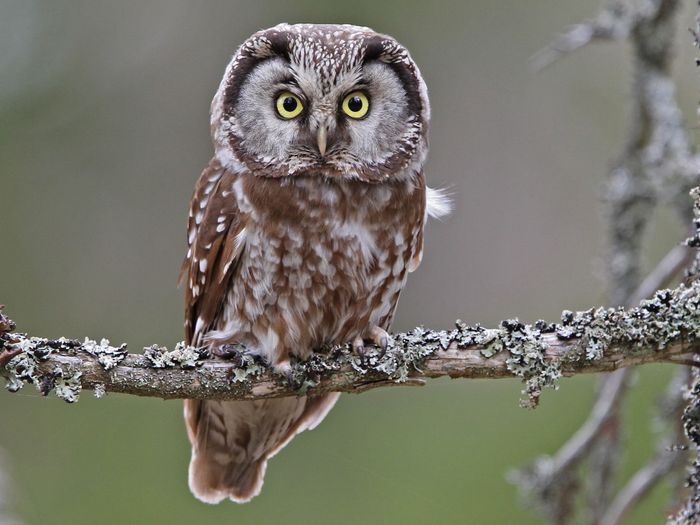
1. Your Property May Be Providing an Ideal Hunting Ground
One of the most common reasons owls repeatedly appear around a house is surprisingly simple: your property may offer an excellent place to find food.
Owls are skilled predators, and many species feed primarily on small mammals such as mice, voles, and rats. Depending on the species, their diet may also include insects, small birds, reptiles, amphibians, and other animals.
If your yard attracts these creatures, it may also attract the owls that hunt them.
Consider a property with a vegetable garden, a compost pile, a storage shed, or a collection of bird feeders. Such places can attract rodents searching for seeds, spilled food, and shelter. Tall grass, woodpiles, and neglected corners may provide additional hiding places.
For an owl, this environment can be an attractive hunting territory.
Unlike many predators that depend heavily on speed or prolonged pursuit, owls often rely on patience, excellent hearing, and the ability to detect movement in low light. A barn owl, for example, can use subtle sounds to locate prey moving beneath grass or other vegetation.
When an owl discovers a reliable source of food, it may return repeatedly.
This does not necessarily mean that the bird has chosen your house as a permanent home. It may simply be using a nearby tree, fence post, or rooftop as a convenient place to observe the ground before swooping down to hunt.
If you regularly see an owl in the same location, pay attention to what lies beneath its favorite perch. You may discover that the bird is watching a garden bed, a grassy area, or a spot where small animals frequently appear.
In this sense, an owl's repeated visits can be a reminder that every backyard is part of a larger ecosystem.
The animals you rarely notice during the day may be supporting an entire chain of wildlife activity after sunset.
2. Your Neighborhood May Offer a Safe Place to Rest
Food is important, but owls also need places where they can rest without being disturbed.
Many owl species spend daylight hours resting in sheltered locations. Depending on the species and habitat, they may use dense evergreen trees, cavities in mature trees, abandoned buildings, barns, or other protected structures.
If your property contains large trees with thick branches, an owl may find them especially attractive.
A quiet garden with limited daytime disturbance can offer a useful resting place. The bird may perch there because the branches provide cover from weather, while nearby vegetation helps conceal it from potential threats.
Some owls are particularly difficult to spot because their feathers blend almost perfectly with tree bark. Their mottled brown, gray, and cream patterns can make them appear almost invisible against a trunk or branch.
You might walk beneath an owl several times without realizing it is watching from above.
This camouflage is not accidental. It is an important survival adaptation that allows owls to rest while remaining less noticeable to other animals.
If an owl repeatedly sits in the same tree during the day, it may be using the location as a regular resting site.
However, it is important not to assume that every owl seen near a home is nesting there. A bird may simply be passing through or using a convenient perch while moving around its territory.
If you discover an owl resting in your yard, the best response is usually to observe it from a distance and allow it to remain undisturbed.
You do not need to approach it, touch it, or attempt to make it leave.
Sometimes, the most respectful way to appreciate wildlife is to leave it alone.
3. The Owl May Be Establishing or Defending Its Territory
Owls are not merely mysterious visitors that appear randomly after dark. Many species maintain territories where they hunt, rest, and reproduce.