Honey has been treasured for thousands of years. Long before modern sweeteners appeared on supermarket shelves, people relied on this golden substance for its distinctive flavor, natural sweetness, and remarkable versatility. It has been used to sweeten food, prepare traditional remedies, preserve certain ingredients, and complement everyday wellness routines. Even today, honey remains one of the most recognizable natural products in kitchens around the world.
Yet behind the familiar golden color and pleasant sweetness lies a growing challenge for consumers: determining whether the honey they purchase is genuinely produced by bees or has been diluted, blended with cheaper sweeteners, or otherwise misrepresented.
At first glance, the task might seem simple. Honey is thick, sweet, and usually golden or amber in color. Surely, a quick look at the bottle should be enough to tell whether it is authentic. Unfortunately, appearances can be deceiving. Genuine honey comes in a wide range of colors, textures, and flavors, while products containing added syrups can be manufactured to resemble natural honey remarkably well.
The financial incentive for adulteration is considerable. Producing genuine honey requires time, healthy bee colonies, suitable flowering plants, favorable weather, careful harvesting, and proper processing. Beekeepers must maintain their colonies throughout the year, protect them from pests and diseases, and transport hives when necessary to follow seasonal blooms. The final product therefore reflects considerable labor and natural variability.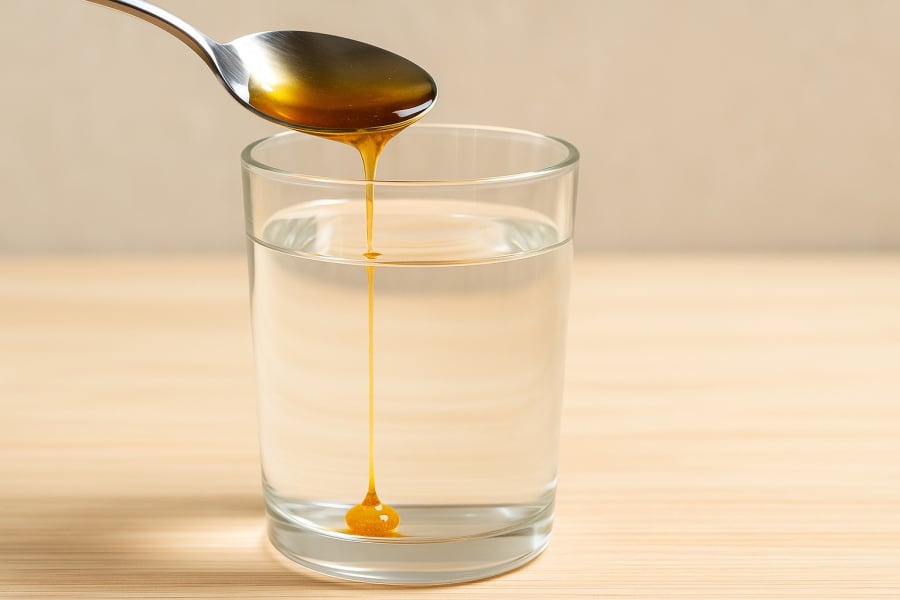
By contrast, certain inexpensive sweeteners can be produced on a much larger industrial scale. When dishonest suppliers use these substances to replace part of the honey in a product, they may reduce production costs while selling the finished mixture at a price that suggests it is genuine honey.
This creates a problem for ordinary shoppers. A bottle may look attractive, have a familiar label, and taste pleasantly sweet without necessarily containing what the seller claims. In some cases, the difference is difficult to detect without laboratory analysis.
Fortunately, consumers are not entirely powerless. Several simple observations can help identify suspicious products, while a few practical purchasing habits can reduce the likelihood of buying adulterated honey.
However, one important point must be understood from the beginning: no single home test can conclusively prove that honey is pure. Popular tricks involving bubbles, water, crystallization, or a spoon can provide clues about physical properties, but genuine honey varies naturally, and some adulterated products can behave much like authentic honey.
Understanding what these tests can—and cannot—tell you is the first step toward making a better-informed choice.
1. The Flip-and-Bubble Test: What Happens When You Turn the Bottle Upside Down?
One of the most widely discussed methods for checking honey involves shaking the container and observing the bubbles that form inside. The technique is popular because it requires no special equipment and can be performed in seconds.
The basic idea is that genuine honey is usually viscous, meaning it resists flowing quickly. Its concentrated mixture of sugars and water gives it a characteristic thickness. When the bottle is shaken, the liquid moves relatively slowly, and air bubbles may remain visible for some time.
Products containing more water or certain thinner syrups may behave differently. Their bubbles can move more freely, and the liquid may flow more rapidly.
How to perform the test
If you already have a bottle of honey at home, you can try the following:
-
Make sure the lid is tightly closed and the bottle is clean on the outside.
-
Gently turn the bottle upside down and return it to its original position several times. There is no need to shake it aggressively.
-
Observe how the honey moves through the container.
-
Pay attention to the size and movement of any air bubbles that appear.
-
Compare the behavior with another honey product, if one is available.
The purpose is to observe the consistency of the liquid rather than to look for a particular number of bubbles.
What might the results mean?
Honey with relatively high viscosity may move slowly and hold small air bubbles for longer than a thinner liquid. A product that pours extremely quickly could contain more water or have a different composition.
Nevertheless, these observations are not definitive.
The viscosity of genuine honey depends on several factors, including temperature, moisture content, floral source, and natural sugar composition. Honey stored in a cool room may become noticeably thicker than the same product kept in a warm kitchen. Some authentic varieties are naturally more fluid than others.
Processing methods can also affect the amount of air trapped in honey. Filtering, bottling, and handling may influence the bubbles visible inside the container.
For these reasons, it is not scientifically reliable to claim that genuine honey always produces bubbles that rise slowly or that fake honey never produces bubbles at all.
A product containing added syrup may also be thick enough to imitate the movement of natural honey. Conversely, genuine honey may appear relatively thin under certain conditions.
The practical lesson
Treat the flip-and-bubble test as an initial observation, not a final verdict.
If a product appears unusually watery, separates into distinct layers, or behaves inconsistently with its label, those characteristics may justify closer inspection. However, the presence of slow-moving bubbles does not establish authenticity.
A bottle can pass this test and still contain adulterated honey. It is therefore important to consider the product's origin, labeling, price, and other available evidence before making a purchasing decision.
2. The Water Drop Test: Does Real Honey Sink Without Dissolving?
Another familiar technique involves dropping honey into a glass of water. Many people believe this is one of the easiest ways to distinguish genuine honey from a counterfeit product.
The test is based on two physical properties: density and viscosity.
Honey is a concentrated solution of sugars, primarily fructose and glucose, with a relatively low water content. Because of this composition, it is generally denser than ordinary water. When a spoonful is placed gently into a glass, the honey may descend toward the bottom before gradually mixing with the surrounding liquid.