A more diluted product may disperse more rapidly, depending on its composition and the way it enters the water.
How to try the water test at home
You will need only a clean, transparent glass, room-temperature water, and a small spoonful of honey.
-
Fill the glass with water and place it on a level surface.
-
Allow the water to become still.
-
Take a small amount of honey on a spoon.
-
Slowly release the honey into the center of the glass.
-
Observe how the honey moves and mixes with the water.
Avoid stirring the glass immediately, because agitation will accelerate mixing and make the initial behavior more difficult to observe.
What should you look for?
A concentrated honey sample may sink in a thick stream or form a dense mass near the bottom before gradually dispersing. This behavior reflects its density and viscosity.
Honey with a higher water content may mix more readily with the surrounding water.
However, this is where the common advice often becomes misleading.
There is no universal rule that genuine honey must remain intact at the bottom of a glass or that counterfeit honey must dissolve immediately. All honey is water-soluble. Given sufficient time, genuine honey will dissolve in water, especially when stirred.
Some adulterated products can also sink because they contain concentrated sugar syrups with a density similar to that of honey. Other authentic varieties may disperse relatively quickly because of their moisture content, temperature, or particular sugar composition.
The test therefore cannot reliably distinguish authentic honey from every possible imitation.
Why the test can still be useful
Although it cannot prove purity, the water test demonstrates something important about the product's physical behavior.
If honey appears exceptionally watery, separates unusually, or has a consistency that seems inconsistent with its description, it may be worth investigating further. The observation becomes more meaningful when combined with other information, such as the product's stated origin, producer reputation, ingredient list, and storage history.
The key is not to interpret one result in isolation.
A bottle that sinks in water is not automatically pure. A bottle that disperses quickly is not automatically fake. Without additional evidence, neither conclusion is justified.
3. The Crystallization Test: Why Real Honey Sometimes Becomes Solid
Among the most persistent misconceptions about honey is the belief that crystallization means a product has spoiled—or, conversely, that every genuine honey must crystallize within a particular period.
Neither statement is correct.
Crystallization is a natural process in which some of the glucose in honey forms solid crystals. Depending on the variety, these crystals may appear as fine grains, a thick creamy texture, or a more noticeable layer of solid material.
For many people, crystallized honey looks unfamiliar because they expect honey to remain clear and pourable. In reality, the transition from liquid to solid is a normal characteristic of many genuine honeys.
Why does honey crystallize?
Natural honey contains several sugars, but fructose and glucose are the principal ones. Glucose is less soluble in water than fructose, so it can gradually separate from the liquid portion and form crystals.
The speed of this process depends on several variables:
-
Glucose-to-fructose ratio: Honey with a relatively high proportion of glucose generally crystallizes more readily.
-
Water content: Moisture affects how easily glucose can remain dissolved.
-
Temperature: Storage conditions influence the rate at which crystals form.
-
Pollen and other particles: Small particles can provide surfaces on which crystals begin to develop.
-
Processing: Filtration and heating may change the rate of crystallization.
These factors explain why two genuine honey varieties can look completely different after several weeks or months of storage.
One may remain liquid for a long time, while another may become thick and grainy relatively quickly.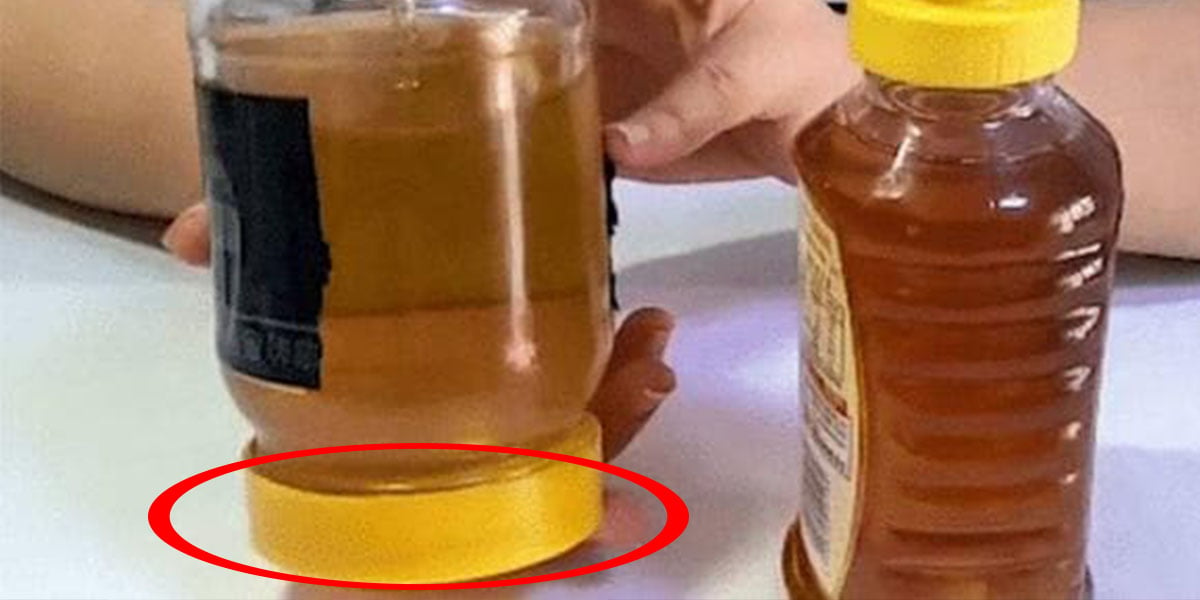
Does genuine honey always crystallize below 14°C?
Not necessarily.
Crystallization does not begin at one universal temperature. A temperature around 14°C can favor crystallization for some honeys, but the actual rate depends on the product's composition and storage conditions.
In fact, crystallization is often relatively rapid under certain cool storage conditions, while very low temperatures can slow the movement of molecules. Temperature alone therefore does not determine whether or when a particular honey will solidify.
Likewise, the claim that crystals automatically melt whenever the temperature rises above 20°C is too simplistic. Crystals may dissolve as the honey warms, but the result depends on the temperature, duration, and composition of the product.
What does crystallized honey tell you?
Crystallization is consistent with genuine honey, but it is not proof of authenticity. Certain adulterated mixtures can crystallize too, depending on their ingredients.
The opposite is also true: genuine honey may remain liquid for a considerable period. Some varieties have a composition that makes crystallization relatively slow.
Therefore, a bottle should not be rejected simply because it has crystallized, nor should a clear, liquid bottle automatically be considered suspicious.
Is crystallized honey safe to eat?
In most cases, yes.
Crystallization alone does not mean honey has spoiled. If the honey has been stored properly and shows no signs of fermentation or contamination, the change in texture is generally harmless.
If you prefer a liquid consistency, place the closed container in warm water and allow the honey to soften gradually. Avoid excessive heating, particularly if you want to preserve its delicate aroma and heat-sensitive components.
Never assume that heating can make adulterated honey authentic. It cannot.
The most useful lesson is simple: crystallization is a natural characteristic of honey, not a universal authenticity test.
4. The Spoon Test: Understanding Thickness and Flow
A fourth popular method involves lifting a spoonful of honey and watching how it falls back into the container.
The appeal of this test is easy to understand. Genuine honey is often thick enough to form a continuous ribbon rather than behaving like ordinary water. As it falls, the ribbon may coil on the surface before slowly spreading out.
This appearance is associated with honey's concentrated sugar composition and viscosity.