For some people, this sound is so familiar that it has become part of everyday life.
In certain traditional beliefs, a gecko calling at a particular moment is thought to carry a message or confirm something that has just been said.
Some families even associate its calls with good or bad luck.
However, gecko vocalizations have biological explanations.
Communication Between Geckos
Unlike many reptiles that are relatively quiet, certain gecko species produce recognizable vocal sounds.
These calls can serve different purposes depending on the species.
They may be involved in territorial behavior, courtship, communication between individuals, or responses to nearby animals.
A male gecko may produce sounds to communicate with other geckos.
In some species, repeated calls can help establish territory or attract potential mates.
This means that a gecko making noise inside a home is not necessarily reacting to something happening among the people living there.
It may simply be communicating with another animal.
Why the Sound Is More Noticeable at Night
Many house geckos are primarily nocturnal.
During the day, they often remain hidden in cracks, behind objects, or in sheltered areas.
After sunset, they become more active and begin searching for food.
The nighttime environment may also make their calls easier for humans to notice.
With fewer household activities taking place, even a small clicking sound can seem surprisingly loud.
Does a Gecko Call Predict Good or Bad News?
There is no scientific evidence that gecko calls predict specific future events.
The timing of a call does not reliably indicate whether someone will receive money, experience an argument, or hear unexpected news.
The sound is a natural behavior.
Nevertheless, traditional interpretations can remain meaningful as part of family culture.
People can appreciate the stories associated with gecko calls while understanding that the animal is following its natural communication patterns.
Why Do Some Geckos Seem to Answer Each Other?
If you hear one gecko calling and another responding, you may be witnessing communication between individuals.
Some species produce repeated vocalizations that can be heard by other geckos nearby.
This can make a house seem as though several animals are having a conversation.
The behavior is especially interesting because it reveals that even small reptiles have more complex communication systems than many people realize.
The next time you hear a familiar clicking sound near the ceiling, remember that the little visitor may be communicating with another gecko rather than sending a message to the household.
5. Is a Lizard Entering Your Home Actually a Good Sign for the Environment?
Beyond traditional beliefs, there is a practical reason why some people consider house geckos welcome visitors.
They are natural predators of many small insects.
Although they are not a complete solution to household pest problems, their presence can reveal something about the local environment.
Geckos Help Control Certain Insects
Most common house geckos feed on small invertebrates.
Their diet may include:
-
Mosquitoes.
-
Moths.
-
Small flies.
-
Crickets.
-
Cockroaches and their young.
-
Other small insects and spiders, depending on the species.
They typically hunt by remaining still and waiting for prey to come within reach.
A gecko positioned near a light may spend considerable time watching insects attracted to the area.
When an insect comes close enough, the gecko can move quickly and capture it.
This is one reason these reptiles are often seen near outdoor lamps, balconies, and windows.
They have learned to take advantage of an environment where insects naturally gather.
A Small Predator With an Important Ecological Role
Every animal occupies a particular position within its ecosystem.
Geckos are predators, but they can also become prey for larger animals.
Birds, snakes, larger lizards, and some mammals may feed on them.
Their presence therefore contributes to the natural food web.
Although a single house gecko has a relatively small impact, its feeding behavior forms part of a wider ecological system.
This is an important reminder that animals often serve purposes that are not immediately obvious to humans.
A creature that appears inconvenient inside a house may still have a useful role in the surrounding environment.
Does Finding Several Geckos Mean Your House Is Dirty?
Not necessarily.
This is an important point because some homeowners feel embarrassed when they notice multiple lizards around their property.
Geckos are attracted primarily by environmental conditions, especially food and shelter.
A clean house can still have geckos if insects enter through open windows or gather around exterior lights.
Similarly, a house surrounded by vegetation may naturally have more small reptiles nearby.
However, repeated sightings can indicate that certain conditions are making the property attractive.
For example, there may be:
-
Many flying insects around outdoor lights.
-
Uncovered garbage attracting flies.
-
Small openings around doors and windows.
-
Damp areas encouraging insect activity.
-
Cluttered storage spaces providing hiding places.
-
Vegetation growing close to entrances.
Addressing these conditions can help reduce unwanted visitors without relying on harmful chemicals.
Why Geckos Often Gather Near Lights
Artificial lighting has changed the way many nocturnal animals interact with human environments.
Many flying insects are attracted to certain types of artificial light.
When insects gather around a lamp, geckos may recognize the location as a convenient hunting area.
This creates a simple relationship.
The light attracts insects, and the insects attract predators.
If you regularly see a gecko near a particular outdoor lamp, the animal may simply be following its food supply.
Reducing unnecessary outdoor lighting or using appropriately selected lighting can sometimes reduce insect activity near entrances.
This may also make the area less attractive to geckos.
A Sign That Nature Is Closer Than You Think
Many people imagine that wildlife exists only in forests, fields, or remote natural areas.
However, small reptiles, insects, birds, and other animals frequently live around human settlements.
A house is not completely separate from nature.
Gardens, trees, walls, drains, roofs, and outdoor lighting create small habitats that different species can use.
A gecko appearing indoors is one example of this relationship.
Rather than viewing every unexpected animal as a problem, it can be useful to understand why it is there and what environmental conditions support it.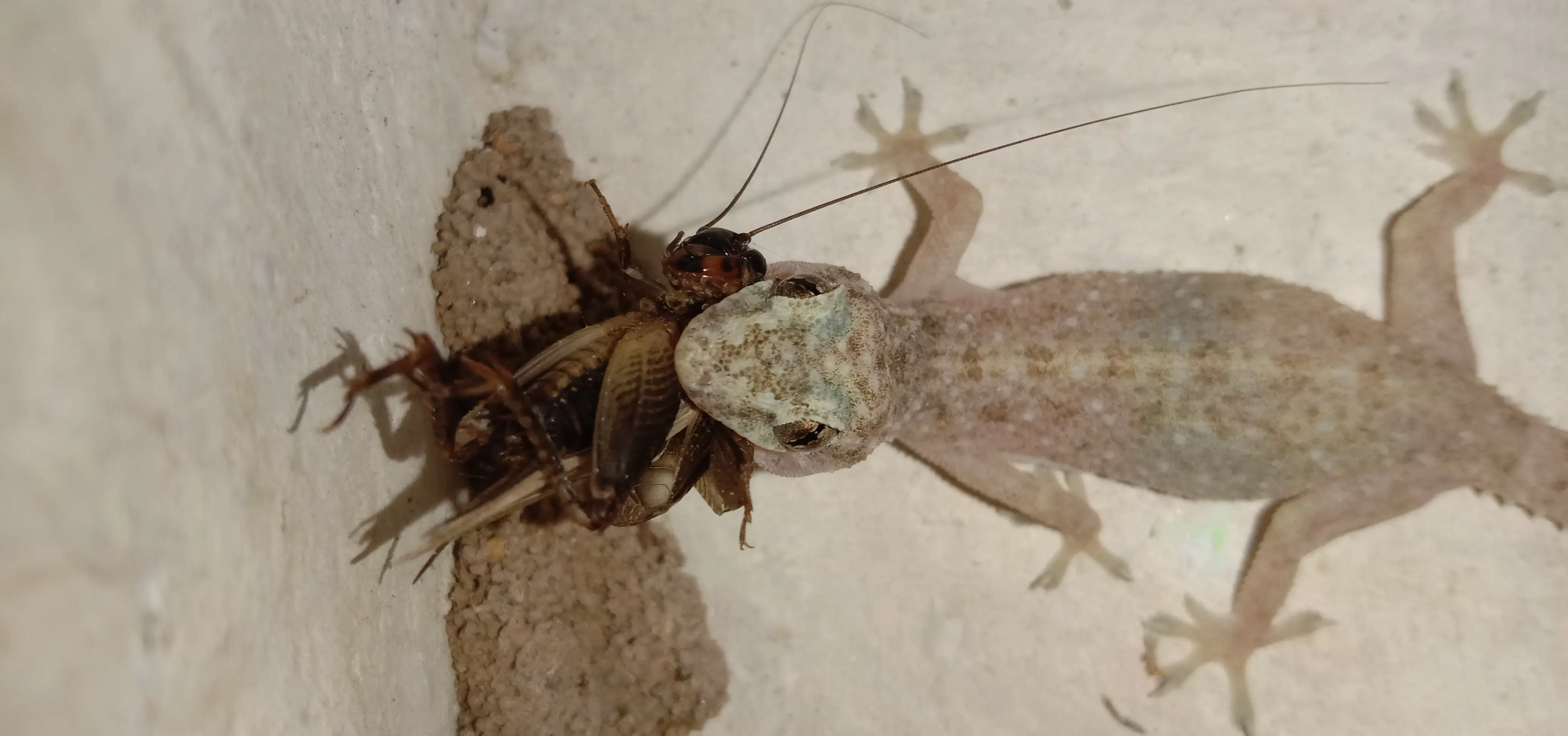
6. Are House Lizards Dangerous to Humans?
One of the first questions people ask after seeing a lizard indoors is whether it is dangerous.
The answer depends on the species, but small house geckos commonly found on walls are generally not aggressive toward humans and are not considered venomous.
They usually prefer to escape rather than confront people.
Nevertheless, it is important to remember that a wild reptile should not be treated like a household pet.
Do House Geckos Bite?
Most small house geckos avoid human contact.
If someone approaches them, they are more likely to run away or hide.
However, a gecko that feels trapped or is grabbed may bite defensively.
Small house geckos generally have tiny teeth, and their bites are usually minor.
Larger gecko species can have stronger bites.
For this reason, it is best not to catch or handle an unfamiliar lizard with bare hands.
The safest approach is to leave it alone or guide it toward an exit without direct contact.
Are House Geckos Poisonous?
A common misconception is that every house lizard is poisonous.
This is not true.
The small geckos commonly found on household walls are generally nonvenomous.
They do not inject venom when walking across walls or ceilings.
However, it is important not to assume that every reptile found inside or around a property is the same species.
Large lizards, unfamiliar reptiles, and potentially dangerous species should never be handled without proper identification.
Can Geckos Carry Bacteria?
Yes.
Like other reptiles, geckos can carry bacteria, including Salmonella, without appearing sick.