Mucus draining from the nose into the throat can contribute additional material that becomes trapped around the tonsils.
Allergies, colds, sinus problems, and other conditions can cause postnasal drip.
Dry Mouth
Saliva helps naturally cleanse the mouth.
When your mouth becomes chronically dry, debris and bacteria may accumulate more easily.
Dehydration, mouth breathing, certain medications, and some medical conditions can contribute to dry mouth.
Oral Debris
Food particles and dead cells can become part of the material trapped inside tonsil crypts.
Good oral hygiene can help reduce the amount of debris available to accumulate, although it cannot completely eliminate the possibility of tonsil stones.
Are Tonsil Stones Dangerous?
For most people, tonsil stones are not dangerous.
They are generally considered a benign condition and often don't require medical treatment.
The main problems tend to be:
-
Bad breath
-
Irritation
-
Throat discomfort
-
Foreign-body sensation
-
Recurrent stones
However, it is important not to assume that every lump, white patch, or throat symptom is a tonsil stone.
A persistent white area, significant swelling, severe pain, fever, difficulty swallowing, or other unusual symptoms can have different causes.
That's particularly important if the symptoms are getting worse rather than improving.
Can You Remove Tonsil Stones at Home?
Small tonsil stones sometimes come out naturally when you:
-
Cough
-
Swallow
-
Gargle
-
Clear your throat
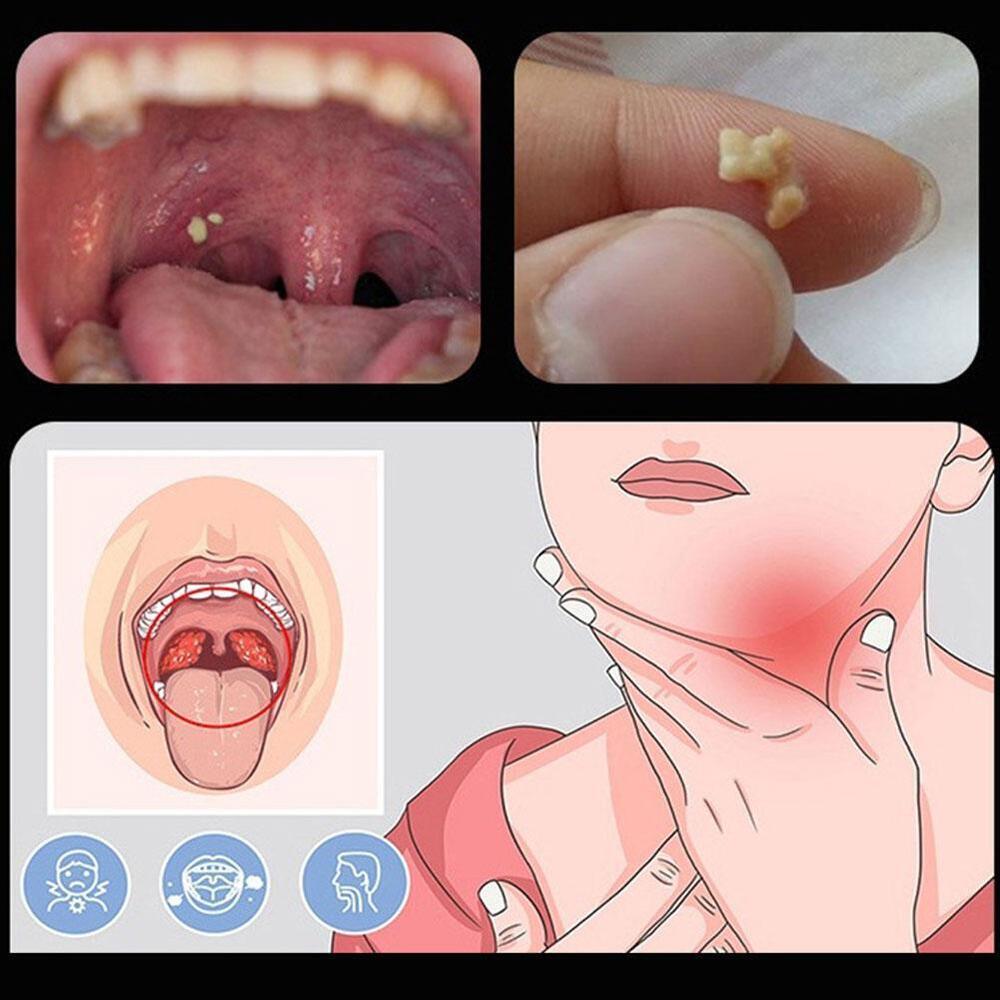
Some people also try gently removing visible stones themselves.
If you choose to do this, be very gentle.
The tonsils contain delicate tissue and blood vessels. Aggressive scraping, digging, squeezing, or poking can cause bleeding and injury.
A safer approach is to focus on gentle oral hygiene and rinsing rather than trying to force a deeply embedded stone out.
Try Gentle Salt-Water Gargling
A warm salt-water gargle may help loosen debris and soothe mild throat irritation.
It can also help keep the area cleaner.
Avoid making the solution excessively salty or using water that is hot enough to burn your throat.
Maintain Good Oral Hygiene
Brush your teeth twice daily, floss regularly, and gently clean your tongue.
This won't guarantee that tonsil stones disappear, but reducing oral debris and bacterial buildup may help reduce contributing factors.
Stay Hydrated
Adequate fluid intake supports normal saliva production and can help prevent excessive dryness in the mouth.
What About Water Flossers?
Some people use water irrigators to try to dislodge tonsil stones.
However, high-pressure water directed directly at tonsil tissue can cause irritation or bleeding.
If you use an oral irrigator, use the lowest comfortable setting and avoid aggressively targeting deep tonsil crypts.
If a stone is deeply embedded or difficult to reach, trying repeatedly to force it out may cause more harm than the stone itself.
When in doubt, a healthcare professional can remove it safely.
Should You Squeeze a Tonsil Stone?
This is something to be careful about.
It can be tempting to use a finger, cotton swab, or other object to push a visible stone out.
But aggressive pressure can:
-
Scratch the tonsil
-
Cause bleeding
-
Increase irritation
-
Introduce bacteria
-
Make the area temporarily more swollen
If the stone doesn't come out easily, don't force it.
A tonsil stone that is difficult to reach may be better evaluated by a doctor or ENT specialist.
Can Mouthwash Prevent Tonsil Stones?
Mouthwash can help reduce bacteria and improve overall oral freshness, but it doesn't necessarily prevent tonsil stones.
That's because the underlying issue is often related to the physical structure of the tonsils.
A person with deep tonsil crypts may continue developing stones even with excellent oral hygiene.
Think of mouthwash as part of an overall oral-care routine rather than a guaranteed solution.
Can You Prevent Tonsil Stones?
You may not be able to completely prevent them, especially if your tonsils naturally have deep crypts.
But several habits may help reduce the amount of debris and bacteria in your mouth.
Brush Regularly
Brush your teeth thoroughly twice a day.
Floss
Flossing removes food particles between teeth that brushing alone may miss.
Clean Your Tongue
The tongue can harbor bacteria and debris, so gently cleaning it can be useful for overall oral hygiene.
Drink Enough Fluids
Keeping your mouth hydrated can help support normal saliva flow.
Treat Persistent Nasal Problems
If allergies or chronic nasal congestion are causing significant postnasal drip, treating the underlying problem may help reduce mucus accumulation in the throat.
Avoid Smoking
Smoking can contribute to dry mouth and changes in the oral environment while also increasing the risk of numerous oral and respiratory problems.
When Should You See a Doctor?
Most small, occasional tonsil stones don't require medical attention.