However, you should consider seeing a doctor or ENT specialist if you experience:
-
Frequent or recurring tonsil stones
-
Persistent bad breath despite good oral hygiene
-
Significant throat discomfort
-
Repeated tonsil inflammation
-
Difficulty swallowing
-
Persistent swelling
-
Bleeding from the tonsils
-
A lump that doesn't go away
-
Persistent white or unusual patches
-
Symptoms that continue or worsen
An ENT specialist can examine your tonsils and determine whether the problem is actually tonsil stones or something else.
What If the Tonsil Stone Keeps Coming Back?
If you repeatedly develop tonsil stones, the underlying anatomy of your tonsils may be contributing.
In mild cases, doctors may simply recommend continued oral hygiene and observation.
For people with significant recurrent problems, an ENT specialist may discuss additional treatment options.
In selected cases, procedures aimed at reducing the depth of tonsil crypts may be considered.
For severe, persistent problems, tonsillectomy, or surgical removal of the tonsils, may be discussed.
However, surgery is not normally necessary simply because someone has an occasional small tonsil stone.
The potential benefits and risks need to be considered individually with a healthcare professional.
Tonsil Stones vs. Tonsillitis: Don't Confuse Them
These two conditions are very different.
Tonsil Stones
Typically involve:
-
Small white or yellow deposits
-
Bad breath
-
Mild irritation
-
Foreign-body sensation
-
Often no fever
Tonsillitis
May involve:
-
Significant sore throat
-
Red and swollen tonsils
-
Fever
-
Difficulty swallowing
-
Tender lymph nodes
-
White patches or pus on the tonsils
Tonsillitis can be caused by viral or bacterial infections and may require medical evaluation.
So if you suddenly develop a severe sore throat and fever, don't automatically assume you have tonsil stones.
When a White Spot Isn't a Tonsil Stone
This is an important distinction.
White material in the throat can have several possible explanations.
For example, it may be associated with:
-
Tonsillitis
-
Strep throat
-
Oral thrush
-
Other infections
-
Mucus
-
Food debris
-
Tonsil stones
The appearance alone isn't always enough to determine the cause.
If a white patch persists, spreads, becomes painful, or occurs alongside fever or significant swelling, professional evaluation is appropriate.
When Throat Symptoms Need Urgent Attention
Although tonsil stones themselves are usually harmless, certain symptoms should not be ignored.
Seek urgent medical attention if you experience symptoms such as:
-
Difficulty breathing
-
Inability to swallow saliva
-
Severe or rapidly worsening throat swelling
-
Severe one-sided throat pain
-
Significant bleeding
-
A muffled or markedly altered voice
-
Severe difficulty opening the mouth
-
High fever with worsening throat symptoms
These symptoms can occur with conditions that are much more serious than ordinary tonsil stones.
Do Tonsil Stones Mean You Have Poor Hygiene?
Not necessarily.
This is one of the biggest misconceptions about tonsil stones.
Someone can have excellent dental hygiene and still develop them.
Your tonsil anatomy, saliva, mucus production, history of tonsil inflammation, and other individual factors can all influence whether stones form.
That said, poor oral hygiene can increase the amount of bacteria and debris in the mouth, which may contribute to the material that becomes trapped.
So good hygiene is helpful—but it isn't a guarantee.
Why Do Tonsil Stones Sometimes Keep Coming Back?
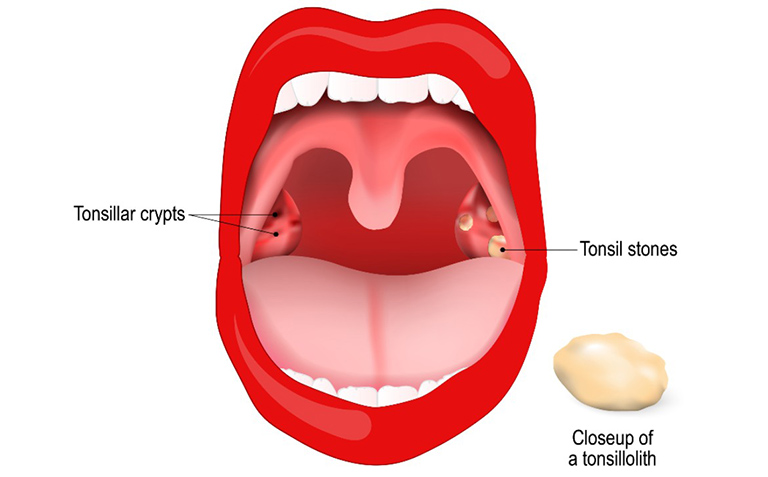
Think of a tonsil crypt like a tiny pocket.
If the pocket is deep, material can repeatedly collect there.
You can remove today's stone, but if the crypt remains, another stone may eventually form.
That's why some people experience a frustrating cycle:
debris collects → bacteria act on it → material hardens → stone forms → stone comes out → the process starts again.
For people with frequent recurrence, treating the underlying issue rather than repeatedly removing individual stones may be more useful.
A Simple Daily Routine for People Prone to Tonsil Stones
If you frequently experience tonsil stones, a straightforward routine may help:
Morning
Brush your teeth thoroughly and gently clean your tongue.
During the day
Stay adequately hydrated and avoid allowing your mouth to remain extremely dry.
Evening
Brush again and floss between your teeth.
After meals
Rinsing your mouth with water can help remove loose food debris.
If you notice a stone
Don't immediately start digging at it. Try gentle gargling first.
If stones keep returning
Consider talking with a dentist, primary-care clinician, or ENT specialist about recurrent tonsil stones.
The Bottom Line
Tonsil stones can be unpleasant, especially when they cause persistent bad breath or the sensation that something is stuck in your throat. But in most cases, they are more annoying than dangerous.
They form when material such as food debris, mucus, dead cells, and bacteria becomes trapped in the natural crypts of the tonsils and gradually hardens.
Good oral hygiene, hydration, gentle gargling, and addressing problems such as persistent nasal congestion may help reduce the buildup that contributes to them.
Most importantly, don't aggressively dig, squeeze, or scrape your tonsils. If a stone is deeply embedded, repeatedly returning, causing bleeding, or accompanied by significant symptoms, an ENT professional can determine what's happening and discuss appropriate treatment.
And remember: a white spot in your throat isn't automatically a tonsil stone. If you have persistent or severe symptoms, getting the area properly examined is much safer than trying to diagnose it yourself.
Sometimes the tiny white lump in the back of your throat is nothing more than a tonsil stone. But knowing when it's a simple nuisance—and when it deserves a closer look—can make all the difference.