A better approach is to become an informed consumer.
What Should You Look for When Buying Meat?
A simple checklist can help:
Before buying:
✓ Check the origin information
Know what the label actually says.
✓ Read the ingredients
Especially for processed meat.
✓ Examine the package
Avoid damaged or leaking packaging.
✓ Check the date
Follow the product's storage and use instructions.
✓ Keep it cold
Don't leave meat sitting in a warm car for an extended period.
✓ Separate raw meat
Keep it away from foods you'll eat without cooking.
✓ Cook appropriately
Use a food thermometer when practical.
✓ Refrigerate leftovers promptly
Don't leave cooked meat at room temperature for prolonged periods.
There's Nothing Wrong With Asking Where Your Food Comes From
Perhaps the biggest lesson is simply this:
Don't buy food blindly.
You don't need to distrust every supermarket or assume every package contains something suspicious.
Instead, become curious.
Ask:
Where was this animal raised?
Where was it processed?
Was it imported?
What ingredients were added?
How was it stored?
What does the label actually guarantee?
Those questions give you much more useful information than sensational social-media claims.
Final Thoughts
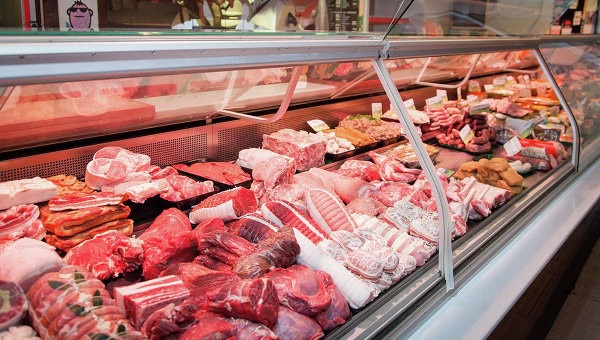
The meat sitting in a supermarket refrigerator may have traveled through a surprisingly complicated journey before reaching your kitchen.
It may have been raised on a farm hundreds or even thousands of miles away, transported to a processing facility, packaged under a retailer's brand, stored in a distribution center, and eventually delivered to your local store.
That isn't necessarily something to fear.
It's simply how modern food supply chains work.
The smartest shoppers aren't necessarily the ones who avoid every imported product or assume the most expensive meat is automatically the best.
They're the ones who read labels, understand food terminology, pay attention to handling instructions, and make decisions based on reliable information rather than fear.
So the next time you stand in front of the supermarket meat counter, don't just look at the picture on the package.
Turn it over. Read the label. Check the ingredients. Look for the origin information.
Because sometimes, the most important information about what's on your dinner plate is hiding in the small print.