Don’t Soak Meat in Water When Defrosting: A Hotel Chef’s Simple Trick to Defrost Meat in 5 Minutes That Looks as Fresh as New
This is a defrosting trick learned from a hotel chef. The entire process doesn’t require soaking meat in water, yet the meat is thawed simply and quickly.
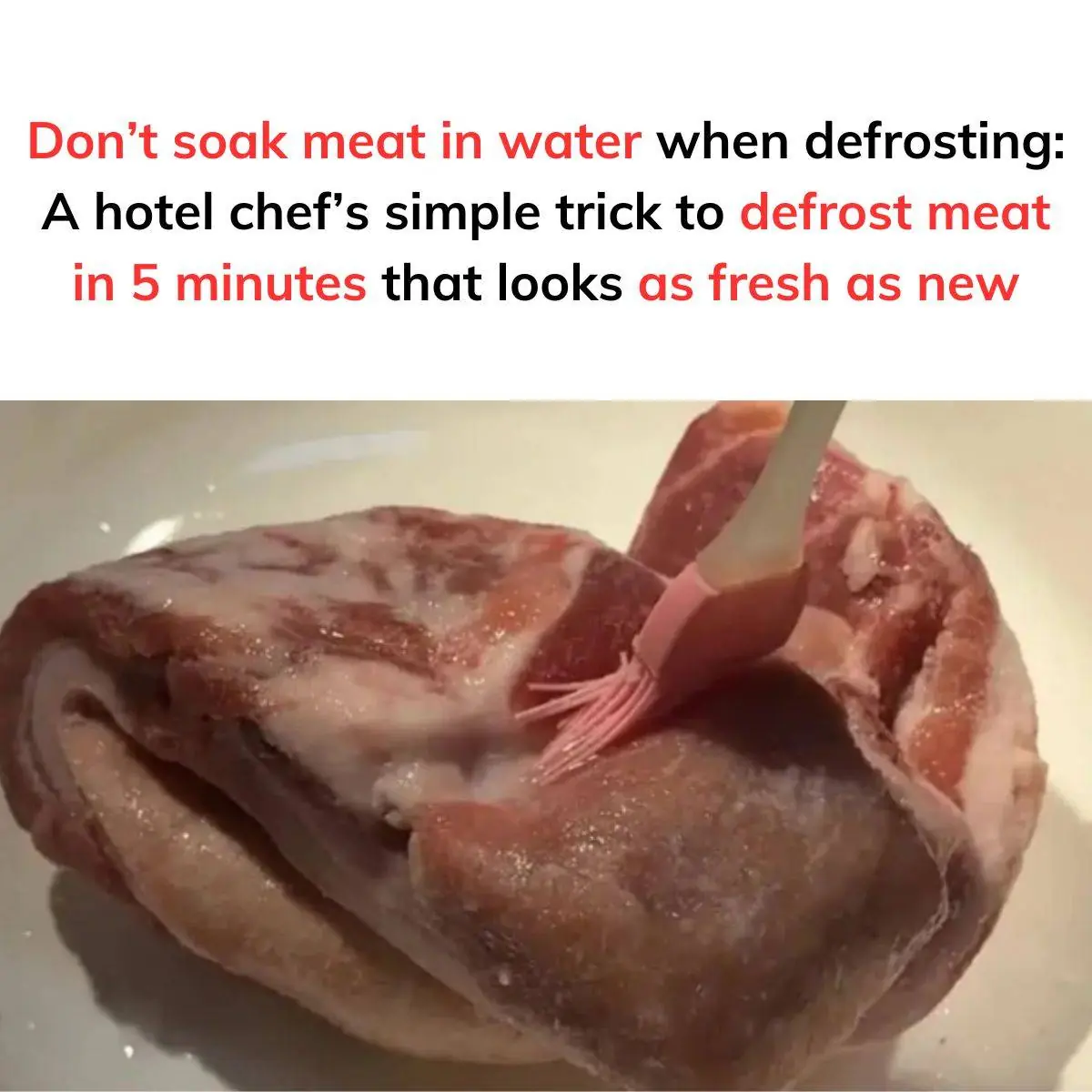
Defrosting meat is a common task for any home cook. In ideal scenarios, some experienced and well-prepared individuals move frozen meat to the refrigerator compartment a day in advance for natural defrosting.
However, before becoming a “pro” at planning ahead, many of us have experienced moments of forgetfulness and resorted to soaking meat in water to defrost it. In reality, soaking meat in water is unhealthy, takes a long time, and compromises the meat’s quality.
In urgent situations, many people also turn to microwaves to defrost meat. While convenient, using the microwave often leads to overheating. As a result, the outer part of the meat cooks while the inside is still frozen.
Today, we’ll share a quick defrosting method learned from a hotel chef. This process doesn’t involve soaking the meat in water and ensures quick and effective defrosting.
Step 1: Salt Application
First, place the frozen meat into a bowl or pot. Next, sprinkle salt over the surface of the meat. For even coverage, it’s better to use your hands rather than a spoon. Adjust the amount of salt based on the size and weight of the meat.
Put on rubber gloves to avoid the cold and spread the salt evenly over the entire surface of the meat. Once one side is fully salted, flip the meat and repeat on the other side. Use fine salt for better coverage, especially in crevices or folded parts of the meat. Avoid coarse salt, as it may scratch your hands if gloves are unavailable.
Step 2: Apply White Vinegar
Next, use white vinegar to enhance the defrosting process. White vinegar accelerates thawing effectively. For best results, use white vinegar made from whole grains (rice vinegar). Pour some vinegar into a bowl and use a brush to coat the meat evenly. Alternatively, use a spray bottle to spray vinegar, especially on overlapping areas, to speed up thawing.
After applying the vinegar, set the meat aside for 3 minutes.
After 3 minutes, you’ll notice the edges and corners of the meat have softened. Press the meat gently; if it’s not fully defrosted, let it sit for a few more minutes. By this point, the meat should be soft enough to cut into smaller pieces with a knife. If the meat is small and not stuck to other pieces, it can thaw completely within 3-5 minutes.
Step 3: Rinse and Prepare
Finally, rinse the meat thoroughly under running water to remove any remaining salt and vinegar. The meat will now feel soft and fresh, almost indistinguishable from freshly purchased meat.
Note:
For larger cuts of meat (around 2-3 kg), after 3-5 minutes, use a knife to cut the meat into smaller pieces. At this stage, the meat will be sufficiently soft for cutting. Although the center may still be slightly firm, this is the ideal time to portion the meat. Place any unused portions into zip-lock bags and return them to the freezer for storage.