On their own, a handful of skins will not transform a household's environmental impact. However, combining several practical habits can make waste reduction more meaningful over time.
You might save garlic skins for stock, compost vegetable scraps, plan meals more carefully, store food properly, and use leftovers before they spoil.
None of these habits needs to be perfect to be useful.
A realistic approach focuses on changes that are convenient, safe, and compatible with your household routine.
Small habits can add up
Suppose a household cooks with garlic several times a week. Instead of automatically discarding every peel, the household could save suitable skins for a stock-making session or add them to a compost bin.
The amount of material saved during one meal may be tiny. Repeated over months, however, the habit can contribute to a broader reduction in kitchen waste.
The same principle applies to other vegetable scraps.
Carrot ends, onion skins, herb stems, and certain leafy trimmings can sometimes be reused in stock or composted, depending on their condition and the intended use.
The goal is not to reuse everything indiscriminately. Some scraps are better discarded, and food safety should always take priority over waste reduction.
Reuse should remain practical
If you do not have a garden or composting system, there is no need to feel that you must start one simply because garlic skins are compostable.
You can focus on the culinary uses that suit your household.
If you rarely make stock, saving garlic skins for that purpose may not be worthwhile. If you already compost vegetable scraps, adding clean garlic skins is a simple extension of an existing habit.
The best method is the one that provides a genuine benefit without creating unnecessary inconvenience.
16. Frequently Asked Questions About Garlic Skins
Are garlic skins edible?
Garlic skins are generally not eaten directly because they are dry, fibrous, and unpleasant in texture. They may be used to flavor liquids that are subsequently strained, but they do not need to be consumed to make use of them.
Can garlic skins be boiled with water?
Yes, clean garlic skins can be simmered in water as part of a homemade stock or culinary infusion. The flavor may be subtle, and the result depends on the quantity and preparation method.
However, boiling should not be used to justify consuming spoiled or contaminated skins.
Can garlic skins be added to compost?
Yes. Clean garlic skins can be added to many home composting systems. Mix them with other suitable organic materials and maintain appropriate moisture and airflow.
If you use a municipal compost service, check its rules because accepted materials differ between programs.
Do garlic skins make plants grow faster?
There is no reliable basis for claiming that garlic skins alone will make plants grow faster. When composted properly, they contribute organic material to the finished compost, which can support soil structure and general soil health.
Plant growth still depends on factors such as sunlight, water, soil conditions, and appropriate nutrients.
Can garlic skins repel insects?
Some garlic-derived preparations have been studied for biological activity, but a homemade garlic-skin infusion should not be considered a proven insect repellent or pesticide.
Its effectiveness can vary, and untested mixtures may damage plants.
Can garlic skins lower blood pressure?
There is insufficient evidence to recommend garlic skins as a treatment for high blood pressure. Research on certain garlic supplements cannot automatically be applied to homemade skin infusions.
People with high blood pressure should follow appropriate medical advice and should not replace prescribed treatment with garlic-skin preparations.
Can garlic skins help with diabetes?
Garlic skins have not been established as a treatment for diabetes. Anyone managing blood glucose should rely on evidence-based care and discuss supplements or concentrated herbal preparations with a healthcare professional.
Can I store garlic skins for months?
Dry skins intended for compost can be stored if they remain clean and dry. For cooking, it is preferable to refrigerate or freeze suitable scraps rather than keep potentially perishable material at room temperature for extended periods.
Discard any material that shows signs of contamination or spoilage.
Are garlic skins useful for natural dyeing?
They may be worth testing in small craft experiments, but the resulting color can be subtle and inconsistent. Do not assume that garlic skins will produce a strong or colorfast dye.
Should I throw garlic skins away if I cannot reuse them?
Yes, if you have no practical use for them or if their condition makes reuse inappropriate. Waste reduction should not come at the expense of food safety, convenience, or good household hygiene.
17. The Best Ways to Start Reusing Garlic Skins Today
If you want to begin making better use of garlic skins, start with one simple habit rather than trying every possible application.
For most households, composting and stock-making are the two most straightforward options.
If you regularly prepare soups, sauces, or vegetable dishes, save a small quantity of clean garlic skins and combine them with other suitable vegetable scraps when making stock.
If you maintain a garden or have access to a composting system, add clean skins to the appropriate collection container and mix them with other organic materials.
If neither option fits your routine, you can simply continue using garlic as usual. There is no need to create a new task solely to avoid discarding a small amount of plant material.
A simple routine for the kitchen
When peeling garlic, separate the clean skins from other waste.
If you intend to cook with them, place them in a clean container and refrigerate or freeze them as appropriate.
If you intend to compost them, keep them in a suitable collection container and add them to your compost system when convenient.
Do not save skins that are moldy, spoiled, or contaminated.
When making stock, simmer the skins with other appropriate ingredients and strain the liquid thoroughly before use.
When composting, balance them with other materials rather than relying on garlic skins alone.
These steps are simple, require little additional equipment, and allow you to make use of a material that would otherwise be discarded.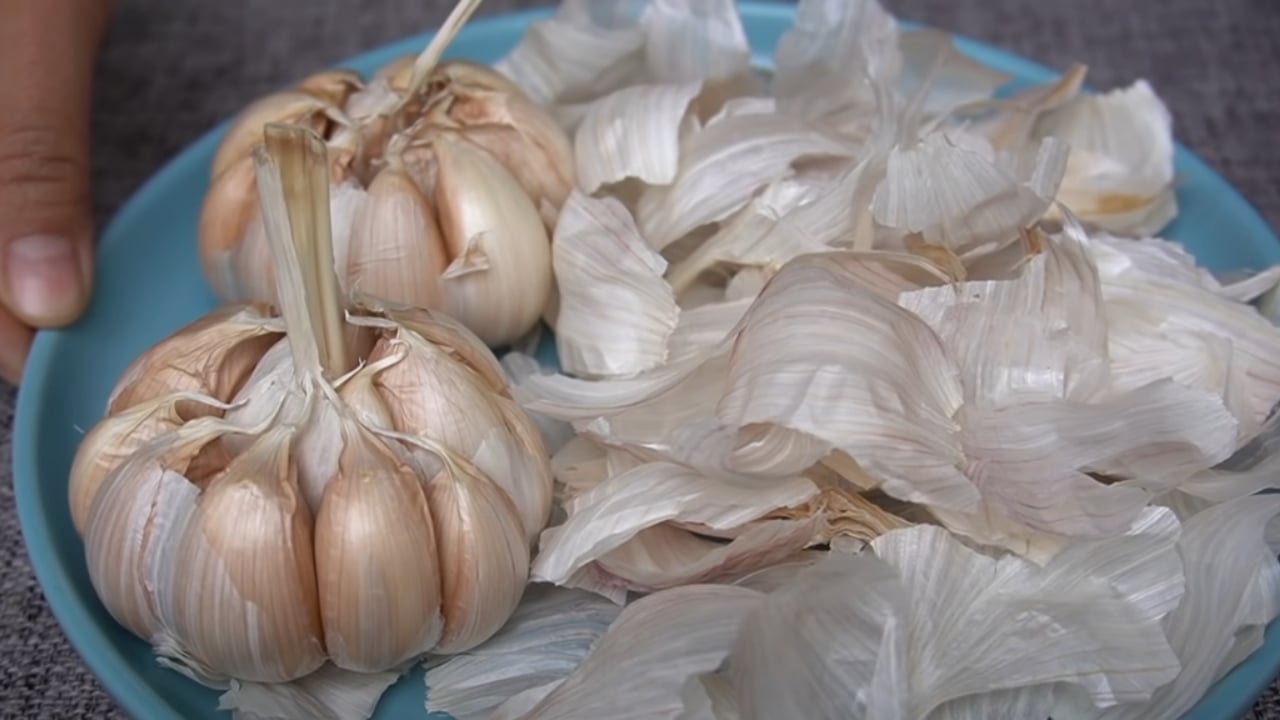
Final Thoughts: A Small Kitchen Scrap Can Still Be Useful
Garlic skins may not look particularly valuable, but they do not have to be treated as completely useless waste.
In the kitchen, clean skins can contribute a subtle aroma to homemade vegetable stock and certain broths. In the garden, they can become part of a composting system that transforms organic scraps into a useful soil amendment. They may also provide material for small craft experiments, although results from natural dyeing can be inconsistent.
These practical applications are modest, but they are genuine ways to make better use of something you already have.
At the same time, it is important to be realistic about what garlic skins can accomplish. Scientific interest in compounds found in garlic or its outer layers does not prove that homemade garlic-skin tea can lower blood sugar, reduce cholesterol, detoxify the body, or prevent disease.
Similarly, a homemade infusion should not be assumed to function as an effective pesticide or household disinfectant simply because garlic contains biologically active compounds.
The most useful approach is to distinguish between practical reuse and unsupported health claims.
Choose the uses that suit your household, handle the skins hygienically, and avoid turning a simple waste-reduction habit into a complicated project.
You do not need to save every peel, and you do not need to experiment with every recipe you encounter online. A small amount of clean garlic skin added to stock or compost is already a useful step.
The next time you prepare garlic for a meal, consider whether the skins could serve another purpose before throwing them away.
They may not be the most valuable ingredient in your kitchen, but with a little planning, they can become part of a more resourceful and sustainable routine.
Sometimes, reducing waste does not require buying anything new. It simply means finding a sensible second use for something you already have.