Drooling during sleep is more common than many people realize. It can happen when the mouth relaxes, saliva accumulates, and the lips remain slightly open. In many cases, it is completely harmless and simply reflects your sleeping position or the way your body moves through different sleep stages.
However, frequent or excessive drooling can sometimes be associated with nasal congestion, allergies, acid reflux, sleep-related breathing problems, medication side effects, or certain medical conditions that affect swallowing and muscle control.
The important thing is to understand the difference between ordinary nighttime drooling and a change that deserves medical attention.
So why does it happen? And when should you be concerned?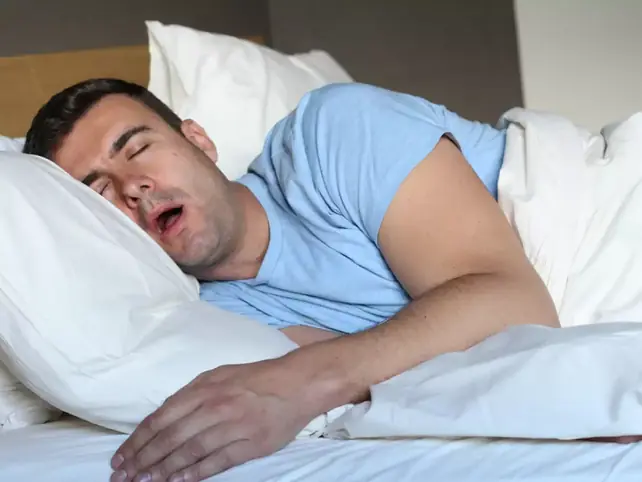
Chapter 1: Why Does Saliva Collect on Your Pillow While You Sleep?
Before assuming that something is wrong, it helps to understand why the body produces saliva in the first place.
Saliva is essential for normal oral health and digestion. It keeps the mouth moist, helps break down food, makes swallowing easier, protects teeth, and supports the body's natural defense against certain bacteria.
Your salivary glands produce saliva throughout the day. Production generally changes depending on whether you are eating, drinking, speaking, resting, or sleeping.
During sleep, the body becomes more relaxed. Swallowing occurs less frequently, and the muscles around the mouth and jaw may lose some of their usual tension. If the lips are slightly open, saliva can gradually escape and collect on the pillow.
This is often the simplest explanation for waking up with drool.
1. Your Sleeping Position May Be the Main Reason
One of the most common reasons people drool during sleep is their sleeping position.
If you sleep on your side or stomach, gravity can make it easier for saliva to leave the mouth. When your head is turned toward the pillow, saliva may naturally flow outward rather than remaining inside the mouth until you swallow.
People who sleep on their backs may be less likely to notice this particular problem because saliva tends to remain inside the mouth. However, sleeping on your back does not guarantee that drooling will never occur.
Your sleeping position can also influence how easily your mouth stays closed. Some people naturally sleep with their lips slightly apart, especially when their facial muscles are relaxed.
If you occasionally wake up with drool on your pillow but have no other symptoms, your sleeping position may be all that is happening.
What can you try?
If you usually sleep on your stomach, experiment with sleeping on your side or back, provided those positions are comfortable and appropriate for you. You can also observe whether drooling happens more frequently when your head is turned toward one side.
A change in sleeping position may reduce the amount of saliva reaching your pillow, although it will not address other possible causes such as nasal congestion or swallowing difficulties.
2. Your Mouth Relaxes During Sleep
During the day, you regularly swallow saliva without consciously thinking about it. This happens automatically and helps prevent saliva from collecting in the mouth.
At night, swallowing becomes less frequent. The muscles responsible for maintaining the position of the lips, tongue, and jaw also relax.
For some people, this combination makes drooling more likely.
The mouth may remain slightly open for extended periods, allowing saliva to escape.
This is particularly common among people who already tend to breathe through their mouths or have difficulty keeping their lips comfortably closed during sleep.
It does not necessarily mean that the salivary glands are producing too much saliva. Sometimes, the issue is simply that saliva is not being swallowed as frequently or retained inside the mouth.
3. You May Be Producing More Saliva Than Usual
Another possible explanation is increased saliva production.
Saliva production can change in response to several factors, including food, oral irritation, nausea, certain medications, and digestive conditions.
For example, eating acidic or spicy foods may stimulate saliva production in some individuals. Dental problems, mouth infections, and irritation of the oral tissues can also influence salivation.
However, producing more saliva does not automatically mean that a medical condition is present.
It is also important to distinguish between increased saliva production and reduced saliva clearance. Someone may experience excessive drooling because the mouth is not clearing saliva efficiently, even if the salivary glands are functioning normally.
Doctors consider both possibilities when evaluating persistent or unexplained drooling.
4. Certain Sleep Stages May Influence Drooling
Sleep is not a single continuous state. Throughout the night, the brain moves through different stages, including non-rapid eye movement sleep and rapid eye movement sleep.
Muscle activity changes during these stages. During REM sleep, for example, many voluntary muscles become temporarily very relaxed.
Although sleep stages alone do not explain every case of drooling, changes in muscle activity and swallowing patterns may contribute to saliva escaping from the mouth.
This is one reason drooling can happen even when someone does not normally have the problem while awake.