The cover was examined for identifying marks.
A name, a date, or a small drawing could help establish that the notebook belonged to Clara. The investigators would also compare its appearance with photographs taken before the disappearance.
If the notebook could be confirmed as hers, it would become an important piece of evidence.
But ownership alone would not reveal what had happened.
A notebook can show where someone intended to go, what they noticed, and how they understood their surroundings. It may also contain mistakes, incomplete thoughts, or drawings that have no connection to the final events of a journey.
Investigators would need to interpret its contents carefully.
They could not assume that every mark represented a warning or that every drawing pointed toward a hidden location.
The notebook might contain an ordinary record of the hike.
It might also contain a detail that had seemed insignificant at the time but became important after the backpack was found.
For Clara’s family, the notebook represented something even more personal.
It was a part of her life that had survived when so many other things had disappeared. The pages might hold her handwriting, her imagination, and the small details that made her recognizable to those who loved her.
The discovery did not bring Clara home.
But it brought a piece of her story back into the hands of the people who had been waiting for answers.
And as the notebook was examined, the investigators began to wonder whether its final pages might help them understand why the pair had left the familiar trail.
The Map That Did Not Match the Original Search
The folded map was the next object to attract attention.
At first glance, it appeared to be an ordinary hiking map. Its paper had been damaged by moisture, and the folds were difficult to separate. But once the map was carefully opened, investigators noticed several marks that seemed unusual.
A route had been traced in pencil.
The line began near a familiar trail and continued toward a less frequently visited section of the mountain. It was not a clean, uninterrupted route. Instead, it appeared to have been drawn in stages, with short sections connecting one landmark to another.
The map also contained a small mark near a rocky area.
The captain remembered that the original search had focused heavily on the main route. Search teams had followed the most likely path from the starting point and checked places where hikers commonly stopped.
The newly discovered map suggested that Julián and Clara might have moved away from that route.
Perhaps they had been looking for a viewpoint.
Perhaps they had noticed something interesting and decided to explore.
Or perhaps they had been trying to find a safer way around a difficult section.
The investigators could not determine the reason immediately.
They compared the map with the known geography of the area. Some landmarks were easy to identify, while others were less clear because the map had been folded and damaged.
The pencil line did not necessarily represent the route the pair had actually followed. It might have been a planned route, a possible alternative, or a rough drawing made after they had already left the trail.
This distinction mattered.
A map can record intention without proving action.
The investigators therefore treated it as a guide rather than a final answer.
They began identifying the points where the drawn route crossed or approached known trails. From there, they could compare the map with the location of the backpack and the areas searched in 2020.
The result was a possible route that had not received the same attention during the original operation.
It led toward a narrow section of rock where the terrain became more complicated.
The path was not necessarily impossible for experienced hikers, but it required careful movement. Loose stones and uneven surfaces could make progress difficult, especially for a child.
The captain returned to the discovery site and studied the surrounding landscape.
The backpack had been found below a higher section of rock.
If the map represented the route Julián had followed, the pair might have approached the area from above. That would explain how the bag had reached the crevice.
But it did not explain why the notebook had remained inside.
Nor did it explain the strange mark that investigators later noticed near the map’s edge.
The mark was small enough to be overlooked.
It appeared to have been made with a different pencil, and its position did not correspond neatly with the route line.
The investigators photographed it and preserved the map for further examination.
The renewed search now had a direction.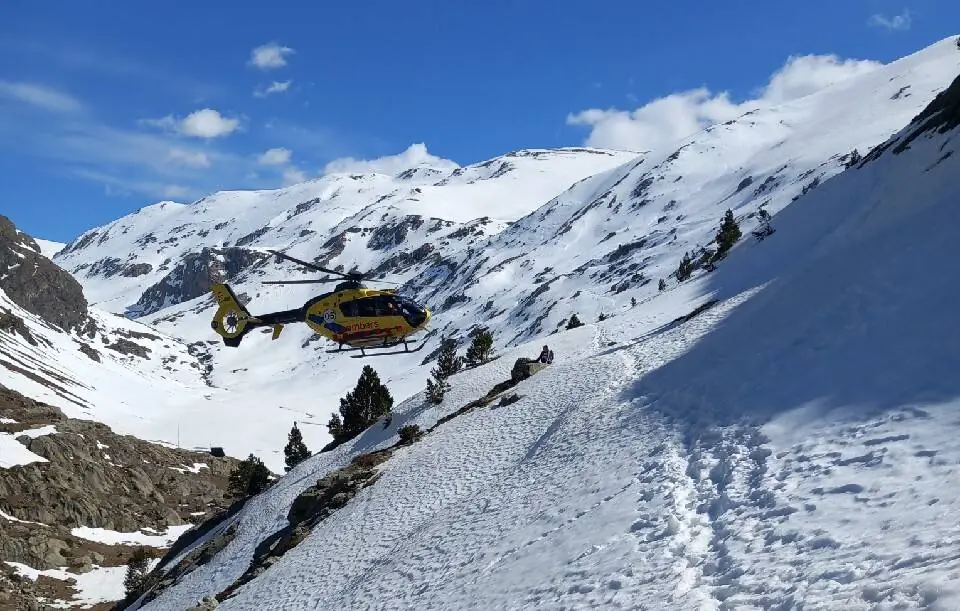
A Mark That Appeared Years Later
The most unsettling detail in the fictional investigation was not a dramatic message or a hidden photograph.
It was a small mark on the map.
When the map was compared with copies examined during the original investigation, the mark appeared to be absent from the earlier photographs.
That did not automatically mean someone had added it after the disappearance.
The original images might not have shown the entire map. The paper could have been folded differently, or the mark might have been too faint to appear in the photographs.
Still, the discrepancy demanded attention.
The investigators began considering several possibilities.
The mark might have been made by Julián during the hike. It could have indicated a landmark, a turn, or a place where he intended to stop.
It might also have been created by Clara.
Children often use symbols that have meaning only to themselves. A simple circle, line, or cross could represent a place they had visited or something they wanted to remember.
Another possibility was that the mark had been added after the backpack was lost.
If someone had found the bag before the hikers discovered it, they might have examined the map and made a note. That person could have been another hiker, a search volunteer, or someone who had encountered the backpack during the years it remained hidden.
The possibility was disturbing, but it was not evidence of wrongdoing.
Investigators needed to establish whether the mark was actually new.
They examined the pencil line under magnification and compared it with the other markings on the map. They looked for differences in pressure, color, and the way the graphite had settled into the paper.
They also considered the effects of moisture.
A mark that appeared darker might not have been made later. It could simply have been protected from water or abrasion.
The map was therefore treated as an object requiring careful analysis rather than a mysterious message waiting to be decoded.
But the question remained.
If the mark had been made after the original search, who had added it?
And why had the person not contacted the authorities?
The captain did not announce a theory.
He knew that a premature explanation could mislead the investigation and create unnecessary suspicion toward people who had done nothing wrong.
Instead, he asked the team to focus on the evidence.
The map, the backpack, and the notebook would need to be examined together.
Only then could investigators determine whether the objects supported the same sequence of events—or whether they told different stories.