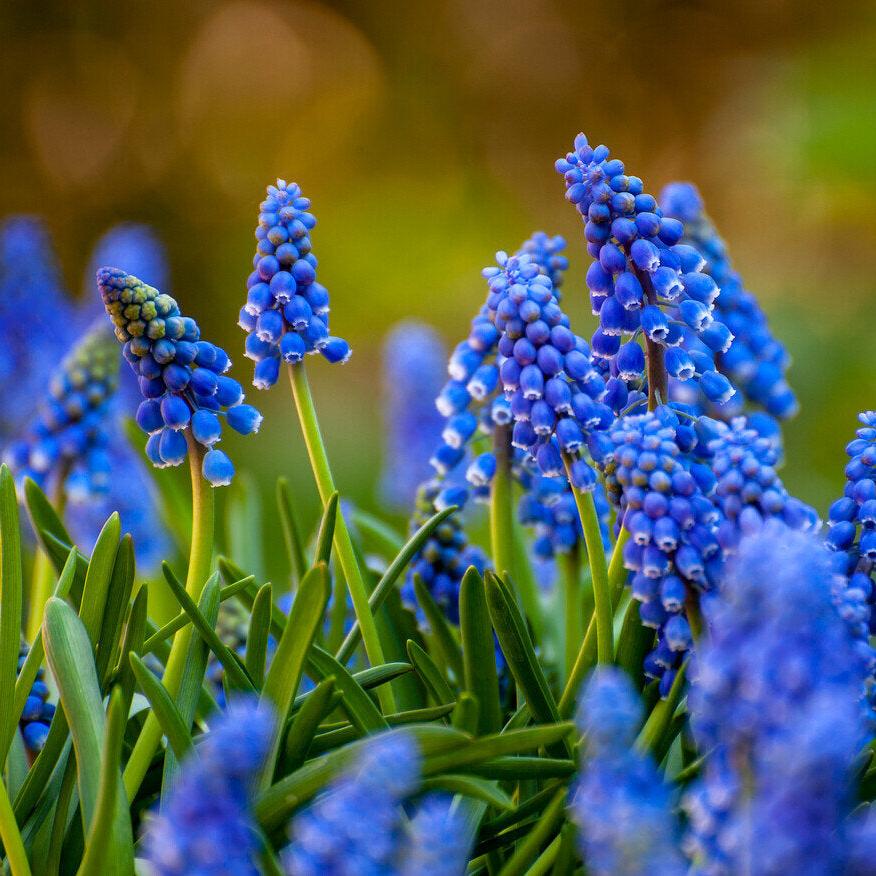
When spring begins to unfold, some of the most magical sights are not the grand blossoms, but the smallest ones quietly transforming the ground beneath our feet. Grape hyacinth, scientifically known as Muscari, is one such wonder. With its clusters of tiny, bell-shaped flowers resembling miniature bunches of grapes, this humble plant brings color, fragrance, and unexpected value to gardens and landscapes around the world.
Though often overlooked due to its size, grape hyacinth carries a rich history, practical benefits, and surprising uses that make it far more than a simple ornamental flower.
A Botanical Snapshot
Grape hyacinths are perennial bulb plants native to parts of Europe, the Mediterranean region, and western Asia. They bloom in early to mid-spring, often appearing just as winter loosens its grip. Their most recognizable feature is their dense spikes of cobalt blue, purple, or sometimes white flowers, each one shaped like a tiny urn.
Despite the name, grape hyacinths are not true hyacinths. They belong to a different botanical group, but the resemblance in scent and bloom structure earned them their popular name.
Why Gardeners Love Grape Hyacinths
1. Low Maintenance and Hardy
One of the greatest strengths of grape hyacinths is their resilience. Once planted, they require very little care. They tolerate cold winters, adapt well to different soil types, and return reliably year after year.
2. Natural Spreaders
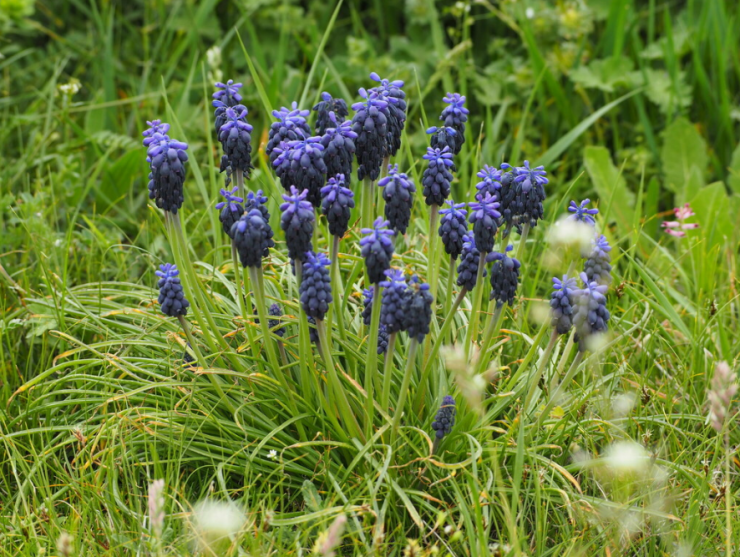
Grape hyacinths multiply easily through bulbs and seeds. Over time, they form beautiful carpets of color, making them ideal for naturalized gardens, borders, and under trees where other plants struggle.
3. Early Pollinator Support
Their early blooms provide a valuable nectar source for bees and other pollinators emerging after winter. In ecosystems where early food sources are scarce, grape hyacinths quietly play an important role.
Symbolism and Cultural Meaning
In many cultures, grape hyacinths symbolize rebirth, trust, and constancy—fitting for a flower that reliably returns each spring. Their deep blue color has also been associated with calm, reflection, and emotional balance.
Because they bloom low to the ground and in clusters, they are often seen as symbols of humility and quiet strength—beauty that doesn’t demand attention but rewards those who notice.
Surprising Traditional Uses
While grape hyacinths are primarily grown for their beauty, they have a lesser-known history of practical and traditional uses.
Natural Dye
Historically, the intense blue pigments of grape hyacinth flowers were sometimes used to create natural dyes for fabrics and crafts, though the color tends to fade over time.
Mild Fragrance Use
The flowers emit a gentle, musky-sweet scent. In the past, dried blooms were occasionally used to lightly scent rooms or stored linens.
Folk Remedies (With Caution)
In traditional folk practices, parts of the plant were sometimes used in very small quantities for topical applications. However, grape hyacinths are not considered edible, and some parts of the plant can be mildly toxic if ingested. Any medicinal use should be approached with caution and proper knowledge.
Ecological Benefits
Beyond aesthetics, grape hyacinths contribute positively to their environment:
-
Soil stabilization: Their root systems help prevent erosion.
-
Biodiversity support: They provide habitat and food for insects.
-
Companion planting: Their early growth can help suppress weeds before larger plants emerge.
Because they thrive without fertilizers or pesticides, grape hyacinths are well-suited for eco-friendly and low-impact gardens.
Growing and Caring for Grape Hyacinths
Growing grape hyacinths is simple, even for beginners.
-
Planting time: Fall, before the first frost
-
Sun exposure: Full sun to partial shade
-
Soil: Well-drained soil is essential
-
Watering: Minimal once established
After blooming, the leaves should be left intact until they naturally yellow. This allows the bulbs to store energy for the next season.
Grape Hyacinths in Modern Landscaping
Today, grape hyacinths are widely used in:
-
Cottage gardens
-
Rock gardens
-
Urban green spaces
-
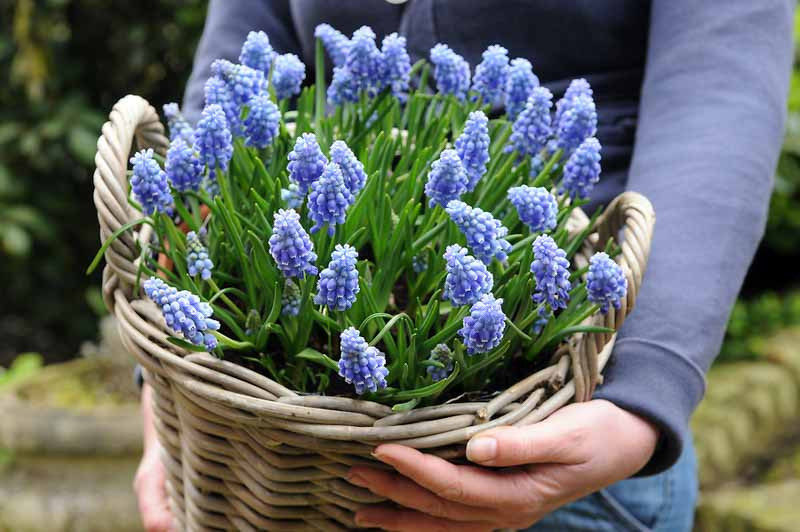
Container gardening
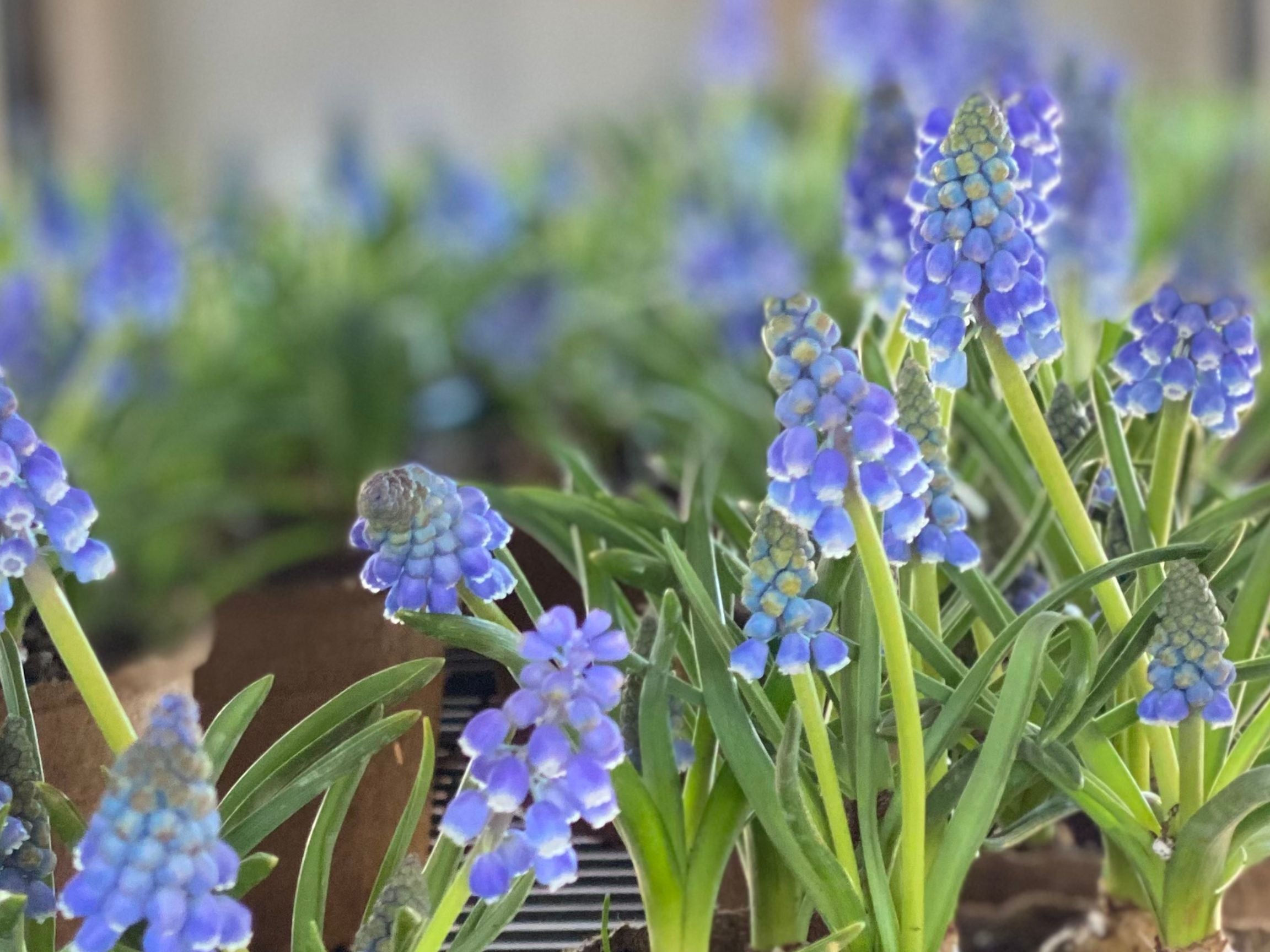
Their compact size makes them perfect for small spaces, while their vibrant color creates strong visual contrast when paired with daffodils, tulips, or crocuses.
A Small Flower with a Big Presence
Grape hyacinths remind us that beauty does not have to be loud to be meaningful. They arrive early, do their work quietly, and disappear just as gracefully - leaving behind stronger soil, fed pollinators, and the promise of return.
In a world that often celebrates the bold and the massive, grape hyacinths offer a gentler lesson: sometimes the smallest wonders bring the deepest joy.