His continued appearances suggested that the opportunity had developed beyond a brief publicity stunt. He became involved in fashion projects, worked on his public image, and explored other areas of entertainment.
The transition also required him to become comfortable with a new kind of attention. During the viral mugshot period, people had reacted to an image without knowing him. In the fashion industry, he had to work with photographers, designers, stylists, production teams, and audiences who expected him to present himself professionally.
The difference between being discussed online and being employed in an industry is significant. Online attention can arrive instantly and disappear just as quickly. A professional career requires showing up, meeting expectations, and building a record of work.
Meeks’s post-prison career became a test of whether the internet’s fascination could be converted into something more lasting.
Exploring Acting and Life in Front of the Camera
Modeling was not the only direction Meeks pursued. He also explored acting, appearing in films and projects that allowed him to move beyond still photographs and runway presentations.
His film work has included titles such as True to the Game, Trigger, and Secret Society, as well as later projects and sequels. His acting career has been described in industry profiles and in coverage of his autobiography.
Acting presented a different kind of challenge from modeling. A photograph captures a moment. A runway appearance requires a model to communicate through posture and movement. Acting requires a performer to build a character, understand a script, learn dialogue, and respond convincingly to other performers.
In a February 2025 interview with The Jamaica Gleaner, Meeks said that he preferred acting because it challenged him more than modeling. He explained that working on a film involved studying a script, developing a character’s background, learning dialogue, and putting himself into the role.
That answer offers an interesting insight into how he views his professional future. The fashion industry may have been the first door to open, but he did not appear to want his identity limited to being a model.
He also expressed interest in becoming involved in other creative areas, including writing, directing, and producing. In the same interview, he spoke about wanting to explore more aspects of entertainment and to create projects of his own.
For someone whose fame began with a photograph taken by authorities, the desire to create his own work represents a significant shift. Instead of being defined entirely by an image created in a moment of crisis, he can choose the projects and stories he wants to develop.
There is also a practical reason why acting may appeal to him. Modeling can be heavily dependent on appearance, trends, and the changing expectations of the fashion market. Acting offers the possibility of playing different characters and demonstrating skills that are not limited to physical presentation.
That does not mean the transition is easy. The entertainment industry is competitive, and a recognizable face does not automatically guarantee major roles. Actors must continue developing their craft and demonstrate that they can carry a performance.
Meeks has acknowledged that he enjoys the challenge. His comments suggest that he sees acting as an opportunity to grow rather than simply as another way to benefit from the attention generated by his mugshot.
For audiences who remember only the viral photograph, his film work offers another way to understand the years that followed.
Fashion, Business, and the Search for an Identity Beyond the Mugshot
As Meeks became more established in entertainment, he also explored business opportunities connected with fashion. This was a natural extension of the public image that had first brought him attention, but it required a different kind of thinking.
A model is usually hired to present someone else’s design. A business owner or fashion entrepreneur must think about the product itself, the audience, the brand identity, and the practical work needed to bring a collection to market.
Reports about Meeks’s career have described his involvement in fashion projects and plans to develop his own clothing brand. Coverage in Vietnam in 2025 also discussed his fashion-business ambitions and his move into acting.
Building a brand is not the same as becoming famous. A recognizable face can attract initial interest, but a business needs more than attention. It needs a clear identity, reliable production, customers, and a reason for people to return.
For Meeks, fashion offered a way to take some control over how he was presented. In the early days of his viral fame, the public had defined him through a nickname and a single photograph. A professional brand offered the possibility of shaping a different image — one associated with design, creativity, and entrepreneurship.
The transition from model to business figure also reflects a broader theme in his story: the desire to be recognized for more than one moment.
The original mugshot was powerful because it was unexpected. But the longer a person remains in the public eye, the more difficult it becomes to rely on the same story. Audiences want to know what happened next. They want to see new projects, new appearances, and evidence that the person has developed beyond the image that first made them famous.
Meeks has continued to pursue opportunities in fashion and entertainment, but the path has not been presented as a perfect or effortless transformation. His career has involved trying different projects and finding out where his abilities and interests fit.
That process is familiar to many people who change careers, although his circumstances were unusually public. Most people can experiment with a new profession without millions of strangers comparing every stage of their progress with an old photograph. Meeks has had to navigate that process while carrying a nickname that the internet created for him.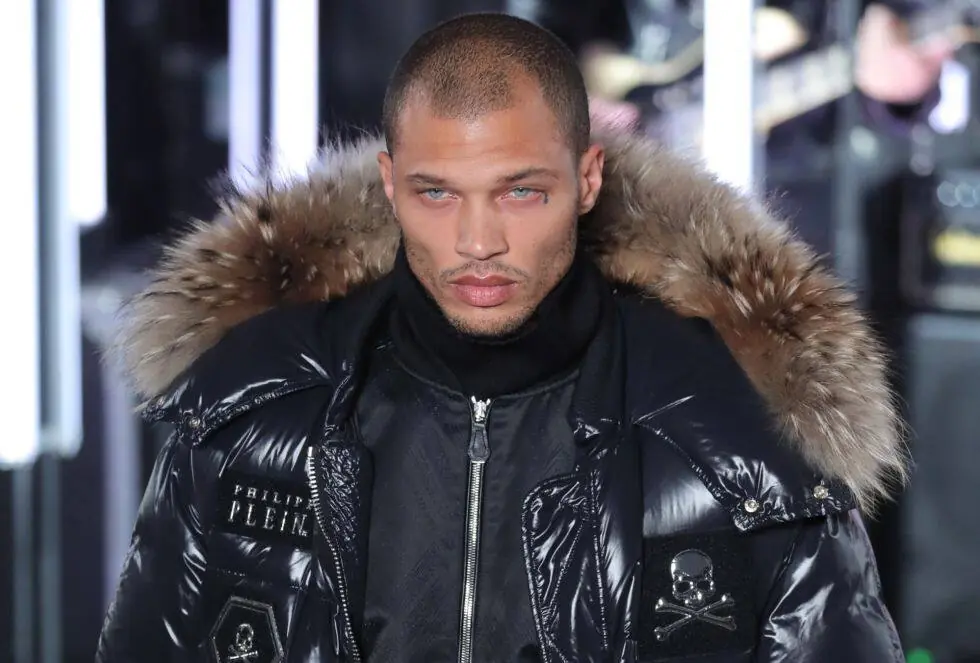
His Memoir: Why Jeremy Meeks Decided to Tell His Own Story
One of the most significant developments in Meeks’s recent public life was the release of his autobiography, Model Citizen: The Autobiography of Jeremy Meeks.
Published in 2024 by Kingston Imperial, the book gives readers an account of his life before and after the viral photograph. The publisher’s description presents it as a story about hardship, gang involvement, incarceration, and the unexpected path into fashion and entertainment.
The title is particularly interesting. “Model Citizen” carries a double meaning. It refers to his professional work as a model, but it also raises a question about what it means to rebuild a life and become a different person from the one the public once judged.
For years, Meeks had been discussed through a short list of labels: convicted felon, viral sensation, model, and celebrity. Those descriptions captured parts of his life but could not explain the experiences behind them.
A memoir gave him the opportunity to tell a longer story in his own voice.
In April 2024, when the book was announced, Meeks said he was at a point in his life where he felt ready to be vulnerable and tell his whole story. He expressed the hope that readers would connect with it and understand how he had reached the position he was in.
That statement suggests that the book was not simply intended to celebrate a fashion career. It was also an attempt to explain the difficult experiences that preceded it.
According to the publisher’s description, the autobiography covers his childhood, the instability of his family environment, his involvement in gang life, and the years that led to incarceration. It also follows the transition into modeling and entertainment after his release.
The book includes photographs from his modeling career, connecting the visual image that made him famous with the professional identity he developed afterward.